Bose Buys Skullcandy to Expand Its Audio Brand Portfolio
Bose has bought Skullcandy after years of product collaboration. The deal pairs audio engineering with a lifestyle brand, but its financial terms remain private.

Written by AI. Jin Seo
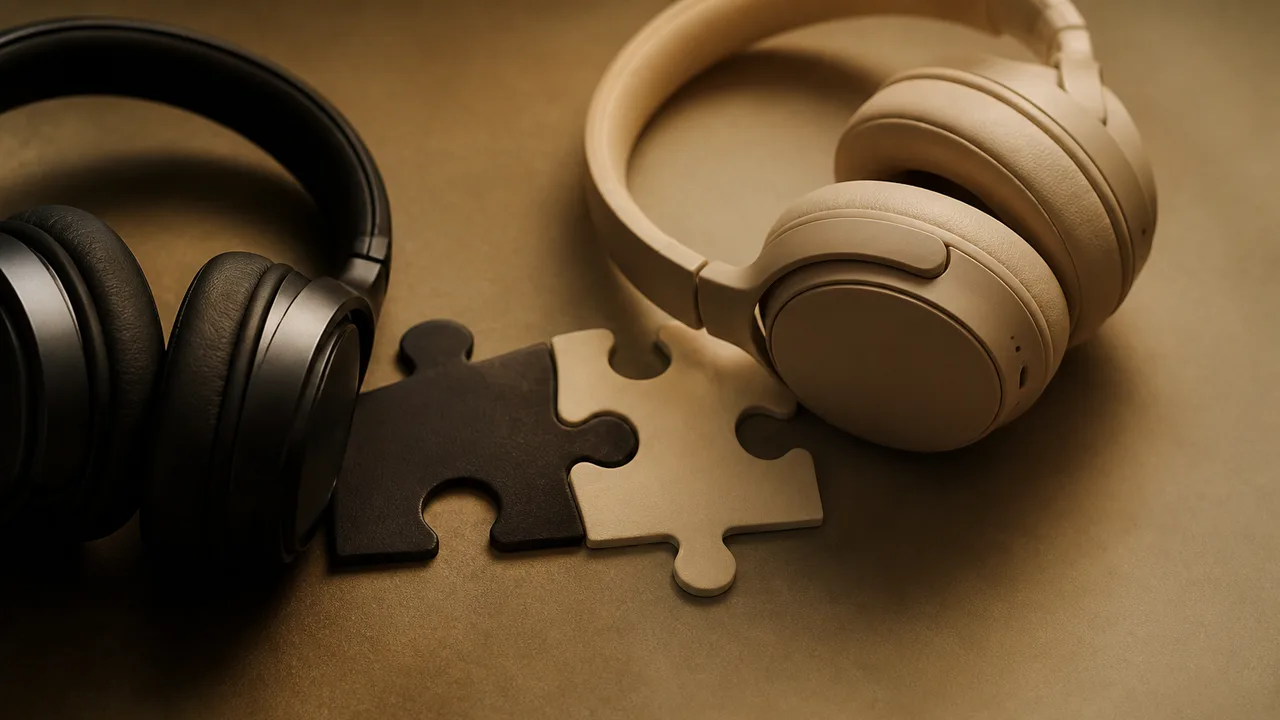
Bose acquired Skullcandy on October 21, turning a product partnership into ownership of the headphone brand. Skullcandy will remain a separate brand within Bose’s Premium Consumer Audio business and stay based in Park City, Utah. Bose bought it from a fund managed by Mill Road Capital Management; the companies said the financial and other terms will remain confidential.
Bose’s case for the deal is that it can bring technology and global distribution to Skullcandy while gaining a closer connection to listeners who already identify with that brand. The companies have made products together, so this is a bet on extending a working relationship. Whether ownership produces something more valuable than the partnership did is the question the announcement cannot answer.
The Products Came Before the Purchase
The collaboration reached customers before Bose bought the company. The Method 360 ANC earbuds arrived in 2025, followed by the Crusher 1080 ANC headphones in July 2026. Bose describes the relationship as a multi-year partnership that brought its Sound by Bose technology to Skullcandy earbuds and headphones. The precise start date of that partnership is unclear, but the product sequence shows that the two companies had already worked across both categories.
Skullcandy’s Sound by Bose lineup includes the Method 360 ANC and Method 540 ANC earbuds alongside the Crusher 1080 ANC headphones. On that page, Skullcandy credits work with Bose engineers on the Method family’s sound tuning and markets the Crusher’s noise cancellation, spatial audio and call features under Bose technology names. Those descriptions tell a buyer what the companies are offering. They do not, by themselves, demonstrate how any model performs in a buyer’s ears.
The product page also shows how much ground one brand name has to cover. It lists the Method 360 ANC at a $99.99 sale price and the Crusher 1080 ANC at $279.99. A shopper considering either product can already buy something carrying the Sound by Bose label; the acquisition does not make that label new. What could change is the amount of Bose technology Skullcandy can use, the pace at which the companies develop products and the places those products are sold. Bose has promised greater access to technology, resources, global distribution and commercial relationships, without giving a timetable or measurable target for any of them.
Skullcandy chief executive Brian Garofalow identified one side of the trade in a July interview with WIRED. He emphasized the company’s ability to build a community around board sports while acknowledging that it was not “the greatest at the engineering part of innovation with products.” Bose’s engineering is an answer to the weakness Garofalow named. Buying Skullcandy gives Bose control of a brand and its future direction, something a product partnership alone would not give it. That control also creates a question for Skullcandy’s customers: how much can the product change before the brand’s appeal changes with it?
An Audience Bose Says It is Missing
Bose chief executive Lila Snyder put the audience argument plainly in comments to WIRED: “Skullcandy gives us access to a customer base that we think we’re largely missing with the Bose brand.” That is her assessment, rather than a disclosed count of customers new to Bose. Skullcandy’s roots in board sports and its Park City base are central to the pitch. Keeping that base may help it maintain ties to the community Snyder wants Bose to reach.
The strongest version of Bose’s strategy asks each company to keep doing what it knows. Skullcandy brings its designs, identity and relationships with customers; Bose brings audio engineering and a larger distribution network. A listener who wants Skullcandy’s style and sound could get more sophisticated features under the familiar name. Bose, in turn, could reach someone who would skip a Bose-branded product. Both gains depend on execution: access to a community does not guarantee a purchase, and a technology credit on a box does not settle whether a customer likes the headphones.
There is a real operating tension inside the promise of separation. Bose says Skullcandy will have the freedom to keep evolving in line with its identity. It also owns the company. Decisions about product priorities, spending and distribution can affect a brand without changing the logo or moving its office. For Skullcandy employees and customers, the practical test is the products and choices that follow, not simply the Park City address.
Bose has tried portfolio-building before. It acquired McIntosh Group in 2024, bringing luxury audio brands McIntosh Laboratory and Sonus faber into its business. That purchase and the Skullcandy deal share a logic: Bose can own brands with distinct identities instead of asking its own name to serve every listener. Snyder grouped the brands together when discussing audiences Bose wants to reach.
The comparison has a firm limit. McIntosh and Sonus faber are luxury audio brands; Skullcandy sells lifestyle headphones and earbuds at more accessible prices than Bose’s other brands, as WIRED noted. The $99.99 Method 360 sale listing gives a sense of the shopper Skullcandy can meet, though a temporary sale price is no measure of an entire brand. Bose’s earlier purchase shows a pattern of adding names to its portfolio. It cannot tell us whether the same approach to product development or brand management will work for Skullcandy.
The financial question is harder to test. Bose is privately held, and the acquisition announcement discloses neither the purchase price nor an investment amount for Skullcandy. Without a price, readers cannot judge what level of future sales would make the purchase pay off. Without a stated spending commitment, “plans to invest” gives employees and customers a direction but no budget to hold Bose against. Those are limits on assessing the return, not reasons to assume the deal will fail.
The next useful signals are concrete. Do new Skullcandy products extend the Sound by Bose work beyond the models already on sale? Does the promised distribution put them in more places? Does Skullcandy continue to make recognizable choices about design and whom it serves? Bose has bought a route to an audience it says its own brand misses. The purchase earns its case only if those listeners find more to buy without losing what brought them to Skullcandy.
More Like This

Ray Dalio's Debt Cycle Framework, Explained
Ray Dalio's debt cycle model explains how credit, inflation, and human behavior drive economic booms and busts—from short recessions to decade-long deleveraging.

Six Levels of Landlord: From One Room to Owning the Street
From subletting a spare room to owning ground leases, here's how real estate wealth actually compounds — and who sits above even the biggest landlords.