Beatles, Drake and Swift Share a Billboard 200 Top Five
The Beatles, Drake and Taylor Swift share the Billboard 200 top five for the first time. Their sales and streaming totals reveal three routes to the same chart.

Written by AI. Zoe Kim
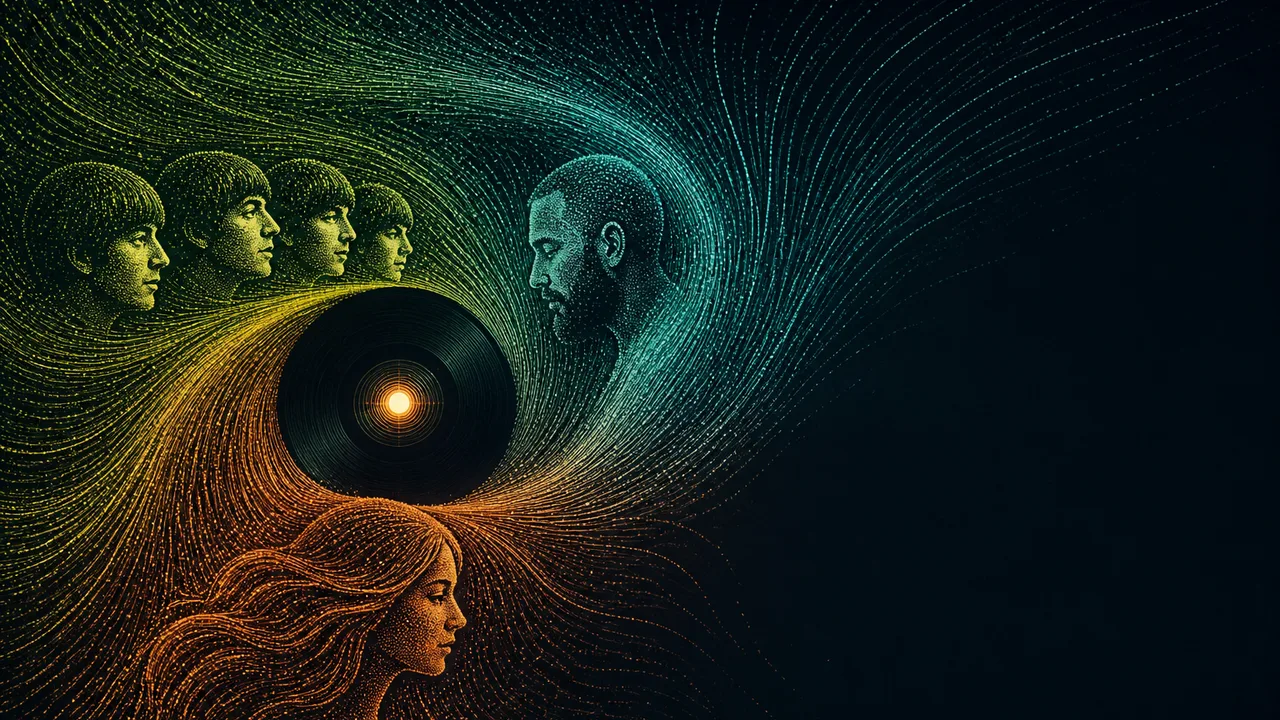
Taylor Swift, Drake and the Beatles occupy three of the top four spots on the Billboard 200 chart dated Oct. 17, 2026. Swift’s The Life of a Showgirl is No. 1, Drake’s HABIBTI is No. 2 and the Beatles’ Rubber Soul has returned at No. 4. It is the first week all three acts have appeared together anywhere in the top 10, let alone the top five.
That lineup reads like someone handed the aux cord to three generations at once. Its more revealing feature is what sits beneath the rankings. All three albums benefited from expanded releases, yet the activity carrying each one up the chart looks different. The Beatles’ week was built chiefly on album purchases. Drake’s was overwhelmingly streaming. Swift’s combined substantial streaming with a substantial number of sales. One chart can register all of those listening and buying habits without requiring them to resemble one another.
Three Albums, Three Routes Up the Chart
The Billboard 200 ranks U.S. albums by equivalent album units compiled by Luminate. It combines album sales, individual track sales and official on-demand streams. Under the chart’s stated conversion, one album sale counts as one unit; 10 tracks sold count as one unit; and streams count at different rates depending on whether they come from ad-supported or paid subscription services. A No. 2 beside a No. 4 therefore compares totals assembled from several types of activity, rather than two piles of physical records.
For the week ending Oct. 8, The Life of a Showgirl earned 93,000 equivalent album units. Streaming-equivalent activity supplied 65,000 of those units, while album sales supplied 27,000. Swift’s deluxe edition arrived Sept. 25 with four previously unreleased songs and sent the album from No. 21 back to No. 1 on the preceding chart. It remains there for a 14th nonconsecutive week.
Drake’s HABIBTI took a more abrupt trip, rising from No. 116 to its previous peak at No. 2 after an Oct. 2 expansion added four songs. Its 71,000 units included nearly 70,000 from streaming-equivalent activity. All versions of the album are combined for chart purposes, so the No. 2 position represents activity across the release, not just plays of the four additions. The new tracks can give listeners a reason to return without every return being a play of a new track.
Rubber Soul also received an expansive Oct. 2 reissue, across multiple formats and editions. Of its 58,000 equivalent units, 50,000 came from album sales and 7,000 from streaming-equivalent activity. It reached No. 1 on the separate Top Album Sales chart. In this top-five lineup, buying was the Beatles’ principal route back onto a chart that also counts streams.
Swift’s result sits between those profiles. Streaming supplied the larger part of her weekly total, but her 27,000 album sales are too large to erase from the story. Nor does a chart unit identify why someone pressed play or bought an edition. These are three release campaigns and one tracking week, so their different mixes show what happened here rather than prescribing a strategy for every artist with a deluxe edition.
Why Rubber Soul Can Return
Rubber Soul spent six weeks at No. 1 in 1966. Before this return, its last Billboard 200 appearance was on the chart dated Jan. 16, 2016; its last top-10 appearance was on the April 9, 1966 chart. An album with that history is doing two things at once in 2026: carrying songs such as “Norwegian Wood (This Bird Has Flown),” “Michelle” and “In My Life” across decades, and entering a current weekly contest through a newly released edition.
The two chart moments measure different markets. The modern Billboard 200 adds purchases and streams into equivalent units; Rubber Soul’s 1966 run preceded that streaming component. Its No. 4 return speaks to activity around the album during one 2026 week, not a replay of the conditions that put it at No. 1 sixty years earlier. For a reader staring at the date on the album and the date on the chart, the reissue is the bridge between them.
There is a useful Beatles precedent. Following a similar deluxe reissue, Abbey Road earned 81,000 equivalent units on the chart dated Oct. 12, 2019, including 70,000 album sales. Rubber Soul’s current 58,000 units include 50,000 sales. Both weeks show how a catalog album can make a strong chart showing with purchases supplying most of its units. They do give Rubber Soul’s sales-heavy return a closer comparison than Drake’s streaming-heavy leap does.
The Beatles had already crossed paths with the other two artists separately. Their deluxe Let It Be reached No. 5 alongside Drake’s No. 1 Certified Lover Boy on the chart dated Oct. 30, 2021. A deluxe Revolver returned at No. 4 while Swift’s Midnights held No. 1 on the Nov. 12, 2022 chart. The current first-time milestone is the three-way overlap. Earlier pairs show that a Beatles reissue meeting a contemporary hit near the top of the chart is familiar territory.
The Numbers Behind the Names
The three acts also happen to own the largest numbers of Billboard 200 No. 1 albums: 19 for the Beatles, 15 each for Swift and Drake. Swift’s current week brings her to 100 career weeks at No. 1 across those albums. Only the Beatles, with 132, have more. That career history helps explain why this particular combination catches the eye, though neither a lifetime No. 1 count nor this week’s position measures the same thing as this week’s streaming or sales breakdown.
Swift’s expanded release, titled The Life of a Showgirl: The Encore, counts alongside the original edition for chart calculation. Drake’s versions are likewise combined. That accounting detail changes how to read the headline: an album can retain its chart identity while acquiring new songs, and a week of renewed activity can add to the history of the existing title. Showgirl’s 14th week at No. 1 belongs to that continuing run, even though the expanded edition helped bring it back to the summit.
A collector can see the enduring appeal of an album edition here, and a streaming listener can see how quickly an expanded track list can put a recent release back into circulation. The chart puts those behaviors in conversation because it converts them into a common weekly unit. This week, that arithmetic placed Rubber Soul, HABIBTI and The Life of a Showgirl within four positions of one another. Their shared top five is the headline; the different ways they got there are the music-listening story inside it.
More Like This

Classical Chinese Culture as Therapy for Modern Anxiety
Alain de Botton's School of Life video finds five ideas from classical Chinese art and poetry that speak directly to burnout, grief, and the pressure to perform happiness.

The Psychology Behind Avoidant Lovers, Explained
Alain de Botton's viral School of Life video on avoidant attachment is everywhere on TikTok. Here's what it gets right — and what it leaves out.