BBC's Doctor Who AI Episode Praise Is No Production Plan
Matt Brittin liked an AI-made Doctor Who episode, but its maker is unknown. The BBC's production tender and a past AI trial show what remains undecided for viewers.
Written by AI. Marcus Chen-Ramirez
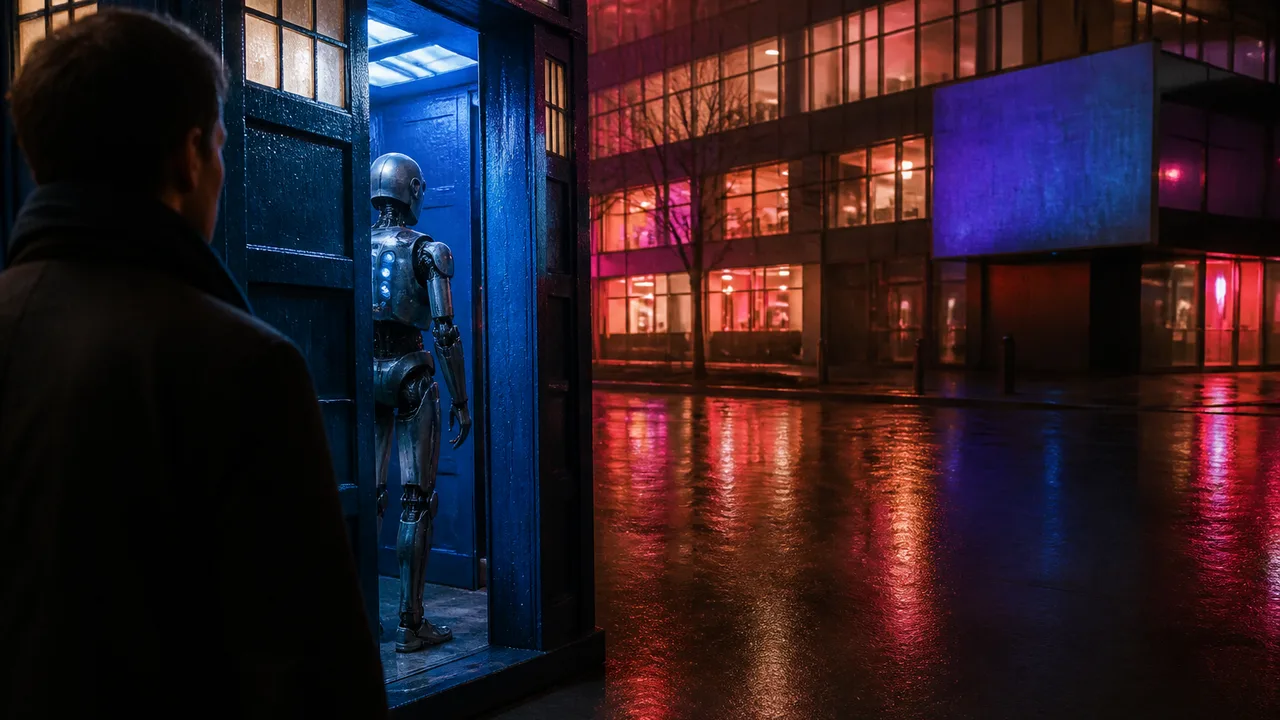
BBC director-general Matt Brittin said someone sent him a 50-minute AI-generated episode of Doctor Who and that he thought it was “pretty good”. At a Royal Television Society conference in London, he added that AI was “not going to replace humans,” Variety reported.
The BBC is also looking for a producer to make the next Doctor Who series. That search has a submission deadline, proposed contract terms and a broadcast timetable. Brittin’s video has a favourable review from the director-general, but no identified maker or disclosed connection to the BBC’s production plans. Treating the two as one development would turn a reaction to something in his inbox into a commissioning decision.
Brittin used the episode to make a broader claim: billions of people, he suggested, can create content “at the standard of a Hollywood studio.” A tool that lets more people produce ambitious-looking work could expand who gets to make it. Studio production also involves sustaining a story across episodes, directing performances and deciding who may use existing material. A 50-minute video that impressed one viewer cannot settle those questions, even when that viewer runs the broadcaster.
Who Made the Episode?
Brittin did not name its creator or say whether the work came from inside or outside the BBC. The broadcaster declined to comment, Decrypt reported. “AI-generated” describes the result without saying who wrote, selected, edited or assembled it. People still make choices about what tools should produce and what to keep. Brittin did not describe those choices.
IGN suggested a possible match: the 50-minute opening instalment of a fan-made project called The Unmade Season. IGN’s writer said they watched part of that project and found the images close to photorealistic but the storytelling flawed. The matching length makes it a plausible suggestion, not a confirmed identification. Those impressions describe the fan project; Brittin has not said it was the video he received.
The maker’s identity would affect which questions can be answered. A named creator could explain how the episode was assembled and what permissions they obtained for any familiar characters, images or performances it used. Until then, claims about the unidentified video’s inputs or rights would be guesses. Visual polish alone cannot tell a viewer whose creative work or likeness contributed to what they are watching. That is a question about the work’s provenance, not an allegation about the person who made it.
The Commission Has Different Paperwork
The BBC’s September 17 tender notice seeks a producer for a multi-episode Doctor Who series, including specials, for transmission in 2028/29. Initial submissions are due at 2 p.m. on October 2. The contract is offered on a work-for-hire basis. The BBC says it will keep all rights and continue broadcasting the programme, with an option to commission a second series.
The successful bidder will be expected to establish a production base in an agreed region and meet two of three Ofcom regional criteria; the BBC prefers a Wales qualification. The BBC says tendering the title forms part of its Charter commitment to open more content to competition. The public notice does not address AI use, although it links to a fuller tender document. Its silence supplies neither an AI permission slip nor a prohibition.
Here is where a demo stops doing the work of a television contract. A prospective producer has to decide how a series gets written, performed and delivered under the BBC’s requirements. If that producer proposes generative AI, the useful questions become narrower than “Was the demo good?” What material would a tool use? Would a performer’s voice or image be involved, and on what terms? Who would review the output, and what would viewers be told? Those are questions for any eventual production proposal, not conditions stated in the public notice.
A bid could use AI for a limited production task, propose a larger role or leave it out. The notice does not say which path a producer will take. It does identify an organization that retains the programme’s rights and will broadcast it. That creates a clearer place to direct questions about a commissioned series than Brittin’s favourable opinion of an unidentified video. The comparison is about responsibility and disclosure; it cannot tell us whether a future episode would look or play anything like the one he saw.
Brittin has expressed an openness beyond that one episode. Days earlier, he said he would consider a BBC programme made and presented with AI “within guardrails,” Decrypt reported. That leaves room for experimentation. Writers, performers and viewers would need to know what those guardrails require before they could judge a proposed use: whose consent is needed, which creative roles people retain and whether audiences will be told what AI did. A general willingness to consider AI leaves those decisions with whoever eventually makes and approves a programme.
A Previous Trial Ended After Complaints
The BBC has tried generative AI with Doctor Who before, though in promotion rather than programme production. In 2024, it announced AI-generated marketing materials for flagship shows, starting with Doctor Who. Within weeks, it dropped the plan after receiving complaints and described the effort as a “small trial,” Decrypt reported.
The BBC did not stop exploring every use of the technology after that marketing reversal. It subsequently launched pilots including a synthetic voice for weather reports and image enhancement, Decrypt reported. Those tasks offer another point of comparison: using AI to enhance an image or voice a report raises different questions from producing a fictional episode with characters and performances. Neither the pilots nor Brittin’s assessment sets the terms for the next Doctor Who contract.
The 2024 complaints show that at least some viewers objected to the promotional use. They cannot predict the response to a future episode or establish what a new producer intends to do. The broadcaster ended a marketing trial within weeks; its proposed work-for-hire contract concerns a multi-episode series made by a producer while the BBC retains the rights and broadcast role. If AI becomes part of that job, scrutiny could extend from what appears on screen to the people, material and permissions involved in making it.
That history gives Brittin’s “guardrails” a practical test. The earlier trial shows the BBC has changed course after complaints; the tender shows it is now arranging who will make the programme itself. Neither tells us that the next Doctor Who will use AI. When the BBC selects a producer, the consequential question will be whether it can say what people and tools are responsible for making the show, and on whose terms.
More Like This

Gemini Nano Gets Faster on Pixel Without Retraining
Google's frozen Multi-Token Prediction retrofits speed gains onto existing Gemini Nano models—no retraining needed. Here's what that means for on-device AI.

Google's Open Knowledge Format for AI Agents
Google's Open Knowledge Format promises to fix how AI agents navigate knowledge bases. Here's what it actually does, what it doesn't, and why the structure matters more than the tool.