Apple's $5.7 Billion Haptics Verdict Heads to Appeal
A $5.7 billion haptics verdict puts Apple's Taptic Engine under scrutiny. Its appeal will test infringement, damages and the value of tactile product design.

Written by AI. Mike Sullivan
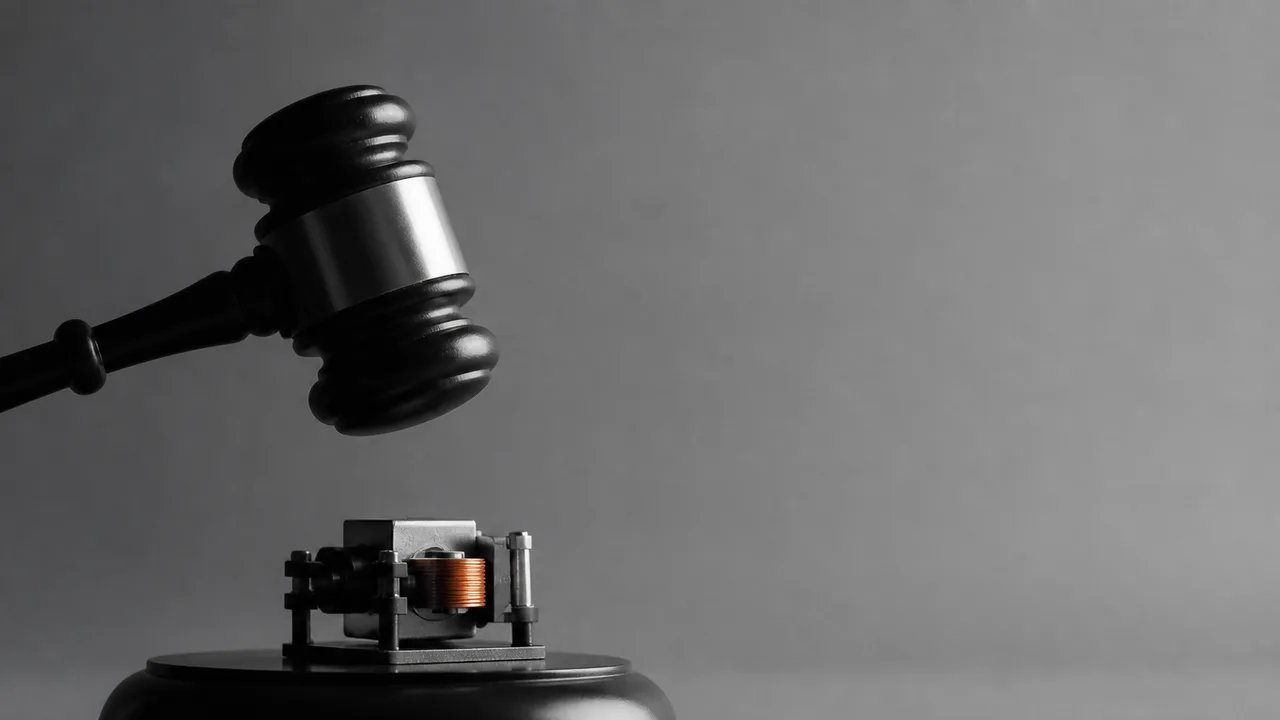
Apple faces a damages award of more than $5.7 billion after a federal jury in San Diego found that its iPhones and Apple Watches infringed claims from two Taction Technology haptics patents.
That number has enough zeroes to activate the old Windows error sound in any corporate legal department. It is also a jury verdict at the beginning of another legal stage, rather than a final transfer from Cupertino to Taction's bank account.
Apple has already said it will appeal. The useful questions now concern what the jury decided, what remains disputed and why the humble vibration motor has become valuable enough to produce a multibillion-dollar fight.
What the Jury Decided
Taction sued Apple in 2021 in the US District Court for the Southern District of California. Its complaint accused Apple of using patented vibration technology without permission. A judge dismissed the case in 2023, but the US Court of Appeals for the Federal Circuit later revived it.
The patents, US Patent Nos. 10,659,885 and 10,820,117, cover vibration-based tactile transducer technology. In ordinary human language, they concern systems that make a device feel as though it has responded when somebody taps, presses or turns a control.
Taction argued that Apple's Taptic Engine, used in iPhones and Apple Watches, incorporated its inventions without a licence. After a trial that began on September 14, seven jurors deliberated for two days and returned a verdict for Taction on September 25.
Apple told Bloomberg Law that it “does not use Taction's technology” and would appeal. That position collides directly with the jury's infringement finding, but the appeal keeps both liability and damages in dispute. A verdict supplies Taction with a major victory; it does not settle the appellate questions waiting behind it like people in an airport rebooking queue.
The jury did not find Apple's infringement willful. That finding narrows what the verdict says about Apple's conduct: the jurors found infringement without finding that Apple acted willfully. It does not, by itself, tell readers what the appellate court will do with the patents, the infringement analysis or the $5.7 billion award.
How a Vibration Became Part of the Interface
Haptics once meant the sort of buzzing alert that could move a Nokia across a café table. Modern systems use carefully controlled tactile feedback to imitate a click, confirm an input or give a digital control some physical character.
A technology trade account describes haptics as part of Apple's product differentiation, citing the simulated response of an iPhone home button and feedback associated with the Apple Watch's Digital Crown. That framing is plausible because tactile feedback performs interface work once handled by moving components. The cited account also argues that disappearing physical buttons increase the importance of haptic systems, although the Taction verdict alone cannot establish an industry-wide trend.
The commercial logic follows in three steps. Apple embeds the Taptic Engine in prominent product lines. Tactile feedback helps those devices communicate input without relying on a traditional mechanical control. A patent claim covering part of that system can therefore reach products whose value extends far beyond the component under dispute.
That final step creates the central damages question. A vibration mechanism may occupy little space inside a device while contributing to an interaction repeated throughout its useful life. Courts still have to determine what share of product value, if any, belongs to the patented invention. The available accounts do not disclose the jury's damages methodology, royalty base or per-device assumptions, so the headline figure cannot answer that question for us.
This is why calling the case a fight over “buzzing” undersells it. Apple has spent years replacing obvious mechanical actions with glass, software and controlled feedback. Once the click becomes a simulation, the machinery behind the simulation becomes part of the interface and, inevitably, part of the patent map. Every futuristic slab eventually develops paperwork.
Apple Has Encountered This Argument Before
Taction is not Apple's first haptics dispute. Engadget reports that Immersion previously accused Apple of infringing haptic patents used in iPhones, Apple Watches and MacBooks. The companies settled for an undisclosed amount.
The Immersion case offers the closest comparison because it involved haptic technology across overlapping Apple products. Its undisclosed settlement also limits the lesson. It shows that haptics generated a previous licensing conflict, but it provides no public price against which to test Taction's $5.7 billion award.
That history changes how the current verdict should be read. Haptics litigation around Apple did not arrive with Friday's jury decision. The recurring pressure point is a product architecture in which tactile components sit inside devices sold at enormous scale. Companies holding relevant patents have an incentive to argue that their inventions contribute to the experience of every covered device. Apple has an equally obvious incentive to contest infringement and resist a damages theory tied broadly to those sales.
The dispute also has a useful, if imperfect, comparison outside haptics. Engadget says another federal jury awarded Masimo $634 million in an Apple Watch patent case concerning blood-oxygen tracking, and Apple plans to appeal that verdict as well.
Masimo's technology performs a different job, so the cases cannot establish a common royalty or predict a common outcome. They do expose the same product-level vulnerability: a flagship device combines many specialised technologies, and a dispute over one embedded feature can produce damages far larger than the component's physical footprint might suggest. The Apple Watch is a tiny computer wearing a jewellery costume, with a patent portfolio trailing behind it like a steamer trunk.
What to Watch Instead of the Headline Number
The appeal will provide more useful signals than the initial scale of the award. First comes liability: Apple says it does not use Taction's technology, while the jury found infringement. Appellate treatment of the patent claims and infringement analysis will determine whether that finding survives.
Second comes the damages framework. Readers should look for arguments about how the award was calculated, which products and sales were included, and how the patented technology was valued within those products. None of those details appears in the available accounts, so predictions that Apple will pay the full sum, secure a reduction or erase the award would outrun the public facts.
Third comes the business response. A surviving verdict could lead to further litigation, a licence, a settlement or product changes, but the current record does not identify which route is likely. The earlier Immersion settlement proves that an agreement is possible, not that history will repeat with the same terms or timing.
For device makers, the broader lesson is less cinematic than “patent warfare” and more familiar to anyone who remembers software dependency charts from the 1990s. A polished product inherits legal exposure from the specialised systems buried inside it. The more central those systems become to everyday interaction, the harder they are to dismiss as replaceable widgets.
Apple's $5.7 billion figure will dominate the first round of coverage because large numbers have always been catnip for headlines. The appeal will have to answer the more consequential question: how much of the way an iPhone or Apple Watch feels can legally and economically be assigned to two haptics patents?
More Like This
AI Is Breaking Open Source Supply Chain Security
Ismail Pelaseyed of Superagent explains how AI has compressed attack timelines and why the open source ecosystem may be approaching a structural breaking point.
Local AI vs. Cloud: Why the Holy War Misses the Point
Running AI locally isn't a purity test—it's a systems design problem. Here's what one builder's hardware journey reveals about the real tradeoffs.