Anthropic's Platform Bet: Open Ecosystem or Soft Lock-in?
Anthropic's Katelyn Lesse and Angela Jiang lay out a three-layer platform strategy—and a clear stance on open ecosystems versus walled gardens.
Written by AI. Dev Kapoor
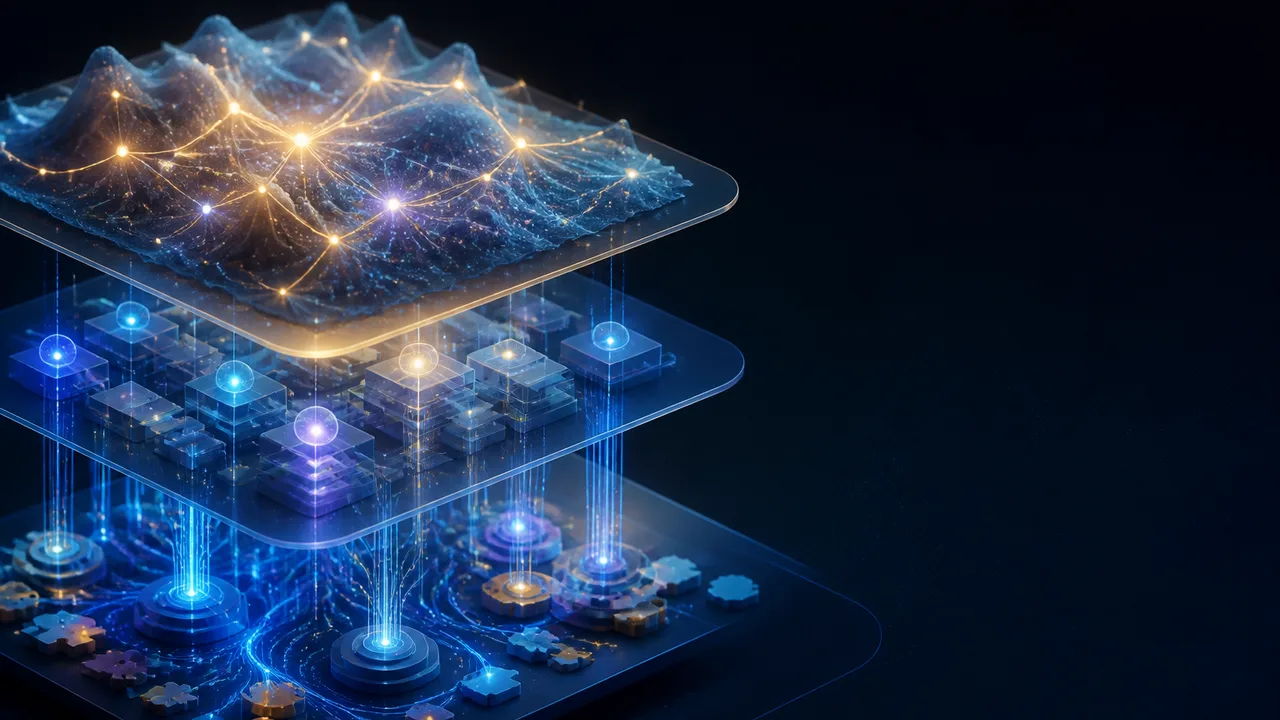
Photo: AI. Dante Nwosu
There's a particular kind of corporate statement that sounds generous until you turn it over and look at what's underneath. "We're building an open ecosystem, not a walled garden" is exactly that kind of statement. It's easy to say. The interesting question is whether the architecture actually backs it up.
In a recent Sequoia Capital conversation, Katelyn Lesse and Angela Jiang — who lead Anthropic's developer platform — spent nearly an hour laying out their vision for how that platform should work and where its boundaries sit. The case they make is more textured than the headline suggests, and the tensions embedded in it are worth sitting with.
The Three-Layer Cake
Jiang's framework for understanding the platform is genuinely useful, and not just as a marketing device. She describes three stacked layers: knowledge (how you interact with Claude, the shape of the messages API, tools, memory, skills), execution (actually getting Claude to do work — sandboxes, session persistence, the infrastructure that makes long-running agents possible), and coordination (what she and Lesse call "strategies" — meta-harnesses that assign different jobs to different tokens).
That last layer is where their roadmap is clearly pointed. The argument is that as models become more capable and more steerable, the low-level scaffolding that used to hold agents to a straight line becomes less valuable. Two years ago, Jiang says, "a lot of the harness was like a scaffold to kind of like tell the model to go from point A to point B. And you had to like you really had to like build in a lot." Today, that steering logic can often just live in the prompt. Which means the harness needs to do something different — not constrain, but enable longer, more complex operations.
The interesting move here is what they're calling strategies: the idea that a given token isn't fungible, that you can deliberately assign it a job — advising, executing, reflecting, dreaming, critiquing. A bug-hunting agent, for example, might benefit less from a bigger model or more runtime (the two obvious levers) than from a "best-of-N" strategy that runs multiple attempts and synthesizes results. The problem, as Lesse notes, is that while the research on this is out there, "to actually build that thing and put it into production so you can actually test it on users — that's like really really freaking hard." Their platform bet is essentially: we'll make that hard thing easy enough that the ecosystem can experiment with it.
This connects to the Claude Managed Agents launch and the broader platform shifts Anthropic has been signaling — where the abstraction layer keeps climbing, and the infrastructure you used to have to wire yourself becomes something you can just opt into.
Where "Open" Actually Means Something
The clearest evidence for genuine openness is at the execution layer. Lesse points out that for Claude Managed Agents, Anthropic isn't precious about its own infrastructure. Self-hosted sandboxes can run on Modal, Vercel, Cloudflare, or Amazon's microVMs. MCP tunnels let you reach MCP servers behind your own firewall. The pattern, as Lesse frames it: "whether it runs on our infrastructure versus somebody else's infrastructure is actually not important to us because the thing that's important to us is more that the architecture of how you put together these agents in a way that will be powerful, in a way that will be reliable and scalable."
That's a meaningful distinction. They have opinions about architecture — strong ones — but they're not trying to own every layer of the stack to enforce those opinions. The interfaces are the commitment, not the compute.
The same logic extends to MCP itself. Skills and MCP are handed to the broader industry precisely because they need network effects to be useful. Jiang frames this with an electricity analogy that, for once, earns its place: "the reason why it's such a transforming technology for all of us... is because you can actually like wire it into everything. Everyone is able to actually access it... And that's not something that anybody can do by themselves." The bet on standards is a bet that Anthropic can't win alone, and that winning alone would be the wrong kind of winning anyway.
Where "Open" Gets Complicated
Here's where the picture gets murkier: model routing.
Lesse and Jiang are explicit that they're designing their platform for Claude, not as a model-agnostic router. The argument is that harnesses should be tuned to the model family they're built for — that a harness and an agent tied to a specific model family will perform better than one that tries to be universally portable. Lesse describes this as a belief that "the agentic layer should be tuned to the model family that you use it with."
That's a defensible technical position. It's also, not coincidentally, a business position. If you build deeply enough into Anthropic's harness architecture and strategy primitives, switching costs accumulate — not through lock-in by contract, but through the natural gravity of optimized abstractions. The "open ecosystem" framing sits alongside a platform design that creates real switching friction at higher levels of the stack, even as the lower levels remain pluggable.
None of this is hidden or nefarious. It's just the ordinary logic of platform businesses: be open at the commodity layers, be indispensable at the value layers. What's notable is that Lesse and Jiang are unusually candid about both sides of it.
The vertical strategy is similar. Finance, legal, coding — Anthropic picks verticals partly by TAM and partly by what they call "token hunger": domains where finishing one turn makes you want to do more, not less. They're building toward form factors for those domains, while insisting those form factors are provisional ("we built something it works it was cool for a year and maybe it's not the right next thing and so throw it away try again"). The question for developers building in those spaces is whether Anthropic's vertical products are a rising tide or a competitive overhang.
Claude Tag and the Iceberg Problem
The conversation around Claude Tag — Anthropic's internal Slack-based agent — is instructive partly because of the initial reaction it got. Dismissed as "just a Slackbot," it apparently confused people who were looking at the interface rather than the architecture underneath.
Jiang's framing of Tag is essentially that the interface is the least interesting thing about it. All the context engineering, the proactivity, the harness complexity — that's the iceberg. The Slack surface is just "the tip bit that's like outside in the water." Shopify built something similar with River; Block built Builderbot. The pattern is an agentic platform internal to a company, with rich context and accessible via wherever employees already collaborate.
What Tag represents as a platform artifact is Anthropic eating its own cooking publicly — showing one opinionated answer to the question of how you'd assemble their primitives into a coherent product. As Jiang notes, crediting Andrej Karpathy with the characterization, it's "like an org-level harness." You don't have to use it. But if you're building something similar, you can see how they made the calls.
The Rationalization Moment
One thread in the conversation that's going to resonate with anyone who's recently had a conversation with their CFO about AI spend: Lesse and Jiang acknowledge what they call the shift from "token maxing" to "token rationalization." Companies that let AI adoption spread organically — Lesse describes employees finding ways to procure and use Claude Code on their own, creating shadow IT patterns that compound token costs — are now asking harder questions about what they're actually getting.
The platform team's response to this is interesting: don't cap, route. Lesse essentially describes complexity-aware routing as a smarter alternative to hard spend limits. A difficult task goes to a powerful model; a simple task routes cheaper. "You don't want to like stop the innovation," she says, "if you are getting returns on top of this you are shipping faster than ever before." The strategies framework is, in part, an answer to this problem — a way to get the same intelligence output at lower cost by being more deliberate about what job each token has.
Whether that framing holds up as enterprises get more sophisticated about measuring returns is an open question. The platform shifts Anthropic announced at its London developer keynote point in the same direction — more tooling for deliberate optimization, less assumption that raw capability is enough.
The three-layer cake is a coherent vision. The openness commitment is real in the places it matters most for ecosystem health. And the coordination layer — the strategies bet — is where the most interesting and genuinely hard problems live.
Whether a platform that's open at the bottom and increasingly opinionated at the top ends up feeling like infrastructure or like a platform company doing what platform companies do is probably a question the market will answer before Lesse and Jiang do.
More Like This
Anthropic's Leaked Conway Agent Reveals New Lock-In Layer
The Conway leak shows Anthropic building an always-on AI agent that locks users in through learned behavior, not data—a platform strategy with no exit.
Anthropic's Advisor Strategy: Smarter AI for Less Money
Anthropic's new advisor strategy pairs Opus with cheaper models for better performance at lower cost. Here's what developers need to know.
Claude Managed Agents: What the Infra Layer Reveals
Anthropic's Claude Managed Agents shifts the bottleneck from model intelligence to infrastructure. Here's what the technical architecture actually means for developers.
Claude Tag Wants to Run Your Workday
Anthropic's Claude Tag embeds AI directly into team Slack channels. Here's what it actually does, what it can't do yet, and what it means for how teams work.
Anthropic Launches Claude Fable 5 at Tokyo Keynote
Anthropic unveiled Claude Fable 5 and Mythos 5 at its Tokyo keynote, with new managed agents, dynamic workflows, and a novel approach to AI safety guardrails.
AI Agents Are Accelerating—But Nobody Agrees What That Means
New benchmarks show AI coding agents tripling capabilities in months. Researchers urge caution. Investors price in economic collapse. Welcome to 2026.
How Agent Operating Systems Handle Always-On AI Tasks
Julian Goldie's Agent OS community session reveals how scheduled tasks, token management, and model orchestration work—and where the friction actually lives.

PrismML's Bonsai 27B Brings Qwen to Consumer Hardware
PrismML's Bonsai 27B runs Qwen 3.6 27B on 10GB of RAM using ternary compression. Here's what the benchmarks show—and what they don't.