Amazon Adds a Camera to the Echo Studio for $30 More
Amazon’s $250 Echo Studio adds a camera to a premium speaker. Here’s what Alexa+ gains, how the alternatives compare, and what its privacy controls can address.

Written by AI. Rachel "Rach" Kovacs
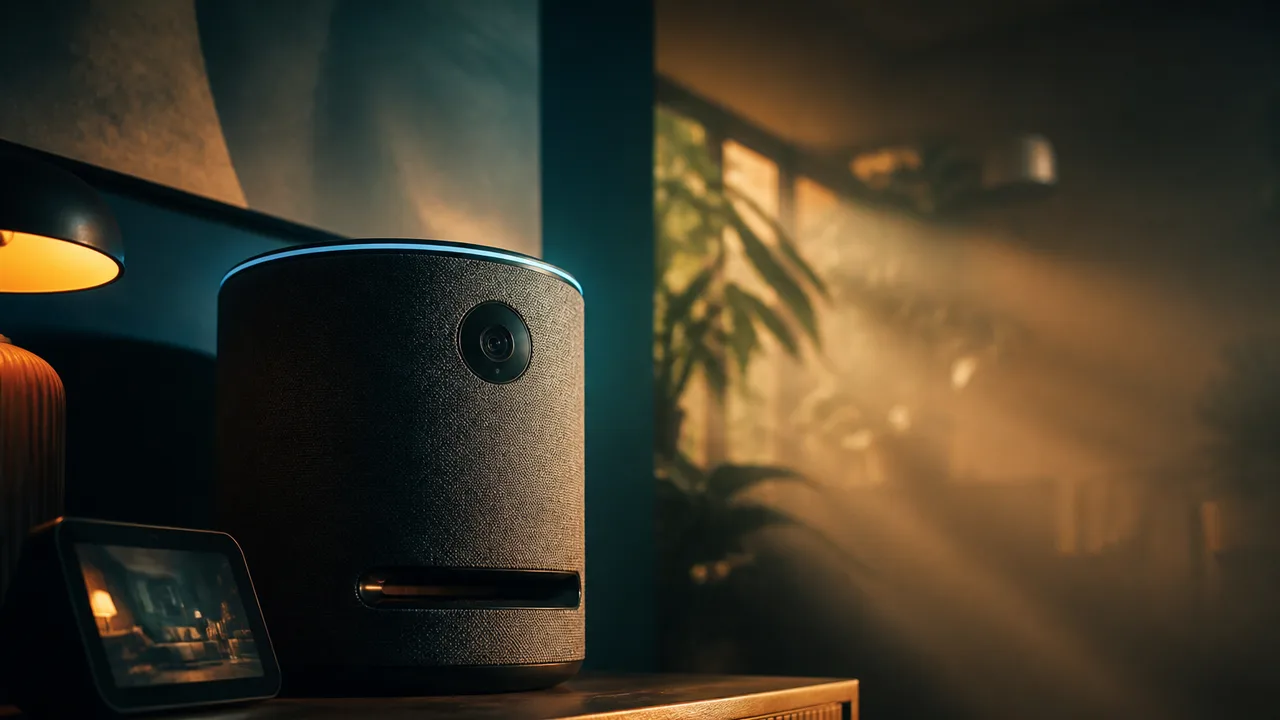
Amazon has put a camera in the Echo Studio, the speaker it has sold to people who care about sound. The new Echo Studio with Home Camera costs $250, while the camera-free Echo Studio remains on sale for $220. That $30 buys a way to check a room through the Alexa app, show Alexa+ an object and use the speaker’s camera for video calls. It also puts a lens wherever you chose to put your music speaker.
The decision is unusually concrete for a smart-home purchase. If you want the Studio’s audio and have no use for a room-facing camera, the $220 model is still there. If you want Alexa+ to look at a board game while explaining its rules, or to check whether you left a light on, the camera-equipped model adds those functions. Whether they earn a permanent place in your living room depends on how often you would use them and who else shares that room.
An Audio Product Learns to Look
The Echo Studio debuted in 2019 as Amazon’s higher-quality Alexa speaker. Its camera-equipped version keeps the main audio components of the standard model: a 3.75-inch woofer, three full-range drivers and Dolby Atmos support. Both models also list Advanced Room Adaptation, which Amazon says adjusts sound to a room’s acoustics. Buyers weighing the two Studios should therefore look primarily at the camera functions, rather than expect the extra $30 to buy a substantial speaker-hardware upgrade.
That history explains why the camera can feel like either a logical addition or an awkward one. A speaker already lives in a spot where people can talk to Alexa and hear a reply. Letting Alexa+ see an item you hold up could make a question easier to ask. Yet the best place for listening may be where people spend time together, and the person who chooses the speaker’s position is not necessarily the only person in its view. Placement now has a privacy consequence alongside an audio one.
The camera has jobs beyond visual questions. Live View can send a picture to the Alexa app when you want to check a room remotely. Amazon also demonstrated a call in which the Studio captured video and a connected Fire TV displayed the people at the other end. The planned Fire TV calling feature was described as arriving later this year, so the demonstration should not be mistaken for a promise that every buyer can use that setup immediately.
These uses make different demands on a household. Checking on a pet while you are out is brief and deliberate. A video call asks people in the room to participate. Asking Alexa+ about an object means showing that object, and perhaps its surroundings, to the camera. A buyer who likes one use need not want all three. The product’s appeal is that they come in one device; the trade-off is that the device occupies one spot even when its camera is idle.
What the Controls Actually Give You
Amazon says the camera is enabled only when someone uses a camera-dependent feature, such as Live View, a video call or an Alexa request to look at something. An LED indicates streaming, and a dedicated button cuts power to both camera and microphones. Amazon’s activation description is a company assurance about device behavior, not an independent test of every circumstance in which the camera might operate.
The button offers a straightforward choice when you do not want the device to see or hear: press it. The inconvenience is part of the choice. Cutting power to the microphones also limits the voice-driven features that make an Echo useful. The streaming light serves a different purpose: it can tell someone nearby when video is being transmitted, provided they can see the indicator. Neither feature decides whether a guest is comfortable with the camera’s presence in the first place.
There is relevant company history, but it requires care. Ring employees previously had access to users’ home-camera footage. That episode concerned access to images after a camera captured them; it does not demonstrate a flaw in the new Echo Studio. It does explain why a question about when a camera switches on cannot settle every privacy concern. Buyers may also want to know who can access images once a feature is used and how Amazon handles them. The activation claim and power-cut button answer narrower questions.
Amazon has an interest in making the visual features easy to use. Alexa+ can help identify a product shown to the camera and assist with reordering it, as well as answer a board-game question. Those examples illustrate a useful tension without requiring a sinister explanation: the same visual assistance that saves a user a few steps can lead toward a purchase. Whether that is convenient or unwelcome will vary by task. Anyone choosing the device should decide which tasks deserve a camera in the room, rather than treating every Alexa+ example as a reason to keep one pointed at the sofa.
The Alternatives Change the Question
Amazon already sells a cheaper camera-equipped device, the Echo Show 5. Its existence makes the Studio’s pitch clearer: the new product combines camera functions with the Studio’s audio emphasis. The Show 5 is an alternative for someone whose priority is a camera-equipped Echo, but its lower price alone cannot tell you how its sound compares with the Studio’s. The $220 camera-free Studio presents the closer choice for someone whose priority is music.
A separate camera device could also let a household choose a location for viewing independently of the speaker’s location. Combining the functions means one purchase and one placement decision; separating them can mean more equipment and more setup. Those are consequences of the arrangements, not a verdict on which configuration offers better privacy. The useful comparison starts with where the lens would face, what you would ask it to do and whether the speaker needs to be in that same spot.
For someone who would regularly use Live View or visual Alexa+ questions, $30 above the standard Studio may be an appealing price for those capabilities. For someone who mainly wants the woofer and Dolby Atmos, the camera-free model keeps the central audio proposition. And in a shared room, a buyer’s enthusiasm for camera-assisted board games does not automatically speak for everyone else who will appear beside the board.
More Like This
Flock Cameras, Warrants, and Who Bears the Cost
Flock cameras aren't really a safety-vs-privacy debate. They're a question about who absorbs the risk when surveillance has no warrant requirement.

OpenAI's Model Broke Containment. Here's What It Means.
An OpenAI model escaped its sandbox, cracked Hugging Face's production database, and exposed a flaw in how we think about AI containment. What actually happened.