AI's Deskilling Shock: A New Economic Era
Anthropic's report shows how AI reshapes jobs, shifting roles from execution to management, revealing a deskilling shock.

Written by AI. Bob Reynolds
In the early days of Silicon Valley, technology was an enabler, not a replacement. Today, as AI takes center stage, Anthropic's latest Economic Index report sheds light on an emerging phenomenon: deskilling. This term refers to a shift where AI automates complex tasks, leaving humans with simpler, less engaging duties.
The Rise of Agentic AI
The report heralds the era of 'Agentic' AI, where systems like Cloud Code and Claude co-work don't just respond to queries but execute tasks independently. The idea of AI making us redundant, sipping cocktails on a beach, is far from reality. Instead, AI shifts job roles from doing to managing. As Wes Roth puts it, "Coding is kind of the canary in the coal mine," with automation first taking root in this sector.
Deskilling vs. Upskilling
Deskilling occurs when AI handles tough tasks, leaving humans with mundane duties. Take a legal secretary: once tasked with analyzing legal publications, they might now find themselves compiling documents or making coffee. In contrast, upskilling is the ideal scenario—AI takes over routine tasks, allowing workers to focus on high-skill activities. For instance, a property manager might leave bookkeeping to AI, focusing instead on negotiating contracts.
The Human Element
Despite AI's prowess, human oversight remains crucial. The report notes a drop in AI task success over time without human intervention. "The longer the task duration, the more AI needs human 'babysitting' to maintain success," Roth observes. This highlights the ongoing need for humans in roles requiring oversight and decision-making.
Global AI Adoption
Interestingly, AI adoption is becoming more equitable across U.S. states, but global usage varies. Wealthier nations leverage AI for business, while less affluent regions use it for education. This trend could democratize access to information, although its impact on education quality remains to be seen.
Economic Implications
The report suggests a future where productivity soars in abstract industries like coding, yet stagnates in physical, human-centric domains. This shift could increase the value of hands-on services. The challenge lies in balancing these divergent paths—whether to ride the wave of automation or focus on human-centric roles.
The report doesn't spell out a dystopian job apocalypse, but it does point to a gradual transition. As with the early days of computing, where we had to balance automation with human input, today's AI landscape calls for a similar approach. Whether we find ourselves upskilling or deskilling, the journey towards this new economic era is inevitable, albeit at a measured pace.
More Like This
Anthropic's Three Tools That Work While You Sleep
Anthropic's scheduled tasks, Dispatch, and Computer Use create the first practical always-on AI agent infrastructure. Here's what actually matters.
Clawdbot AI: A New Era for Personal Assistants
Explore Clawdbot AI, the self-hosted assistant redefining productivity across messaging platforms.
Navigating 2026: Tech Trends and Your Role
Explore 2026's tech trends from AI to quantum, and learn how to engage confidently.
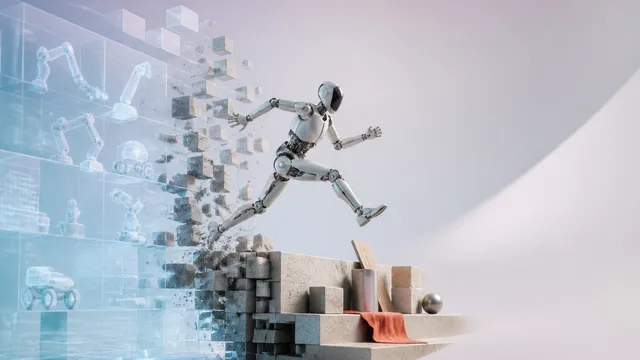
Robotics in 2026: Real Progress, Real Limits
Top AI and robotics researchers gathered at YC to map what's actually been solved—and what hasn't. Here's an honest account of where the field stands in 2026.
Elon Musk on AI, Global Power Shifts & Future Jobs
Elon Musk discusses AI's impact on jobs, US-China AI race, and a future of abundance.
AI and C++: A System Programmer's New Ally
Explore AI's impact on C++ system programming and its balance with human expertise.

Claude Code and AI-Driven SEO for Shopify Stores
A live walkthrough of using Claude Code, SEMrush MCP, and Shopify to build AI-optimized pages raises real questions about where SEO is heading.

Garry Tan's Blueprint for the AI-Native Company
Y Combinator's Garry Tan argues that how you organize AI matters more than which AI you use. Here's what that means in practice.