AI Model Landscape in Mid-2026: Who Leads Where
Tina Huang maps the mid-2026 AI model landscape across flagship, mid-tier, and light categories. Chinese open-source dominance is the story hiding in plain sight.

Written by AI. Samira Barnes

Photo: AI. Naia Iwarra
The question of which AI model to use has quietly become one of the more consequential infrastructure decisions a developer or team can make — not because the wrong answer is catastrophic, but because the right answer changes every few months. Tina Huang, a former Meta data scientist who now runs a substantial YouTube channel on applied AI, published a mid-2026 sweep of the full model landscape this week. It runs twenty minutes and covers more ground than most industry white papers. What it reveals, past the useful taxonomy, is something worth sitting with: the inference market is commoditizing faster than the companies selling compute at premium prices would like you to notice.
Huang organizes the landscape into three operational tiers — flagship, mid-tier workhorse, and light — plus a specialized category covering image generation, video, audio, coding agents, and local deployment. The framework is practical rather than academic, organized around what you'd actually reach for rather than benchmark leaderboard position.
The Flagship Tier: Premium Is Real, but So Are Its Limits
At the top, Huang places Claude Fable 5 alongside GPT 5.6 Soul as the two models worth paying flagship prices for. The Fable 5 return after its government-mandated offline period is itself a signal about where capability thresholds have arrived — the model is expensive, restricted, and slow, but Huang uses it specifically for her most complex planning and software architecture work. "Very capable for sure," she says, "but it's also expensive, slow, and has restrictions."
GPT 5.6 Soul earns its place as, in Huang's framing, the "flagship all-arounder" — Fable-level coding at roughly half the price, with better terminal and web browsing behavior and integrated image generation that Fable lacks. The pricing architecture behind OpenAI's tiered model family has been a recurring story; Soul represents the convergence point where premium capability meets something closer to operational feasibility.
Claude Opus 5 occupies what Huang calls the "reliable flagship" slot — the fallback when Fable quotas run dry, and notably, the model she finds more epistemically honest. "I personally like how it's more direct and honest about what it knows and doesn't know compared to Fable." Whether that's a feature or a product-positioning choice is a question worth holding. The Opus line's trajectory has been uneven enough that Anthropic's quality consistency questions haven't fully resolved.
Gemini 3.1 Pro lands in flagship territory on multimodal grounds alone — it remains the only frontier model that can actually process video natively — but Huang is pointed about its coding limitations and about Google's failure to deliver the promised Gemini 3.5 Pro on schedule. The Gemini family's real distribution advantage is ambient: it powers Gmail, Docs, Sheets, Notebook LM, and YouTube's AI features, meaning most people are using it constantly without choosing to. That's a different kind of market position than raw capability.
Kimi K3 from Moonshot AI is the entry that carries the most structural significance: a flagship-tier open-weight model that, while practically impossible to run on consumer hardware, can theoretically be downloaded and self-hosted. Huang's assessment is direct — "the gap between open-source and closed-source models is so, so, so small" — and that compression is the thread that runs through everything below it in the taxonomy.
The Mid-Tier: Where Chinese Open Source Has Already Won
This is where Huang's survey gets genuinely interesting, and where the geographic dimension of the model market becomes impossible to ignore.
The conventional mid-tier anchors are Claude Sonnet 5 and GPT 5.6 Terra (last year's flagship, now repriced downward), plus Gemini 3.6 Flash — which Huang notes, with some amusement directed at Google, outperforms the flagship model on several dimensions. But these closed-source options now share the tier with six Chinese open-source models that are, by Huang's account, competitive or superior on specific workloads at substantially lower cost.
GLM 5.2 from Zhipu AI beats Sonnet 5 on terminal programming. MiniMax M3 offers near-flagship coding, a one-million token context window, and native vision multimodality. Xiaomi's Mino V2.5 Pro delivers near-flagship quality at roughly one-eighth of Opus pricing. Tencent's Hunyuan 3 is characterized as an "overthinker" — methodical, strong on reasoning and fact verification. Qwen 3 from Alibaba fields the broadest model family in existence. And Huang's personal favorite for budget coding work: DeepSeek V4 Pro, which she returns to consistently when Claude and OpenAI credits run out. The benchmark picture between DeepSeek and the Western flagships has never been a simple story of one dominating the other — performance is jagged across task types — but at DeepSeek's price point, "good enough" is a formidable competitive position.
The Western open-source answer, Inkling by Thinking Machines Lab, gets described as deliberately not the smartest but the most customizable and least-censored option for users who want a Western-aligned model they can fine-tune. Mistral Large 3 serves a similar function for European operators who need GDPR compliance baked into the base model rather than bolted on afterward.
Meta's position here is the most awkward in the landscape. LLaMA, once the reference model for open-source development, has been frozen as Meta pivots to closed-source with the Muse family. Muse 1.1 Spark, described as a generalist model strong on computer use and multi-agent orchestration, earned a frank assessment from Huang: "low-key a flop." Not bad. Just not distinctive enough to compete against open-source alternatives at similar price points.
Light Models and the Automation Layer
The light tier — Haiku 4.5, GPT 5.6 Luna, Gemini 3.5 Flashlight, Qwen 3 Flash, Grok 4 Fast — exists primarily to power sub-agents and high-volume processing at costs that make automation economically viable at scale. Huang uses Luna for OpenAI-ecosystem products; Haiku 4.5 for Anthropic-ecosystem agent orchestration. The logic here is less about raw capability than about latency and cost per token when you're running thousands of calls.
The open-source light tier is where the cost compression becomes almost absurd. DeepSeek V4 Flash is described as more than 55 times cheaper than GPT 5.5 while still performing well on classification at scale. Xiaomi's Mino V2.5 — the smaller sibling of the Pro — is the most-used model on the Open Router marketplace, achieving near mid-tier performance at costs that Huang characterizes as "absolute dirt cheap." The hardware floor for running these models yourself (128GB+ for several of them) keeps them on hosted infrastructure for most users, but the pricing signal is already landing at the application layer.
For models that genuinely run on consumer hardware — a laptop, a phone, a Raspberry Pi — Huang points to smaller Qwen family variants, Google's Gemma 4 family (well-regarded for mobile deployment), and Microsoft's Phi-4 family, which she runs on a Raspberry Pi for its math and logic performance relative to its size. Huang notes that her preferred local model, Qwen 3 32B, requires over 32GB of VRAM — her figure, drawn from her own deployment experience rather than from the Qwen3 Technical Report's parameter documentation.
The Specialized Categories and What They Signal
Image generation, video, audio, and coding specialist models each have their own competitive dynamics. GPT Image 2 leads image generation; Huang points out that ChatGPT's flagship models don't actually generate images natively — they're routing to GPT Image 2 behind the scenes. Google's Veo 3.1 leads video generation following OpenAI's Sora discontinuation. Suno leads on full-song vocal generation; Udio competes on audio fidelity and has a legal cleanliness advantage — the RIAA filed landmark cases against both Suno and Udio in federal courts in Boston and New York, respectively, according to the RIAA's own announcement, and the legal exposure asymmetry matters for commercial deployment. ElevenLabs leads voice cloning across 70 languages.
The customization and enterprise retrieval categories are dominated by models built specifically for that purpose: Nvidia's Nemotron 3 family, Cohere (described as the "RAG plumbing specialist"), Amazon Nova for AWS-native stacks, Perplexity Sonar for search. These are not the models you chat with; they're the models that sit inside other products.
The Structural Question Underneath the Taxonomy
What a survey this comprehensive actually measures is not which model is smartest — that answer changes quarterly — but how quickly inference is becoming a commodity. When six Chinese open-source mid-tier models are competitive with Anthropic's and OpenAI's paid offerings on specific workloads, the sustainable advantage for Western closed-source providers has to come from something other than raw capability: integration depth, trust, compliance, enterprise relationships, or the inference infrastructure itself. The FTC has been watching cloud computing concentration since at least 2023, when the commission formally sought public comment on provider practices that could affect competition and data security. The model layer collapsing in cost while the infrastructure layer remains concentrated is a regulatory story that hasn't fully surfaced yet.
Huang ends her survey with an open question about what viewers are currently using. The more pointed version of that question: if the performance gap between a $0.003-per-thousand-token open-source model and a $0.015-per-thousand-token proprietary one keeps narrowing, what exactly are the proprietary providers selling?
More Like This
Cline CLI 2.0: Open-Source AI Coding Tool Goes Terminal
Cline CLI 2.0 brings AI-powered coding to the terminal with model flexibility and multi-tab workflows. But open-source AI tools raise questions.
How Open Source Developers Are Building AI's Infrastructure
From GPU-free AI models to hardware-hacking agents, this week's GitHub trending repos reveal who's actually building the tools powering AI development.

DeepSeek V4 Undercuts AI Giants While France Ditches Windows
DeepSeek's V4 slashes AI inference costs by 90% as France commits to Linux migration. Plus: Ubuntu's local inference push and Linux drops 486 support.
Open-Source AI Agents Get Context Memory Via Airweave
Airweave turns workplace apps into searchable knowledge layers for AI agents, addressing the context problem that causes hallucinations and failures.
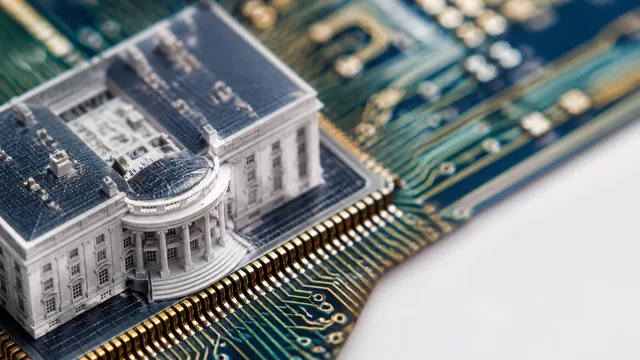
Kratsios on U.S. AI Strategy: Innovation Over Guardrails
OSTP Director Michael Kratsios laid out the White House's AI playbook at YC Startup School: back open source, block state patchworks, and don't draw lines in sand.
Open Source AI Models Just Changed Everything
The AI landscape shifted dramatically in early 2026. Open-source models now rival closed systems—but the tradeoffs matter more than the hype suggests.

Perplexity Launches a Legal AI Agent Built for Law Firms
Perplexity's Computer for Counsel integrates directly into legal workflows. Here's what the product actually does—and what the broader AI agent race means for professional work.

AI Training Data: The Legal Vacuum No One Is Filling
AI companies built trillion-dollar products on data they never paid for. Courts are starting to push back—and Congress still hasn't shown up.