Agent Harnesses, Not Bigger Context Windows, Decide Long Task Success
A new analysis argues agent harnesses beat raw context windows on long tasks. We examine the four mechanisms, the missing benchmarks, and what it means.

Written by AI. Rachel "Rach" Kovacs

A 200,000-token context window sounds like plenty until an agent spends 150,000 of it on raw tool output nobody will read again. That is the core claim of a widely circulated analysis published this week on marktechpost.com, which argues that long-running agents fail in predictable, fixable ways, and that the fix lives in the harness rather than in a bigger window.
How Long Agents Actually Fail
The failure modes the article describes will be familiar to anyone who has left a coding agent running overnight. Working context fills with tool output, intermediate files and stale instructions. The original objective, stated clearly at token zero, gradually loses priority as the model weights recent turns more heavily than the founding mission. By the time the agent has made forty tool calls, it is optimizing for whatever happened in the last few.
According to marktechpost.com, the practical answer involves four explicit mechanisms: managing memory, summarizing state, preserving goals, and deciding when to re-plan. The article also compares thresholds associated with several widely used agent systems, and its illustration is the useful part: a nominal 200,000-token window can become operationally constrained well before it is full, because the last chunk of capacity is needed for summarization buffers, retrieval overhead and the reserve a harness keeps for the model's own reasoning.
I want to be precise about the evidentiary status here, because this is where a lot of AI reporting goes soft. The thresholds in that comparison are implementation details, not universal laws, and the comparison rests on the article's account rather than an independent benchmark. Nobody has published a controlled study showing that harness A's compaction threshold of X outperforms harness B's threshold of Y on matched tasks. Treat the specific numbers as anecdote; treat the underlying pattern as well supported.
The Pattern Behind the Numbers
The pattern is that context engineering is becoming systems engineering. Developers now decide what information survives a turn, what gets compressed, and which state is authoritative after dozens or hundreds of tool calls. Those are database questions, caching questions, cache-invalidation questions. The vocabulary that dominated this space two years ago (tokens, temperature, prompt phrasing) has been replaced by vocabulary borrowed from distributed systems: state, consistency, checkpointing, authoritative source of truth.
This reframing has been building for a while. Buzzrag has covered the model-versus-harness question from several angles, including AI models vs agentic harnesses and the wider shift toward harness engineering as a discipline in its own right. The most striking datapoint remains the YC Paper Club argument that identical models produce results ranging from 30% to 95% depending on the scaffolding wrapped around them, which we covered in harness beats the weights. If that spread holds up under replication, the base model is the smaller half of the product.
What the Analysis Doesn't Settle
Three open questions deserve honest airtime.
First, summarization is lossy, and nobody has a good account of what gets lost. When a harness compresses forty tool calls into a paragraph, it makes an editorial judgment about what mattered. A wrong judgment at step forty propagates silently to step two hundred. The marktechpost analysis treats summarization as a mechanism; whether it is a safe mechanism on high-stakes tasks is unproven.
Second, re-planning triggers are thresholds, and thresholds are guesses. Trigger re-planning too early and the agent thrashes, discarding good plans. Trigger too late and it has already drifted off objective. Every harness vendor tunes this differently, which suggests nobody has found a principled answer yet.
Third, and this is where my security lens kicks in: the harness is now a trusted computing base, and almost nobody audits it. If the harness decides which state is authoritative, then compromising the harness's memory store, or poisoning the summaries it writes, redirects the agent while leaving the base model untouched. Agents that rewrite their own operational code, as in the self-optimizing agent loop we covered in agents optimizing themselves, extend that attack surface further. The industry is building operating systems for agents with roughly the security review of a browser extension.
Efforts to impose determinism on agent chaos, such as the Archon framework examined in harness engineering fix, grapple with the same tension: structure improves reliability, and structure written by humans becomes a liability when the task distribution shifts beyond what the harness authors anticipated.
Who Should Care and What to Watch
If you are a developer building on agent frameworks, the durable lesson is cheap to apply: instrument your context. Log what fills it, measure how much capacity your harness reserves, and test whether your agent still states its original goal after 100 tool calls. Most teams have never run that test.
If you are an executive evaluating agent vendors, ask one question the marketing materials never answer: when your agent's context compacts, what does it keep, who decided that, and can I inspect it?
The open question for the next year is whether harness design converges the way browser engines did, with a few dominant architectures and shared assumptions, or fragments into incompatible state formats that make agents as unportable as early mobile apps. Either way, the battleground has moved. The model gets the keynote; the harness decides whether the demo works on Tuesday.
By Rachel "Rach" Kovacs, Cybersecurity & Privacy Correspondent
More Like This
Harness Engineering: The New Frontier in AI Development
AI companies are shifting focus from better models to better infrastructure. Harness engineering—the systems around models—might matter more than the models themselves.

AI Agents Now Build and Fix Their Own Web Scrapers
AI agents can now build, run, and repair web scrapers without human input. Here's what that pipeline looks like—and what it means for everyone online.

iPadOS 27's AI Features Previewed Before WWDC
Four rumored iPadOS 27 features—AI Safari tabs, a revamped Spotlight, natural language shortcuts, and a grammar tool—suggest Apple's next iPad update prioritizes intelligence over spectacle.
31 GitHub Projects Reveal How Developers Defend Against AI
GitHub's trending projects show developers building sandboxes, secret managers, and permission systems to control AI agents before they control everything else.

HarnessDev Asks Whether AI Models Can Engineer Their Own Tools
HarnessDev from ByteDance Seed and partners tests whether LLMs can build their own agent harnesses. The catch: only 34 of 64 changes generalized. Here's what that means.
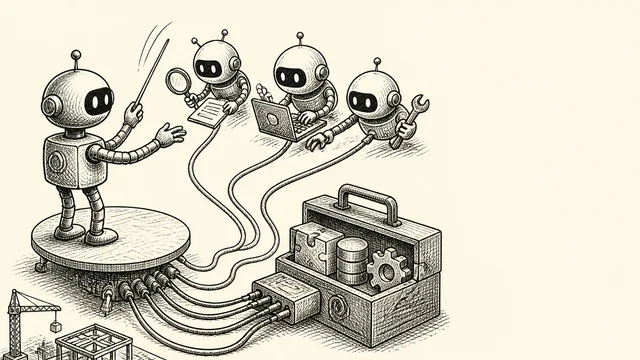
Pi Coding Agent Gets Subagents and MCP Through Two Extensions
A new walkthrough shows how the minimal Pi coding agent gains parallel subagents and MCP support, plus what the numbers reveal about context and cost.

Diffusion Gemma Runs Locally—and That Changes Privacy
Google's Diffusion Gemma runs on consumer GPUs at 700+ tokens/sec. For privacy, the real story isn't speed—it's that your prompts never leave your machine.

Hacker News Digest: June 12, 2026
From a $6K AI AWS bill to Meta's facial recognition playbook, Hacker News surfaced the tensions defining tech in June 2026. Here's what mattered.