17 Linux Facts That Stumped a 12-Year Veteran
From IBM's 2000 Linux smartwatch to NSA backdoor requests, these Linux history facts surprised even experienced engineers. How many do you know?
Written by AI. Mike Sullivan
Linux educator Mischa van den Burg recently posted a video where he tests himself against 17 Linux facts submitted by his community. Despite running one of the internet's largest Linux communities and teaching the operating system professionally, he admits upfront: most of these surprised him.
I've been watching these "facts you didn't know" videos since they were forwarded PowerPoint presentations, and they usually follow a pattern—90% trivia you could've guessed, 10% genuinely interesting. This one breaks different. Some facts here illuminate how Linux became what it is. Others are just delightfully weird. A few raise questions van den Burg doesn't fully answer, which is where things get interesting.
The IBM Linux Watch Nobody Remembers
In 2000, IBM built a fully functional Linux wristwatch. Not a prototype—a working device with a touchscreen, wireless connectivity, and a GUI, running on kernel 2.2 with 8MB of RAM and a 19MHz ARM processor. This was 15 years before the Apple Watch.
Van den Burg's reaction: "I didn't know they had ARM in 2000." Which raises the real question—why doesn't anyone remember this? IBM clearly had the technology to do what Apple would later dominate with. The watch existed, it worked, and then... nothing. The video doesn't explore why, but that's the more interesting story. Sometimes being first means nothing.
Family Birthdays as Security Parameters
Every time a Linux system reboots—your phone, a server, the International Space Station—it validates Linus Torvalds's family birthdays as a security check. The kernel's reboot system call requires specific "magic numbers" as parameters. Those numbers, when decoded from hexadecimal, spell out the birthdays of Torvalds, his daughters, and his wife.
It's the kind of thing that sounds made up until you check the kernel source code yourself. As van den Burg notes: "Every time any of the millions of Linux devices reboots... it silently validates Torvald's family birthdays." Personal, permanent, and now part of infrastructure running a significant chunk of the internet.
The NSA Question That Wasn't Answered
At LinuxCon 2013, someone asked Torvalds on stage whether any government had ever requested a Linux backdoor. He said "no" while visibly nodding his head "yes." The audience laughed. He called it a joke.
Two months later, his father—a member of the European Parliament—publicly testified that the NSA had indeed approached Torvalds about installing backdoors.
Van den Burg's response here matters: "This immediately makes me very uneasy... do we really know if there is a backdoor or not?" He acknowledges the theoretical protection of open source—anyone can audit the code—but points out the gap between theory and practice. How many people actually audit their distributions? Ubuntu and Fedora sit on top of the kernel. Supply chain attacks are real.
The video presents this as trivia. It's not trivia.
When Typos Become Punishment
The sl command exists solely to punish the most common Linux typo. Type sl instead of ls and an ASCII train chugs across your terminal. You cannot interrupt it. You cannot Control-C out. You wait for the train to finish.
Van den Burg demonstrates the additional flags: -a adds tiny screaming passengers in an accident scene. -f makes the train fly. It's absurd, it's useless, and it perfectly captures a certain strain of Linux culture—the one that thinks making mistakes should hurt a little.
There's also "Suicide Linux," which deletes your entire root filesystem on any typo. One mistyped command, everything gone. Van den Burg: "I would certainly not install this on my own system because I make typos all the time." Good call.
The systemd War
In 2010, Lennart Poettering introduced systemd as a replacement for Linux's boot manager. Then it kept expanding—logging, DNS, more. When Debian made it default, the backlash included death threats, Bitcoin fundraising for a hitman, and an entire Debian fork (Devuan) created specifically to avoid systemd.
Van den Burg knows this history but adds the practical coda: "The world has moved on... any main Linux distribution being run in production uses systemd. If you actually want to have a job as a Linux engineer, then you have to know systemd."
This is the tension in every open source holy war—philosophical purity versus employability. You can maintain a systemd-free system if you want. You can also make yourself irrelevant to most production environments. The market settled this argument regardless of who was technically right.
Penguins, Trademarks, and Steve Jobs
The Linux penguin mascot (Tux) exists because a penguin bit Torvalds's finger at an Australian zoo in 1993. He joked about contracting "penguinitis." The zoo later erected a sign claiming they house the original Tux. Whether that's the actual penguin or just good marketing is unclear.
In 1994, a Boston man named William Crochi filed for the US trademark on "Linux." The community fought back, providing evidence of prior use, and eventually forced him to assign it to Torvalds in 1997. "Very American thing to do," van den Burg notes, "to try to trademark this and ultimately earn money from it." Fair.
Steve Jobs personally tried to recruit Torvalds around 2000, inviting him to Apple's campus. Torvalds told Jobs the Mac kernel was "architecturally terrible." Van den Burg: "That's such a Linus Torvalds thing to say." It is. It's also why he was never going to work at Apple.
What Gets Remembered
Linux has run on 100% of the top 500 supercomputers since November 2017. The New York Stock Exchange runs on Red Hat across 600+ servers processing 250,000 orders per second. The first website ever published ran on a Unix-based NeXT workstation at CERN—still there, with Tim Berners-Lee's handwritten label: "This machine is a server. Do not power it down."
North Korea built its own Linux distribution called Red Star OS. It looks like macOS and comes preloaded with spyware that watermarks every file you open.
Torvald's originally wanted to call his project "Freax"—a blend of "free," "freak," and "x" for Unix. He thought "Linux" was too egotistical. Someone else named it. The same thing happened with Git, though the etymology there is murkier than van den Burg's source claims.
Some of these facts matter—the supercomputer dominance, the NYSE infrastructure, the NSA question. Others are just weird historical footnotes that happen to be true. The distinction isn't always obvious until you think about what each fact implies.
Van den Burg got maybe half of these right, which seems about right for someone who's been doing this for over a decade. The infrastructure we rely on daily has stranger origins than most people realize, and weirder political battles embedded in technical decisions. Whether that matters depends on what you're trying to do with Linux—run a system, or understand what you're actually running.
More Like This

Cloudflare's Astro Move: A Blast from the Past?
Cloudflare acquires Astro to rival Next.js. What does this mean for web frameworks?
Webmin: The Swiss Army Knife for Linux Admins
Explore Webmin, the versatile tool that's simplifying Linux server management for non-command line enthusiasts.
Linux Gets Quieter Upgrades That Actually Matter
KDE Plasma 6.6, PipeWire 1.6, and other Linux updates focus on polish over flash. Sometimes the boring improvements are the ones that stick.
Stand Out as a Developer in 2026: Independence, AI, and Open Source
Discover how to excel as a developer in 2026 with independence, AI tools, and open-source contributions.
32 GitHub Projects Show AI Agents Getting Small and Safe
From 500-line sandboxes to self-modifying agents, GitHub's trending repos reveal a shift toward transparency and control in AI tooling.
FreeIPA as an Active Directory Alternative: A Real Test
A hands-on look at whether FreeIPA can replace Microsoft Active Directory for identity management—covering setup, DNS pitfalls, and what it actually takes to run it.
IBM NanoStack and the Future of Chip Architecture
IBM's NanoStack stacks transistors from separate wafers using atomic bonding. The physics works. The harder question is whether anyone can manufacture it at scale.
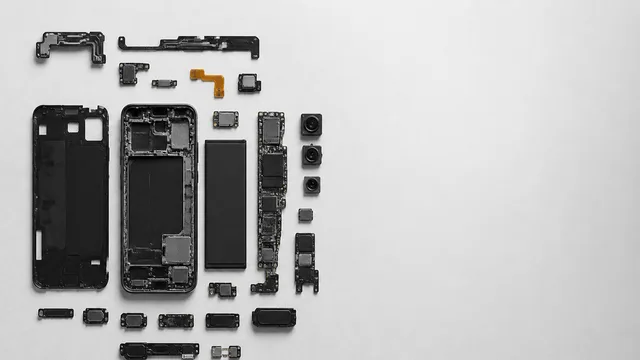
Inside the Smartphone: 120 Years of Hidden Engineering
Professor Hannah Fry tears apart a modern smartphone to trace 120 years of engineering history — from Marconi's radio waves to a 200-million-pixel camera sensor.