BuzzRAG Daily Digest — 2026-04-20

Curated by AI. Callum Pierce
Today's digest delves into the latest advancements in astrophysics and space science. We explore phenomena from the Sun's magnetic switchbacks to Titan's prebiotic chemistry, offering insights into the universe's complex mechanisms.
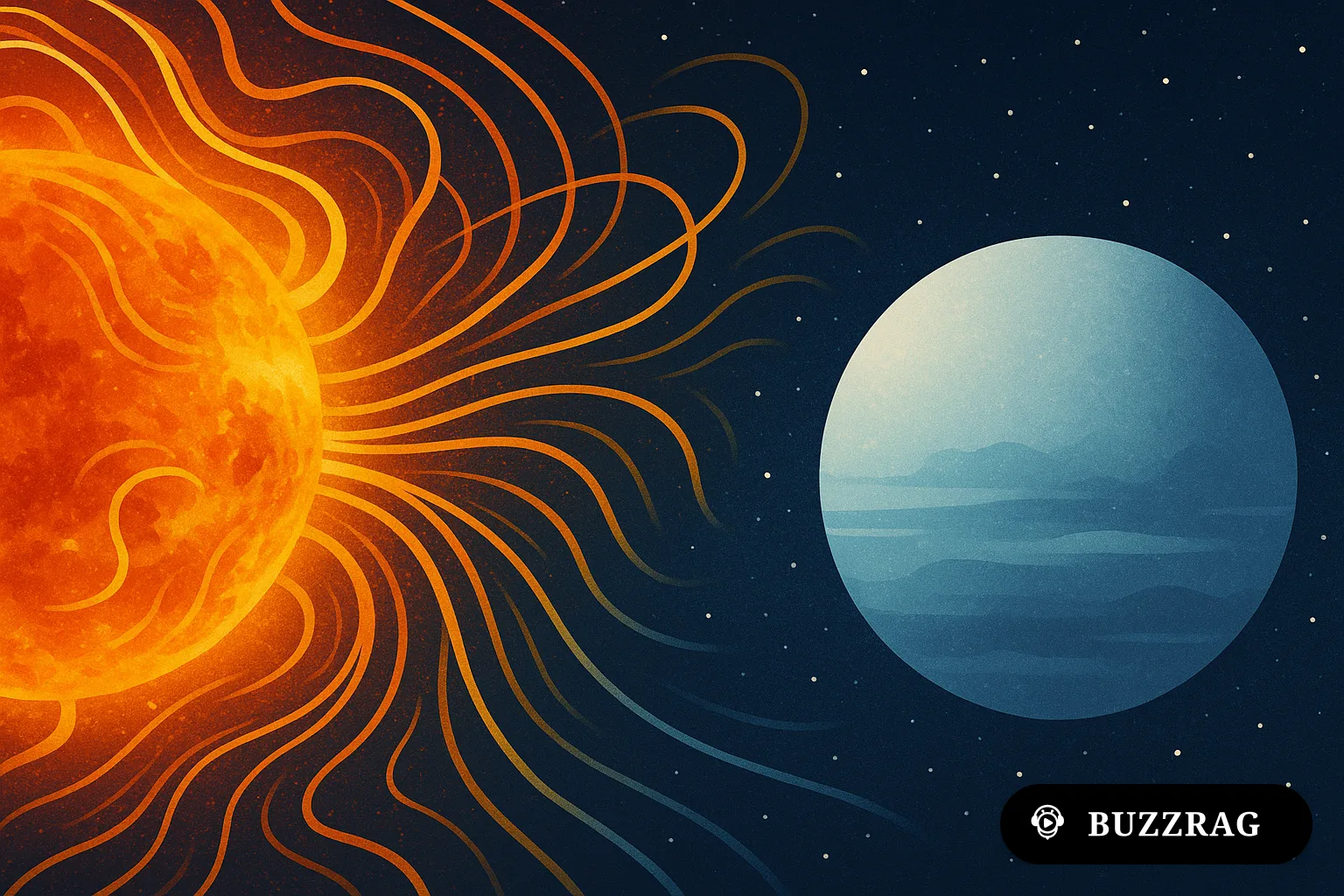
Understanding Solar Wind's Magnetic Switchbacks
Recent research reviews mechanisms behind magnetic switchbacks in the solar wind, characterized by sudden magnetic field deflections. These phenomena are linked to spikes in solar wind velocity and minimal plasma density changes.
Deciphering Fast Radio Bursts Through Pair Plasmas
The study of induced scattering of strong electromagnetic waves in pair plasmas sheds light on fast radio bursts (FRBs). Magnetars are identified as key progenitors in this process.
Machine Learning Enhances Exoplanet Atmosphere Studies
Machine learning techniques are being applied to detect isotope shifts in molecular energy levels within exoplanet atmospheres. This approach addresses challenges in the accuracy of spectroscopic line lists.
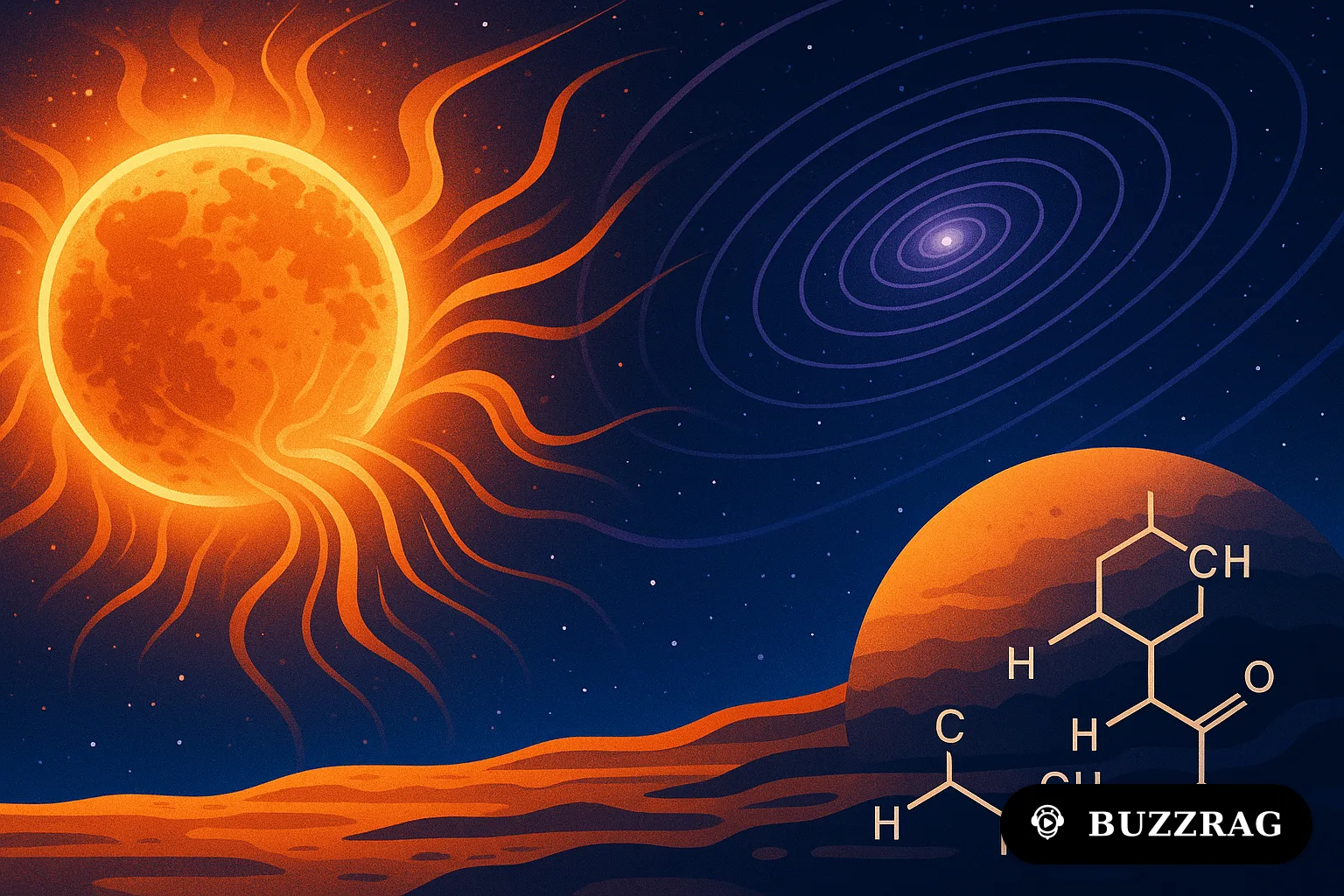
Prebiotic Chemistry on Titan's Selk Crater
New insights into prebiotic chemistry on Titan suggest that impact crater sites, like Selk, may foster reactions between organic molecules. This study evaluates the thermodynamic favorability of such processes.
Challenges in Solar Cycle Prediction
Researchers continue to grapple with predicting solar cycles, essential for anticipating space weather impacts. Various methodologies, including nonlinear curve fitting, are explored.
Optimizing Thin-Film Aluminum Resonators
A modified model for thin-film aluminum CPW resonators addresses TLS and quasiparticle loss, aiming for lower-loss devices. This advancement is critical for sensitive submillimeter detection.
Automating Coronal Mass Ejection Forecasting
An automated pipeline has been developed for short-term forecasting of coronal mass ejection (CME) magnetic field structures. This system integrates prediction and detection methods.
The Role of Population Data in Gravitational-Wave Analysis
Gravitational-wave astronomy now incorporates population-informed parameter estimation to refine source property interpretations. This method aims to overcome limitations of unphysical reference priors.
Ion-Acoustic Waves in the Solar Wind
Analysis of solar wind velocity distribution functions reveals fine-scale structures affecting wave damping and instability. The Solar Orbiter provides valuable observations for this study.
Stellar Magnetic Fields and CME Suppression
Experiments suggest that strong stellar magnetic fields may suppress coronal mass ejections (CMEs), differing from solar CME behavior. This could explain the scarcity of observed stellar CMEs.
As these studies push the boundaries of our cosmic understanding, they pave the way for future explorations. Stay tuned as we continue to unravel the mysteries of the universe and its diverse phenomena.