Venice DB: A Planetary Data Odyssey
Explore Venice DB's unbundled architecture and CAP theorem insights in building planetary-scale systems.

Written by AI. Mike Sullivan
Venice DB: A Planetary Data Odyssey
Remember the 90s? When "planetary-scale" meant your Tamagotchi was still alive after a week? Fast forward to today, and people like Félix GV are architecting data systems that make that digital pet look like, well, a digital pet. In a recent chat with GOTO Conferences, Félix and Olimpiu Pop took us on a tour of Venice DB, a database system that might just be the McFly family's DeLorean of data management.
A Roll Call of Components
Venice DB is what the cool kids call an "unbundled" database. Each part operates as its own distributed system—a bit like a rock band where every member insists on a solo. Félix explains, "One big part of the database was Kafka... that was our write-ahead log component and also our commit log or replication log between the replicas." In other words, Kafka is the drummer keeping everyone in time, but sometimes it just wants to do its own thing.
And then there's the "eager cache" pattern, which sounds like a euphemism for my teenage self waiting for a dial-up connection. It actively loads data ahead of time, turning your client application into another follower replica of the database. But like every convenience from the microwave to the smartphone, it comes with a cost—more local resources.
Chaos Engineering: Playing with Fire
In the spirit of every 90s disaster movie where the hero tests a theory by risking the world's destruction, Venice DB employs rigorous chaos engineering. Félix mentions, "We did what we called load tests... where we would fail out traffic out of data centers and concentrate the traffic into a single data center." It's a bit like seeing if your car can run on three wheels by taking it for a spin down the Autobahn.
These "experiments" are not just for show. The idea is to regularly test whether the system can handle stress and still function, akin to making sure your parachute opens before jumping out of a plane. Félix is upfront about the stakes: "Having reliability mechanisms that you do not regularly test basically means you don’t have reliability mechanisms."
The CAP Theorem: Choose Your Adventure
Ah, the CAP theorem. Like a Rubik's Cube, it's easy to understand for a fleeting moment before it turns into a colorful mess. In the realm of distributed systems, it asks you to pick two of three attributes: Consistency, Availability, and Partition tolerance. Félix GV describes it as almost being in a constant state of network partitioning, with asynchronous writing sacrificing strong consistency from the get-go.
This might sound like a compromise, but in the land of derived data systems like Venice, it's a strategic decision. "It’s almost as if we were continuously network partitioned," Félix notes, highlighting how this approach inherently prioritizes availability over consistency—much like choosing between a cell phone's battery life and screen brightness.
DuckDB: Because SQL is Still Cool
In a delightful twist, Venice DB has been experimenting with integrating DuckDB, an SQL engine. It might seem counterintuitive in a system handling mostly machine-generated data, but as Félix points out, "It was a way to test if our abstractions were flexible enough." Sometimes you just need SQL to ask the important questions—like why your cassette tape collection is still missing that one B-side track.
As we navigate this brave new world of planetary-scale databases, it’s worth remembering that the more things change, the more they stay the same. Even in 2026, when we might be using VR headsets to attend virtual conferences, the fundamentals of data management—reliability, consistency, and scalability—will continue to echo the lessons of tech revolutions past.
More Like This
Effect-Oriented Programming: A New Hope?
Exploring Effect-Oriented Programming: simplifying complexity and enhancing reliability in software development.
Lean Tech: Reviving Old School Principles
Exploring lean and agile in tech: a nostalgic journey with a modern twist.
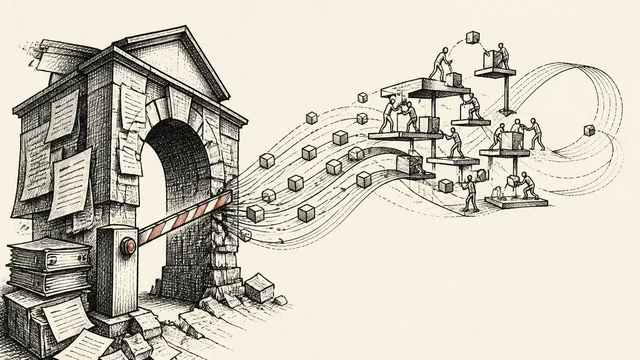
Enterprise Architecture Still Runs on Waterfall Time
Simon Rohrer argues EA must shed its phase-gate past and align with DevOps, outcomes, and evolution. The diagnosis is right. The prognosis is harder to share.
Your CI/CD Pipeline Is Now Your Product
CircleCI's Olaf Molenveld on why managing deployment infrastructure has become as complex as the software it produces—and what that means for teams.
Effect-Oriented Programming: Making Side Effects Safe
Three authors explain how effect-oriented programming brings type safety to the messy, unpredictable parts of code—without the intimidating math.
Decoding LLM-D: AI's New Traffic Controller
Explore LLM-D's role in optimizing AI performance with Kubernetes and intelligent routing.
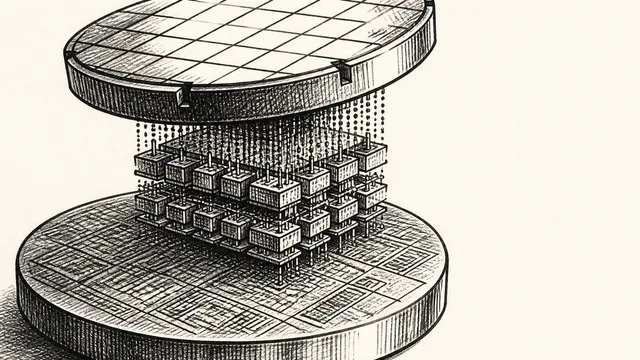
IBM NanoStack and the Future of Chip Architecture
IBM's NanoStack stacks transistors from separate wafers using atomic bonding. The physics works. The harder question is whether anyone can manufacture it at scale.

Inside the Smartphone: 120 Years of Hidden Engineering
Professor Hannah Fry tears apart a modern smartphone to trace 120 years of engineering history — from Marconi's radio waves to a 200-million-pixel camera sensor.