Effect-Oriented Programming: A New Hope?
Exploring Effect-Oriented Programming: simplifying complexity and enhancing reliability in software development.

Written by AI. Mike Sullivan
Once upon a time in the mystical land of Crested Butte, where ski slopes meet open space conferences, three wise men—Bill Frasure, Bruce Eckel, and James Ward—gathered to discuss the magic of Effect-Oriented Programming (EOP). If this sounds like the setup for a tech fairy tale, it's because the promises of EOP read like one: enhanced software reliability, composability, and a way to finally tame those pesky side effects.
The Quest for Simplicity
In the 80s, the only side effect we worried about was the fallout from mixing Pop Rocks and soda. Today, in the world of software, side effects are the unpredictable gremlins that can make a programmer’s life... interesting. EOP aims to provide the tools to handle these gremlins with a composed calmness that would make Mr. Miyagi proud.
The authors, having distilled their tome from a hefty 250 pages to a lean 100, echo the wisdom of the past: less is more. "What can we strip out of this?" became their mantra, channeling a Marie Kondo-esque focus on essential knowledge over intimidating jargon.
"It’s important, Andrew, but is it essential?" their editor would ask, highlighting the drive to make EOP accessible to anyone who’s ever written a line of code.
What Are Effects, Really?
If you’ve ever tried to compose a catchy jingle from the cacophony of a dot-matrix printer, you know the essence of EOP: making bigger, harmonious pieces out of smaller, unpredictable ones. "Effects are operations that can be composed," Eckel explains. Think of it like building a LEGO set without losing pieces to the sofa cushions.
EOP's secret sauce lies in its approach to deferred execution. It's like deciding whether to watch 'Back to the Future' now or after you've finished that looming deadline—only here, you have to be very deliberate about when and how you execute these operations.
The Compiler: Your Annoying Yet Helpful Friend
EOP’s reliance on the compiler to check and manage errors might seem like the nagging voice of Clippy, Microsoft’s infamous paperclip assistant. But this time, it’s actually helpful. The compiler won’t let you skip out on error handling with a mere "or die" option, a friendly reminder that ignoring problems doesn’t make them disappear.
Ward points out, "The compiler can also tell you when you're being too defensive in your code." It’s a bit like having a backseat driver who actually knows the roads better than you do.
Beyond Scala: A Growing Ecosystem
While Scala is the home turf for EOP, there’s a burgeoning diaspora. TypeScript has embraced a ZIO-like framework, and new languages like Unison and Roc are weaving effects directly into their fabric. Python might join the party once it figures out its type system, currently as reliable as a dial-up connection.
The big question remains: Will EOP be the next big thing or just another tech fad that fades like a Tamagotchi battery? With its focus on simplifying complexity and enhancing reliability, it might just be the programming paradigm we didn’t know we needed—until now.
More Like This
Venice DB: A Planetary Data Odyssey
Explore Venice DB's unbundled architecture and CAP theorem insights in building planetary-scale systems.
Lean Tech: Reviving Old School Principles
Exploring lean and agile in tech: a nostalgic journey with a modern twist.
Enterprise Architecture Still Runs on Waterfall Time
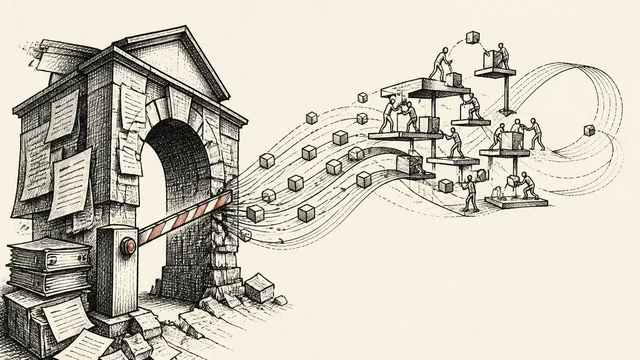
Simon Rohrer argues EA must shed its phase-gate past and align with DevOps, outcomes, and evolution. The diagnosis is right. The prognosis is harder to share.
Your CI/CD Pipeline Is Now Your Product
CircleCI's Olaf Molenveld on why managing deployment infrastructure has become as complex as the software it produces—and what that means for teams.
Effect-Oriented Programming: Making Side Effects Safe
Three authors explain how effect-oriented programming brings type safety to the messy, unpredictable parts of code—without the intimidating math.
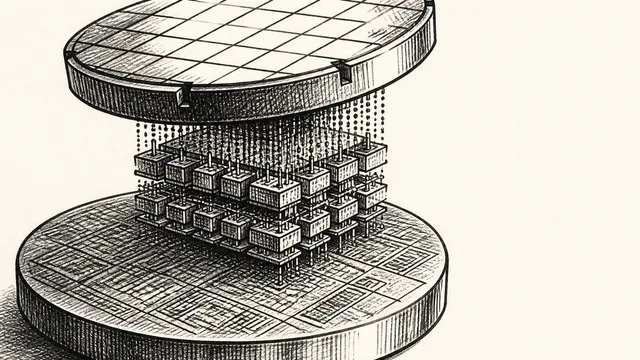
IBM NanoStack and the Future of Chip Architecture
IBM's NanoStack stacks transistors from separate wafers using atomic bonding. The physics works. The harder question is whether anyone can manufacture it at scale.

Inside the Smartphone: 120 Years of Hidden Engineering
Professor Hannah Fry tears apart a modern smartphone to trace 120 years of engineering history — from Marconi's radio waves to a 200-million-pixel camera sensor.