Lean Tech: Reviving Old School Principles
Exploring lean and agile in tech: a nostalgic journey with a modern twist.

Written by AI. Mike Sullivan

If you've been in the tech game as long as I have, you might remember a time when computers took up entire rooms and the height of sophistication was a dot matrix printer. Fast forward to today, and we're still navigating the same old corridors of hype with new labels slapped on the doors. Enter the Lean Tech Manifesto, a nostalgic nod to the days of yore, now dressed in digital garb.
The Lean-Agile Tango
Fabrice Bernhard and Steve Pereira, co-authors of 'The Lean Tech Manifesto,' claim that lean and agile methodologies aren't just buzzwords to fill conference rooms with jargon. They're the yin and yang of modern tech organizations—or so they say. "We're going to build on top of the agile manifesto," Bernhard professes, adding that lean thinking is a way to scale that intention.
Back in the 80s, lean was all the rage in manufacturing. Think of it as the Walkman of production strategies—streamlined, efficient, and a bit retro. But in tech, where everything moves at the speed of a Napster download (pre-lawsuit), there's a new twist: tech-enabled networks of teams.
Misconceptions and Missteps
It's easy to romanticize the past, but not everything from the 90s was a hit—just ask anyone who owned a Zune. Similarly, lean and agile aren't without their critics. The misconception that lean is merely about squeezing every last drop out of human capital has left some teams feeling like they're trapped in a never-ending game of Tetris.
"Lean is this bad thing to squeeze more out of people," Bernhard acknowledges. But he insists that's a narrow view, much like assuming a Tamagotchi is the pinnacle of digital pets. Properly applied, lean principles should enhance, not exhaust, your organization.
The Modern Tech Orchestra
Today, tech companies operate more like orchestras than assembly lines. The focus is shifting from individual virtuoso performances to the harmony of interactions. "We've touched an idea that's going to be big in the next decades," Pereira suggests, likening this evolution to the transition from cassette tapes to streaming services.
The challenge, as always, is whether organizations can keep up with the tempo. Lean and agile methodologies offer a framework, but it's up to the players to hit the right notes. While lean principles might help you scale, the question remains: can they keep your company from sounding like a garage band still stuck in their parents' basement?
So, as you ponder whether to dust off your old Commodore 64 or embrace the latest AI fad, remember: the more things change, the more they stay the same. Lean and agile might just be the vinyl records of tech methodologies—old school, but still spinning.
More Like This
Ternary Models Promise Full AI Power at Fraction of Size
PrismML's new ternary models claim to deliver FP16-level AI accuracy at 7-8x smaller size. We examine what's real and what's still theoretical.

Effect-Oriented Programming: A New Hope?
Exploring Effect-Oriented Programming: simplifying complexity and enhancing reliability in software development.

Venice DB: A Planetary Data Odyssey
Explore Venice DB's unbundled architecture and CAP theorem insights in building planetary-scale systems.

YouTuber Builds Enterprise Storage Server for $2,300
A DIY enthusiast built a custom E3.S storage server for 80% less than commercial options, hitting 91 GB/s speeds with consumer parts and 3D-printed components.
Your CI/CD Pipeline Is Now Your Product
CircleCI's Olaf Molenveld on why managing deployment infrastructure has become as complex as the software it produces—and what that means for teams.
Effect-Oriented Programming: Making Side Effects Safe
Three authors explain how effect-oriented programming brings type safety to the messy, unpredictable parts of code—without the intimidating math.
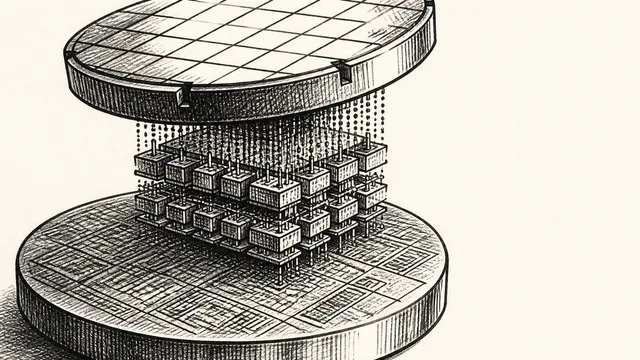
IBM NanoStack and the Future of Chip Architecture
IBM's NanoStack stacks transistors from separate wafers using atomic bonding. The physics works. The harder question is whether anyone can manufacture it at scale.

Inside the Smartphone: 120 Years of Hidden Engineering
Professor Hannah Fry tears apart a modern smartphone to trace 120 years of engineering history — from Marconi's radio waves to a 200-million-pixel camera sensor.