Unpacking Dr. Birch's Unique AES Key Schedule
Explore Dr. Birch’s creative take on AES key scheduling, blending coding and cryptography with unique twists.

Written by AI. Tyler Nakamura
Hey tech explorers! Today we're diving into a pretty intriguing video from Dr. Jonas Birch's YouTube series on designing your own encryption cipher. This is episode 3 of 8, and it's all about creating a key schedule for the AES cipher using C programming. Now, if you're like me, you probably think of key schedules as the magical process behind secure encryption. But Dr. Birch gives it a unique twist. 🚀
Dr. Birch's Creative Take on AES
In the video, Birch sets out to design a key schedule that generates 16 subkeys from a 128-bit encryption key. If you're scratching your head because that doesn't sound like standard AES... well, you're not wrong! Standard AES-128 actually generates 11 round keys (10 rounds plus the initial key), not 16. What Birch is offering is a creative interpretation, or as he might say, a "beautiful" take on key scheduling. So, buckle up! We're in for a ride through cryptographic creativity.
The Fibonacci Twist
One of the standout elements of Birch's approach is his use of Fibonacci numbers as round constants. He states, "In addition to this, we are also going to have 16 round constants which are based on the Fibonacci numbers." Now, in standard AES, round constants (Rcon) are derived from powers of 2 in the finite field GF(2^8). Birch's choice to use Fibonacci numbers isn't part of the official AES design—it’s his own creative spin, adding a layer of mathematical elegance to the process.
The G() Function and Rotations
Birch introduces a function he calls g(), which is reminiscent of a combination of AES's RotWord, SubWord, and Rcon operations. He explains: "We rotate the whole thing to the left seven bit positions. That's step number one." Standard AES rotates a 4-byte word by 1 byte (8 bits), so Birch's 7-bit rotation is another departure from the norm. This function also involves the use of the S-box, a standard component in AES for substitution.
Subkeys Galore
The video claims the generation of 16 subkeys, each 128 bits long. Birch notes, "The output is key zero, k1 to all the way up to K 15 also at 128 bits." In the world of standard AES-128, it generates 11 keys, so once again, Birch is diverging from the traditional path, perhaps to illustrate a different concept or simply to challenge our understanding.
The Technical Underpinnings
For those of you who love diving into the nuts and bolts, Birch's video doesn't disappoint. He provides a detailed explanation of bitwise operations, substitutions using the S-box, and the conceptual analogy to puzzles. While his methods deviate from the official AES specifications, they offer educational value and a fresh perspective on encryption.
Fact Check: Where Birch Deviates
- Subkey Count: Standard AES-128 generates 11 keys, not 16.
- Round Constants: AES uses Rcon derived from powers of 2, not Fibonacci numbers.
- Rotations: AES rotates by 1 byte (8 bits), not 7 bits.
Why It Matters
Dr. Birch's tutorial is a reminder that cryptography can be as much an art as it is a science. His approach, while not aligning with AES standards, encourages viewers to think outside the box and explore the mechanics of encryption in new ways. It’s a testament to the creative potential within technical disciplines.
Whether you're a budding cryptographer or a seasoned programmer, Birch's series offers a platform to learn, question, and innovate. And in the ever-evolving landscape of tech, those are invaluable skills. Until next time, keep exploring and coding your way to new discoveries! 💻
More Like This
What Actually Happens When You Run printf() in C
Dr. Jonas Birch's tutorial reveals the three-layer journey from C library calls to system calls to CPU instructions—using printf() as the unlikely hero.
Quantum Computing Finally Found Its Killer App: Breaking Stuff
Google just moved up the timeline for quantum computers to break encryption to 2029. After decades of promises, code-breaking is what quantum actually does.
Why Regulators Should Care About C Programming Skills
A file compression tutorial reveals the technical knowledge gap undermining tech regulation—and why lawmakers need to understand what they're trying to govern.
Building a Virtual Machine From Scratch Takes Six Hours
A programmer documents building a 16-bit virtual machine in C with custom assembly language, revealing the actual complexity of low-level systems work.
How Cloudflare Uses Lava Lamps to Encrypt the Internet
Cloudflare's San Francisco office has a wall of 100 lava lamps generating entropy for SSL/TLS encryption. Here's why computers can't be truly random.
Three Hours of Debugging a File Compressor in C
Dr. Jonas Birch spent 3.5 hours live-coding a file compressor in C. What the session reveals about real programming work might surprise you.

Meta Faces Lawsuit Over AI-Driven Layoff Decisions
26 former Meta employees allege AI scoring systems—not managers—decided who got laid off. Here's what that means for anyone who wants to work in tech.
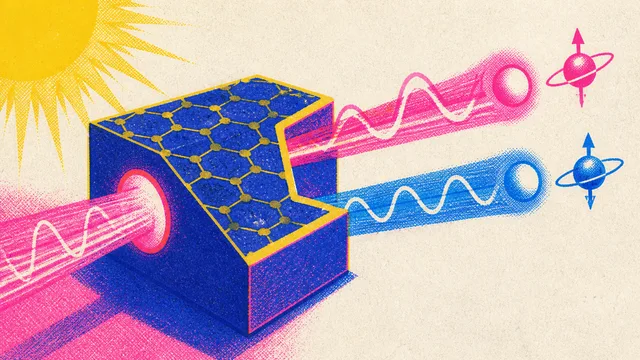
Room-Temperature Quantum Materials Are Here
LSU physicists built a quantum material that works at room temperature. Here's what that actually means for quantum computing, and why it matters right now.