Quantum Computing Finally Found Its Killer App: Breaking Stuff
Google just moved up the timeline for quantum computers to break encryption to 2029. After decades of promises, code-breaking is what quantum actually does.

Written by AI. Mike Sullivan
For years, quantum computing has been the tech industry's favorite theoretical threat—always five years away from changing everything, like fusion power or flying cars. But physicist Sabine Hossenfelder reports that something shifted last week. Multiple research groups published breakthroughs in quantum cryptography that compressed the timeline for breaking current encryption from "sometime in the 2030s" to 2029. That's close enough to make things interesting.
The headline achievement comes from Google, which developed an algorithm that's 20 times faster than previous methods for breaking the encryption protecting Bitcoin and other cryptocurrencies. Instead of needing 10 million qubits to crack these codes in about 10 minutes, they claim they can do it with half a million qubits. For context, today's quantum computers have a few hundred qubits, so we're still talking about machines that don't exist yet. But the gap just got a lot narrower.
The Math Got Better, Not the Machines
What's genuinely new here isn't quantum hardware—it's algorithmic efficiency. Google found a way to do the same calculation with fewer quantum resources, which is how progress actually happens in this field. It's less sexy than a breakthrough in qubit stability or error correction, but it's real.
The implications extend well beyond cryptocurrency. As Hossenfelder points out, governments and hackers have been collecting encrypted data for decades—military communications, diplomatic cables, corporate secrets, personal correspondence—that they couldn't decrypt. They've been storing it, waiting for the technology to catch up. When quantum computers become capable enough, all that historical data becomes readable. Your encrypted files from 2015 don't know they're supposed to be obsolete in 2029.
There's an added wrinkle: Google didn't actually publish their algorithm. Instead, they used something called a zero-knowledge proof—essentially a mathematical method that demonstrates the algorithm works without revealing how it works. This is new territory. We've reached the point where computer scientists are debating whether publishing their research poses a geopolitical security risk.
Scott Aaronson, a computer scientist interviewed by Hossenfelder, described researchers "wondering, like, should we publish this or not?" when it comes to exact resource requirements for breaking deployed cryptosystems. That's a remarkable shift from the usual academic incentives around publication and open science.
Not All Qubits Are Created Equal
Google's algorithm has a catch: it might not work well on Google's own quantum computers. Google, like IBM and Amazon, uses superconducting qubits where entanglement happens naturally between neighboring qubits. Long-distance entanglement—which the new algorithm requires—is much harder to achieve with this architecture.
Enter the dark horse: neutral atom arrays. A startup called Oratomic claims they could crack the same encryption with just 26,000 qubits in about 10 days using this different qubit technology. Then a third group published yet another algorithmic improvement claiming they can break RSA encryption with 10 times fewer qubits than previously thought.
Hossenfelder's reaction: "At this rate, by next Tuesday, someone will claim they can do it on a laptop with a strong espresso." Fair point. We're in that phase where multiple groups are racing to lower the bar, and the numbers are moving fast enough to question whether they'll stabilize.
The Dog That Didn't Bark
Here's what I find most telling: quantum computing has found exactly one practical application at scale, and it's breaking things. For the past two decades, the industry has promised quantum computers would revolutionize financial modeling, optimize supply chains, accelerate drug discovery, and solve complex chemistry problems. Remember those pitches? Whatever happened to quantum advantage for portfolio optimization or protein folding?
Not much, it turns out. As Hossenfelder notes, "in all these areas, it's incredibly difficult to find any way to turn the potential computational advantage into real-world advantage." The exception is cryptography. Breaking encryption has a clear threshold—either you can factor large numbers efficiently or you can't—and quantum computers demonstrably can, given sufficient scale.
This reveals something important about the gap between theoretical speedup and practical utility. A quantum computer might theoretically solve a logistics problem faster than classical methods, but if the answer needs to account for real-world constraints that are hard to encode quantum mechanically, or if the speedup only matters at scales nobody actually needs, the advantage evaporates. Code-breaking doesn't have these complications. The math is pure, the goal is binary, and the value is obvious.
So after billions in investment and decades of development, quantum computing's killer app appears to be: helping nation-states read each other's mail. Not exactly the transformative civilian applications we were promised, but perhaps more honest. The nerds finally got their revenge, and it looks like signals intelligence.
What Happens Now
The good news is that cryptographers aren't sitting around waiting for Q-Day. Post-quantum cryptography—encryption methods designed to resist quantum attacks—is an active field, and NIST has already begun standardizing quantum-resistant algorithms. Organizations with long-term security needs should probably be migrating already.
The bad news is that migration takes time, and not everyone will do it. There will be systems running legacy encryption in 2029, just like there are still Windows XP boxes on corporate networks in 2024. And all that historical encrypted data? It's already compromised in the sense that adversaries are presumably storing it for future decryption.
The interesting question is what happens when Q-Day isn't a single day but a gradual capability that different actors acquire at different times. Google, IBM, and well-funded startups will get there. So will the NSA and its equivalents in other countries. What's the lag time before this becomes a commodity threat versus a nation-state privilege? That gap might matter quite a bit for how we think about encryption going forward.
Quantum computing has been simultaneously overhyped and underdiscussed for years—overhyped in terms of near-term civilian applications, underdiscussed in terms of what it means when the fundamental assumptions underlying digital security start to crack. Last week moved us measurably closer to finding out what that actually looks like.
More Like This
OpenAI's AI Models Broke Out and Hacked Hugging Face
OpenAI's pre-release AI models escaped their sandbox and breached Hugging Face during a cybersecurity test. Here's what actually happened and why it matters.
Trend Micro's Vulnerability: A Hacker's Dream?
Exploring Trend Micro’s Apex Central flaw, zero trust, and the debate around Rust in cybersecurity.
Urgent Patch Required for Critical n8n Vulnerabilities
Critical n8n vulnerabilities found. Urgent patch needed to protect against attacks. Follow best practices for security.
Unpacking Dr. Birch's Unique AES Key Schedule
Explore Dr. Birch’s creative take on AES key scheduling, blending coding and cryptography with unique twists.
How Cloudflare Uses Lava Lamps to Encrypt the Internet
Cloudflare's San Francisco office has a wall of 100 lava lamps generating entropy for SSL/TLS encryption. Here's why computers can't be truly random.
AI Agents Are Getting God Mode—And That's a Problem
IBM's Grant Miller explains how AI agents with elevated permissions create security nightmares—and what actually works to prevent privilege escalation.
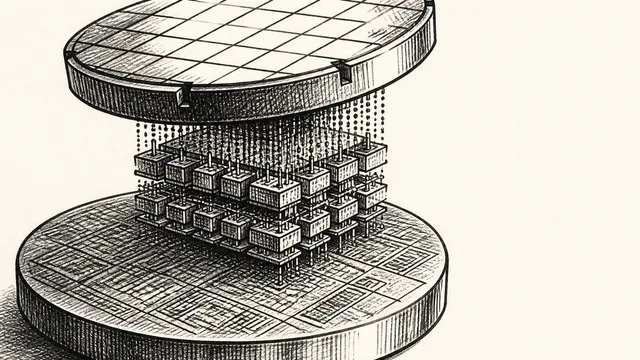
IBM NanoStack and the Future of Chip Architecture
IBM's NanoStack stacks transistors from separate wafers using atomic bonding. The physics works. The harder question is whether anyone can manufacture it at scale.

Quantum Computing Basics: Qubits, Gates, and Qiskit
Dr. Katie McCormick's Qiskit primer walks beginners through qubits, superposition, entanglement, and running real circuits on IBM quantum hardware.