Opus 4.7 Drops Amid Molotov Cocktails and AI Fear
Anthropic's Opus 4.7 launches as a 20-year-old throws a Molotov cocktail at Sam Altman's house. The AI world is splitting in two—and it's getting violent.

Written by AI. Yuki Okonkwo
Someone threw a Molotov cocktail at Sam Altman's house this week. The suspect was active on a "Pause AI" Discord server. Meanwhile, Anthropic dropped Opus 4.7 to a crowd of tech enthusiasts who immediately started testing it on cyberpunk game generators.
These two things happened in the same 24-hour period, and that feels important.
The Model Nobody's Excited About
Opus 4.7 isn't mythos (or MythOS, depending on who you ask). That's the first thing you need to know. Computer scientist Alexander Wissner-Gross put it bluntly on Peter Diamandis's Moonshots podcast: "It is moderately interesting. Is it mythically interesting? No."
What changed? Mostly the interface. All those hyperparameters developers used to tweak—temperature settings, reasoning token limits—they're gone. "The knobs are gone," Wissner-Gross explained. "Now everything, the new guidance is use prompts. Use prompts for everything."
Translation: Anthropic is making their models more conversational and less technical to control. You can't turn the temperature dial to zero for deterministic outputs anymore. Instead, you ask nicely in natural language and hope the model cooperates.
Dave Blundin from Link Ventures tested it immediately and noticed something interesting—Opus 4.7 can now accept images three times larger than before. Huge for corporate workflows, PDFs, PowerPoint decks, all that enterprise stuff that actually makes money. The model also got better at computer use (it successfully installed itself, which is either convenient or slightly terrifying depending on your mood).
But here's what stuck with me: Opus 4.7 can understand images but still can't generate them. Wissner-Gross suspects this is deliberate—Anthropic is "viciously focusing on dollars of economic value created per token" and has decided image generation isn't worth the compute.
When you ask it to make you a diagram, according to Blundin, it "generates pure crap." Cool, cool.
The Numbers Nobody Wants to See
Stanford's Lab for Human-Centered AI just released their 2026 AI Index—their ninth annual report card on artificial intelligence. The findings are a masterclass in contradictions.
AI models now beat top PhDs in science and math benchmarks. Software engineering scores jumped from 60% to 97%. Generative AI hit 53% global adoption in just three years, faster than PCs or the internet ever managed.
But here's the disconnect: only 23% of the American public is optimistic about AI. Among experts who actually work with this stuff? 73% are optimistic.
That's not a gap. That's a chasm.
"99% of the people you bump into on the street are underreacting and unaware," Blundin noted. Which would be fine except some of that 99% are apparently buying Molotov cocktails.
The report also showed model transparency scores dropping from 58 to 40. The most powerful models are now the least accountable—companies are sharing less about how their systems work, what data they trained on, what safeguards exist. AI incidents (documented harms from deployed systems) rose from 233 to 362.
Oh, and Maine just passed the first statewide data center ban in US history.
Two Americas, Same Country
The podcast hosts kept circling back to this split: walk through San Francisco's Market Street and everyone's talking about Anthropic and Opus 4.7. Walk through middle America and people know just enough to be scared.
"The unknown tends to scare people, which is why you see that 23% optimism number," one of the hosts said.
But I think it's more than just unfamiliarity. Only 31% of Americans trust the government to regulate AI. Which sounds damning until you realize trust in the federal government overall sits around 33%, and Congress has a 21% approval rating. Americans don't specifically distrust AI regulation—they distrust everything.
Compare that to China, where 80% of people are optimistic about AI. Different system, different relationship with technology and authority, wildly different sentiment.
The Stanford report showed China now publishing more AI research than the US, though they're still behind on frontier model development. Wissner-Gross attended NeurIPS (the biggest academic AI conference) last year and noticed Mandarin was the dominant language in the hallways. Not English. Mandarin.
"China is publishing more," he said, "but I would view that as sort of leading from behind" since Western labs currently have the capability edge and less economic pressure to share their advances.
The equilibrium could flip, though. If China algorithmically leapfrogs the West, expect the entire publication dynamic to reverse.
When Progress Looks Like Danger
Back to that Molotov cocktail.
The hosts noted this wasn't an isolated incident—there have been attacks on data centers, too. "Social unrest coming as a result of people's fear and people not getting jobs," Diamandis said.
Anthtropic recently published research showing that weaker models can successfully supervise the alignment of stronger ones. Wissner-Gross called this promising for "super alignment"—the idea that humans (who are, let's face it, the weaker intelligence here) might be able to keep superintelligent systems contained.
Jeffrey Hinton's approach involved something Wissner-Gross termed "digital oxytocin"—basically giving AIs synthetic hormones to make them care about us the way children care about parents. Wissner-Gross was skeptical the neuroendocrine system would "generalize quite as well to super alignment," which is a polite way of saying he thinks that's a weird idea.
Meanwhile, model transparency keeps dropping because companies are worried about both competitive advantage and safety. The more powerful these systems get, the less we're allowed to know about how they work.
Wissner-Gross had perhaps the most damning critique of the Stanford report itself: "I think an annual cadence is just woeful. I think an annual report on AI is quite literally sleeping through the singularity."
He's got a point. They're documenting changes that happened a year ago in a field where major releases drop weekly. The chart showing AI adoption literally undercuts the report—the growth curve is so steep that yearly snapshots can't capture it.
The Uncomfortable Middle
So where does this leave us? With a model that's solid but not revolutionary, arriving the same week someone tried to firebomb one of the industry's most visible leaders. With expert consensus that AI is advancing faster than ever, while public trust craters. With the most powerful models becoming black boxes just as they're becoming most capable.
The podcast hosts are optimistic—their whole brand is staying optimistic during "crisis news network conversations." But even they kept returning to this mounting fear, this social unrest, this gap between San Francisco and everywhere else.
Nobody on that call had a solution. They just kept noting the trend.
Opus 4.7 is a point release in a world that's reaching a breaking point. And I'm not sure prompting our way out of that one is going to work.
More Like This
Anthropic's Opus 4.7: The Enterprise Model You Can't Afford
Anthropic's Opus 4.7 excels at enterprise tasks but costs 35% more due to tokenizer changes. The upgrade everyone's complaining about, explained.

Anthropic Wants a Pause. Argentina Wants AI Companies.
Anthropic published a landmark paper calling for a pause mechanism on frontier AI—the same week Argentina unveiled legal personhood for AI agents. Two signals, one reckoning.
AI's Wild Week: From Images to Audio Mastery
Explore the latest AI tools reshaping images, audio, and video editing. From OpenAI to Adobe, discover what these innovations mean for creators.
India Just Became AI's Next Battlefield (And Why It Matters)
88 nations signed the New Delhi AI declaration, but the real story is who's training the models versus who's running them—and what that means for power.
Google's Imagen 3 Just Broke News Before the Reporters
Google's Imagen 3 image generator pulled breaking news into an infographic before journalists knew it existed. We tested speed, accuracy, and guardrails.
When AI Safety Becomes a Luxury No One Can Afford
Anthropic just dropped its safety pledges. Amazon's betting $35B on AGI. The AI race has officially entered its 'screw it, we're doing this' phase.
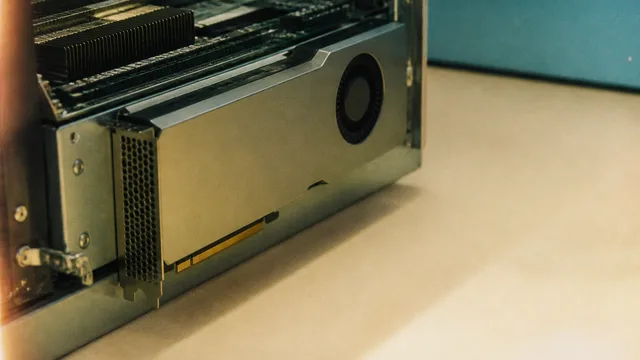
AMD Instinct MI350P: 144GB HBM3E in a PCIe GPU
AMD's Instinct MI350P brings 144GB of HBM3E and 3.6TB/s bandwidth to standard PCIe servers. Here's what it means for the mid-market AI infrastructure gap.

How Optimization Powers Modern AI and Engineering
From training ChatGPT to imaging black holes, optimization is the hidden engine behind modern AI and engineering. Steve Brunton's lecture explains how.