Decode Procrastination: Brain Science & Study Habits
Explore how neuroscience reframes procrastination and enhances study habits by understanding your brain's signals.

Written by AI. Harold "Harry" Goodman
Procrastination. A word that conjures up images of delay, distraction, and that nagging guilt of tasks left unfinished. It's a phenomenon as old as time, and yet, each generation invents new ways to grapple with it. In the video from the channel 'Simple, Actually,' procrastination is dissected not as a character flaw but as a complex neurological response—a far cry from the old adage that it's merely about laziness.
For those of us who grew up in the golden age of radio, we learned that communication is about connecting with the human condition. In the same vein, this exploration of procrastination invites us to understand that our brains are not just avoiding tasks—they're seeking safety. The notion that procrastination is a "protection response" is intriguing. It suggests that our brains are wired to prioritize immediate comfort over perceived threats, like the daunting prospect of a hefty study session.
The Dopamine Conundrum
One of the video's key insights is the "dopamine trap." Our brains, it seems, release dopamine—the pleasure chemical—prematurely when we initiate a task, confusing starting with completing. This is not a new revelation in the world of neuroscience. A study published in Nature in 1998 highlighted how dopamine not only influences pleasure but also reinforces behaviors by attaching itself to the anticipation of rewards rather than the reward itself.
This insight echoes the experience of many a college student who studies for a brief 15 minutes and feels an unwarranted sense of accomplishment. The video suggests shifting from time-based to output-based study sessions to counteract this dopamine trickery. For instance, completing a set of practice questions rather than simply sitting at a desk for an hour might align our brain's reward system more accurately with genuine achievement.
Breaking the Task Down
The video further advises that nebulous study goals are a recipe for resistance. Instead, specificity is the cure. This principle is reminiscent of the "chunking" technique in cognitive psychology, where breaking information into smaller, manageable parts makes it more digestible. The brain, they argue, shies away from abstraction. By shrinking study tasks into microspecific actions—turning "study chemistry" into "answer questions 1 to 10 on page 42"—we trick our brains into engaging without overwhelming them.
Rituals Over Motivation
In broadcasting, as in life, consistency is key. The video advocates for creating a "5-minute entry ritual"—a repeatable series of actions that signal to the brain that it's time to focus. This approach reminded me of the old days in radio where a pre-show routine was essential to get into the right mindset. The same desk, water bottle, and instrumental track can serve as cues that activate focus, bypassing the fickle nature of motivation.
The Historical Context
To see procrastination in its historical perspective, consider how past generations tackled it. The post-war boomers, with their "keep calm and carry on" mentality, often equated hard work with moral virtue. Today, we have the luxury—and the burden—of understanding the brain's chemistry, offering a different kind of roadmap to productivity.
The video's narrative echoes the sentiment that procrastination isn't a permanent state but a temporary one that can be managed with the right tools. "You are not lazy. You are responding to perceived threat," it asserts. The implication is profound: procrastination is less about sloth and more about our brain's ancient instincts trying to protect us from the perceived dangers of failure and inadequacy.
In the grand scheme, understanding the neurological underpinnings of procrastination could shift the cultural narrative from one of blame to one of empathy and strategy. The next time you find yourself reaching for your phone instead of your textbook, remember: it's not just about discipline. Perhaps it's about designing an environment where focus is not a Herculean effort but an effortless part of your day.
More Like This

Exploring Audio Analysis with the Short-Time Fourier Transform
Dive into audio analysis with the Short-Time Fourier Transform and discover its impact on sound manipulation.

Why Confident People Don't Overexplain
Exploring why confidence leads to less overexplaining and what we can learn from it.
The Neuroscience of Discipline: Automation Over Motivation
Explore how discipline evolves from motivation to neural automation, making actions automatic and emotions irrelevant.
Rewire Your Brain to Relish Discipline
Transform discipline from a chore to a craving using brain science.
Rewiring Attention: A Neuroscientific Approach
Explore how digital habits reshape our attention span and ways to reclaim focus.
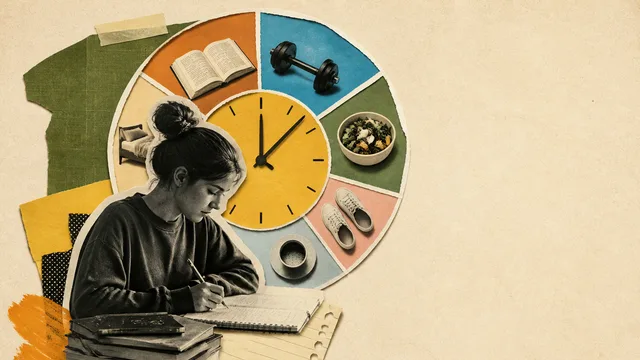
How Students Can Build a Daily Routine That Lasts
A new video from Simple, Actually lays out a brain-aligned daily routine for students—one built on consistency over intensity. Here's what holds up and what's worth questioning.

Chapel Head: Time Team Digs the Cambridgeshire Fens
Time Team's "Beacon on the Fens" investigates Chapel Head in Cambridgeshire, uncovering a medieval chapel, Saxon pottery, and layers of prehistoric occupation.

Ken Leechman and the 1966 Winnipeg Gold Heist
How Ken Leechman, the Flying Bandit, masterminded Canada's biggest gold heist at Winnipeg Airport in 1966—and how it all unravelled.