Claude Design Isn't Killing Figma—It's Killing the Mockup
Anthropic's Claude Design doesn't compete with Figma where you think. It's eliminating the prototype-to-production gap that's structured product teams for decades.

Written by AI. Bob Reynolds
When Anthropic launched Claude Design last week, the financial press wrote the predictable story: Figma stock dropped, AI threatens designers, creative jobs at risk. The pattern is familiar because we've seen it before—the same headlines ran when desktop publishing arrived in 1985, when Photoshop shipped in 1990, when the web made everyone a publisher in 1995.
But the actual story here isn't about Figma at all. It's about something more fundamental: the twenty-year-old process of turning an idea into a mockup, then turning that mockup into code, is becoming obsolete. The mockup—that intermediate artifact product teams have built entire workflows around—is going extinct.
Nate B Jones, who covers AI strategy, walks through what Claude Design actually does in a video published this week. He lists eight specific use cases, and the range is worth noting: pitch decks with embedded working chatbots, animated explainer videos rendered as code, 3D product configurators with live customization, design systems extracted from existing codebases, web page captures that get reskinned in your brand, interactive dashboards, internal admin tools, mobile app prototypes with real state transitions.
Every one of those used to require its own specialist or its own specialized tool. More importantly, every one produced an approximation of what you'd eventually ship. A mockup of the dashboard. A prototype of the app. A render of the 3D view. The final product always came later, rebuilt by engineers who translated the designer's intent into production code.
Claude Design outputs code from the start. Not a picture of a UI, but the actual UI already written in HTML, CSS, and JavaScript. When you hand that to Claude Code—Anthropic's coding tool—there's no translation layer. The prototype is the production artifact, or one step away from it.
The Stack Nobody Noticed
Claude Design is the third tool in what Jones calls "a coordinated Anthropic stack." Claude Code shipped mid-2024 for software development. Claude Co-work arrived in January for knowledge work—board decks built from meeting notes, competitive analyses drawn from scattered research, file systems reorganized from chaos. Each tool works the same way: describe what you want, Claude produces a working artifact, you refine through conversation.
What changes across the three isn't the mechanics—it's the kind of artifact you get. Code produces software. Co-work produces documents and analyses. Design produces visual interfaces. All three generate production-ready output, not approximations.
This matters because most product work begins with visual artifacts. PMs communicate features through mockups. Designers show direction through prototypes. Founders pitch products that don't exist yet through decks with UI concepts. Before Claude Design, Anthropic wasn't in that workflow. Now they are, at the exact moment when most teams are figuring out what to build.
The reason Claude Design works this way traces back to what the models actually learned. Sam Henry Gold, a designer who posted analysis after the launch, pointed out that Figma spent a decade building sophisticated design primitives—components, variables, modes, props—but those primitives were Figma-proprietary. They weren't in the training data.
LLMs learned from code: HTML, CSS, SVG, JavaScript. When frontier models got good at design, they got good at the medium they know. As Jones puts it: "Code became the de facto source of truth for AI-assisted design because code is what AI knows."
Where Figma Actually Competes
Claude Design isn't primarily a Figma competitor, despite what the stock movement suggested. Figma remains sticky for production-grade design work—design systems at scale, component library maintenance, the craft work in the middle of the product lifecycle.
Claude Design competes at the beginning with quick exploration and early prototyping. Then it connects directly to the end through Claude Code, skipping the middle where Figma is strongest. Mike Krieger, Anthropic's chief product officer, stepped down from Figma's board days before Design shipped—a move that suggests Anthropic sees a path to hollowing out that middle over time.
Google isn't waiting to see how this plays out. Within days of Claude Design's launch, Google Stitch introduced design.markdown—a plain text specification that describes design tokens, type scales, and component rules in a format AI can read. Google open-sourced the spec so any tool can use it.
It's a classic Google move: expose a standard, make it ubiquitous, compete on model quality. Anthropic is betting on integration—their stack, their handoffs, their coordinated workflow. Google is betting on openness and convenience. Both companies agree on the underlying shift: code is the medium AI works in, not Figma files. They just disagree on where the competitive advantage lies.
What Changes When Mockups Cost Nothing
The shift shows up differently depending on your role, but the underlying change is the same: the distance between having an idea and having something you can show has dropped to minutes.
For product managers, the PRD stops being the default artifact. Prototyping costs almost nothing now, and a working prototype communicates intent more clearly than a document. Jones describes the new workflow: paste user stories and acceptance criteria into Claude Design, prompt for a flow that satisfies them, generate all the states—empty, error, loading—by default, drop the prototype into the Jira ticket. Done.
For designers, the rationing of attention is over. Designers used to choose: Do I prototype in multiple directions or commit to one? Those tradeoffs don't matter when ten directions in an hour is routine. Jenny Wen, who runs design at Anthropic and came from Figma where she led FigJam and Slides, says mockup and prototype work used to take two-thirds of her team's day. Now it's closer to a third. The rest of the time moved into pairing with engineers and working directly in code.
Jones is careful here: "Professional designers that I've talked to describe this as getting hours of their day back, not as getting replaced. And I think that's a really important distinction because I've seen a lot of breathless headlines about designers specifically with this launch."
The craft moves upstream. Less time making mockups, more time deciding which directions are good and why. Less time on the mechanics of visual production, more time on what Jones calls "situating a product in a context in a way that makes it profoundly useful to customers."
The Cost That Disappeared
For twenty years, product teams have been structured around a specific cost: prototyping was expensive, code was more expensive, so you had a discrete phase between spec and build where specialists produced throwaway artifacts to figure out what to ship.
That cost has effectively been deleted. The prototype is no longer separate from the thing you ship. The only difference between prototype and production is whether you decide to launch it.
Most team structures are built around that disappeared cost. The handoff meetings. The translation work. The back-and-forth between what design mocked up and what engineering can build. The compromises made because fully prototyping three directions would take too long.
The question worth asking isn't whether this changes how teams work—it obviously does. The question is how long it takes for teams to reorganize around the new reality, and what they do with the time they get back. History suggests these transitions take longer than the people building the tools predict, and happen faster than the people using the old tools expect.
The mockup is going extinct. What gets built in its place will determine whether this was just a productivity boost or something more fundamental.
More Like This
Ancient Greek Myths as Warnings About AI and Automation
Historian Adrienne Mayor argues Greek myths about robots and AI aren't just stories—they're 2,500-year-old warnings we're actively ignoring. A closer look.
Anthropic's Claude Design Tool: What Actually Changed
Anthropic released Claude Design for UI prototyping. We tested it to see if it escapes the 'vibe-coded' look that plagues AI-generated interfaces.
Anthropic's Three Tools That Work While You Sleep
Anthropic's scheduled tasks, Dispatch, and Computer Use create the first practical always-on AI agent infrastructure. Here's what actually matters.
Claude Design Isn't Coming for Figma—It's After Something Else
Anthropic's new design tool targets a different workflow than established players. Early users reveal what it's actually good at—and the hard limits.
Claude Design Wants to Eat Figma's Lunch. Can It?
Anthropic's new Claude Design tool generates design systems from code repos and lets you edit with voice commands. Here's what actually matters.
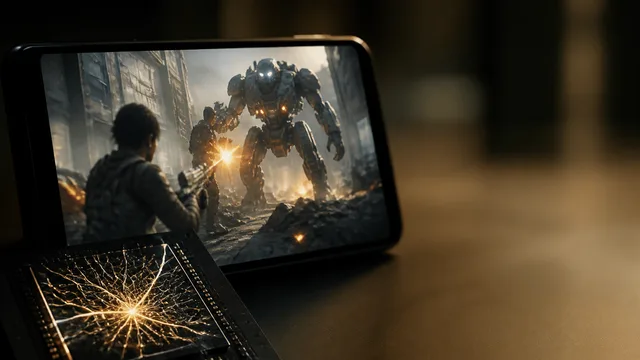
Arm's Next Mali GPU Will Carry Neural Accelerators
Arm's Neural Dawn demo signals dedicated neural accelerators in the next Mali GPU generation, bringing desktop-style upscaling and dynamic lighting to Android.

Loop Engineering: Building AI Agents That Improve Themselves
LangChain's Sydney Runkle outlines a four-loop framework for building reliable AI agents. The ideas are older than the branding suggests — and that's the point.

AI Observability Cuts Telecom Faults by 50 Percent
A New Zealand telco reports cutting IT incidents by 50% using AI-driven observability. Here's what that claim actually means—and what it doesn't.