Bridging the Gap: C++ Workshop Tackles Industry Reality
Amir Kirsh's workshop addresses the persistent divide between academic C++ and production code—and questions whether one-day training can solve it.

Written by AI. Dev Kapoor
There's a distance between the C++ you learned and the C++ you need to know. Amir Kirsh has spent enough time in both worlds—academia and industry—to measure it precisely.
His upcoming workshop, "From Hello World to Real World," attempts to compress that distance into a single day. The premise is straightforward: take developers with basic C++ knowledge and walk them through everything from RAII to move semantics, from template metaprogramming to AI-assisted development, from C++98 legacy code to C++23 features. The question isn't whether Kirsh knows this territory—his background suggests he does. It's whether the gap he's identified can actually be bridged in eight hours.
The Alignment Problem
Kirsh returns repeatedly to what he calls "alignment"—ensuring everyone in the room shares a baseline understanding before advancing. It's a teaching approach born from experience, and possibly from frustration.
"Going back to the basics, going back to alignment, things that we may know, we may forgot, maybe we do not use correctly," he explains. "Maybe we just miss something—oh, this is how to use it, this is the way to use it correctly."
This matters more in C++ than in younger languages. The ecosystem spans decades of idioms, standards, and legacy code. A developer might know how to use smart pointers but not understand when move semantics matter. They might write templates without grasping CTAD (Class Template Argument Deduction). The language doesn't just evolve—it accumulates, and that accumulation creates knowledge gaps that don't exist in languages designed after smartphone era.
The workshop curriculum reflects this fragmentation. It covers seven major C++ standards (C++98 through C++23), acknowledges that many teams can't actually use recent features, and promises to explain "what is the alternative if you're using 14 or 11 or even if you are in legacy C++98 which is still in some cases the standard being used."
That's the reality Kirsh is designing for: teams maintaining critical systems in outdated standards while trying to adopt modern practices. It's less glamorous than discussing the latest language features, but it's where most C++ developers actually work.
The Industry-Academia Divide
Kirsh positions the workshop explicitly for people caught in transition—recent graduates, self-taught programmers, developers switching from other languages. His target audience reveals the underlying problem: formal education and self-directed learning both leave gaps that only emerge under production conditions.
"Writing solid C++ for production is not easy," he notes. "It's not the same as the C++ that we learn in universities and at colleges."
This isn't unique to C++, but the consequences might be. Memory safety, resource management, API design, performance optimization—these aren't academic exercises in systems programming. They're the difference between software that ships and software that fails audits, between code that scales and code that needs rewrites.
The workshop attempts to address this through hands-on practice: live coding, exercises, code review. The agenda allocates 90 minutes to templates and STL, another 90 to modern C++ practices, 75 minutes to real-world design patterns and pitfalls. Whether that's enough time depends partly on the audience's starting point, which Kirsh acknowledges will vary.
"We'll try to answer all questions of the audience but doing that while we move on," he says. "In some cases if there will be a gap that cannot be filled, cannot be tackled within the workshop, we may take it offline."
That's the honest version: some gaps won't close in a day. The question is whether the workshop creates enough structure and momentum for developers to continue closing them afterward.
The AI Addition
One curriculum item stands out as distinctly contemporary: AI-assisted development. Kirsh frames it as unavoidable—"something that you cannot avoid, you have to understand when how to use AI and leverage it."
This creates an interesting tension. C++ is a language where precision matters intensely—undefined behavior lurks in innocent-looking code, memory errors emerge from subtle misunderstandings. AI assistants, meanwhile, work probabilistically. They're trained on enormous corpuses of code, some of it excellent, much of it not. They don't understand memory models or object lifetimes; they pattern-match.
How do you teach developers to use tools that might confidently suggest unsafe practices? The workshop doesn't detail this section beyond noting AI will be covered. But the inclusion itself signals recognition that developer workflows have changed, even if the language's fundamental challenges haven't.
The Education Equation
Kirsh invokes a Kevlin Henney quote about work-life balance: "You need to spend evenings, weekends and holidays educating yourself. Therefore, you cannot spend your evenings, weekends and holidays working overtime on your current project."
It's a useful frame, though it sidesteps uncomfortable questions about whose responsibility developer education is. Should engineers spend personal time learning what they need for professional work? Should employers provide that education? Should academic programs better prepare students for production realities?
The workshop model—a paid, structured day of instruction—splits the difference. It costs £345 (£90 for students), positioning it between free self-study and expensive multi-day corporate training. Whether that's accessible depends on your context and whether your employer funds professional development.
What's clear is that the gap Kirsh identifies persists across the C++ community. Recent graduates don't know production practices. Mid-level developers haven't kept current with standards. Teams maintain legacy code without understanding the principles behind modern idioms. Self-taught programmers have knowledge patchworks shaped by whatever tutorials they found.
Whether an eight-hour workshop fundamentally addresses these structural issues is debatable. Whether it helps individual developers navigate them more effectively seems more plausible. The test won't be the curriculum—it's comprehensive enough. It'll be whether participants leave with clearer mental models of how C++ works and why, or just more facts about what it can do.
More Like This
Cline CLI 2.0: Open-Source AI Coding Tool Goes Terminal
Cline CLI 2.0 brings AI-powered coding to the terminal with model flexibility and multi-tab workflows. But open-source AI tools raise questions.
Intel's Plus CPUs Make Budget Gaming Builds Make Sense Again
Level1Techs' Wendell builds two systems around Intel's Core Ultra 5 and 7 Plus chips—and the gaming performance gap is shockingly small.
OpenAI's Codex: What This 4.5-Hour Course Reveals About AI Coding
A deep dive into OpenAI's Codex certification course shows what's actually happening when AI writes your code—and what remains frustratingly opaque.
C++ Range Algorithms Make Code Actually Readable
Intel engineer shows how C++ parallel range algorithms transform confusing word-counting code into something humans can actually understand.
Why Your C++ Code Is Secretly Unmaintainable
Klaus Iglberger's workshop preview reveals how dependencies and coupling quietly transform simple C++ codebases into nightmares nobody wants to touch.
Brain Hacks for Smarter Studying, Backed by Science
Explore unconventional study tips rooted in brain science, enhancing focus and retention without the struggle.
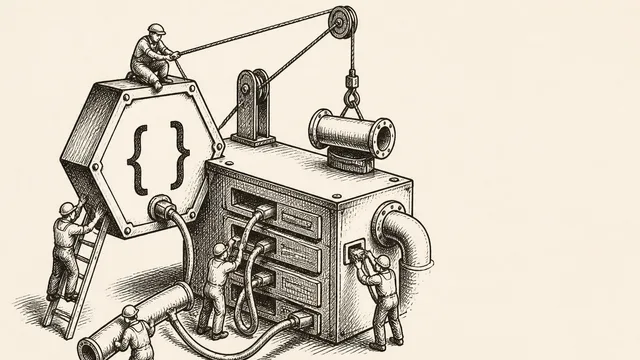
Building Typed Express APIs with TypeScript
A freeCodeCamp tutorial walks through integrating TypeScript with Express—covering typed routes, middleware, and query params for production-ready APIs.

Pretext Is Solving Web Text Layout From Scratch
Pretext, a TypeScript library by Cheng Lou, bypasses the DOM entirely to measure and lay out text fast—and it's already approaching 50,000 GitHub stars.