YouTube's Algorithm Doesn't Care If You're Monetized
A YouTube employee reveals what actually affects your views: it's not monetization, AI, or shadowbans—it's whether your content has a fingerprint.

Written by AI. Zara Chen
Here's what every small creator spiraling at 2 AM needs to hear: YouTube's recommendation algorithm literally cannot see whether your video is monetized. Like, architecturally cannot. It's deliberately blinded to that information.
Renie Richie, YouTube's creator liaison, told vidIQ in a recent interview that this separation is intentional. "Let's say you're a charity and you just you're not allowed to monetize it. Or let's say like there are some streamers who cover legal issues who just don't feel right about putting ads on and so they use membership. There's no reason that those videos shouldn't get every bit as much reach."
Which raises an obvious question: why does it feel like demonetization tanks your views?
The Correlation Confusion
Turns out we're confusing cause and effect. When a video gets demonetized and loses reach simultaneously, it's not because one triggered the other—it's because two separate systems responded to the same red flag.
Richie explains: "Sometimes let's say somebody makes an adult video uh like a video like very mature themes. The monetization system may say like this does not meet our adfriendly guidelines. Advertisers would not want to be on this video and so the video is demonetized. At the same time, the discovery system might say this is not appropriate to put in front of like a 13 year and older audience and that video might get age gated."
Age-gating does affect reach—you've just cut out anyone under 18 or not logged in. The monetization status? Irrelevant. But when both happen at once, creators naturally assume the yellow icon caused the view drop.
This matters because it completely reframes how we should think about platform dynamics. YouTube isn't punishing you for turning ads off. It's making separate decisions about advertiser-friendliness and viewer-appropriateness based on your content.
Small Channels Get Tested, Not Ignored
Okay but does YouTube even see your 67-subscriber channel? Yes, and they're measuring whether you succeed.
"YouTube actually has a stat called creators making it that we track because like the goal is for more creators to make it," Richie says. The platform actively reserves homepage slots for videos with "a few dozen, a few hundred views"—you can scroll down and see them right now.
But—and this is the part that should fundamentally shift how you approach content—YouTube isn't doing this for you. "YouTube does not push videos for creators. YouTube pulls videos for viewers," Richie emphasizes. The algorithm is trying to satisfy viewers who opened the app. Your video is a candidate solution to someone else's "what should I watch?" problem.
For small channels, this means YouTube will test your content on small audiences to learn who might want it. If the system isn't sure, "it'll take a video like we think this is the right audience. Can we test it and see?" The test slot exists. Whether your video earns the click is on you.
The AI Question Nobody's Asking Correctly
Half the creator economy is freaking out about whether AI content gets demonetized. According to Richie: "YouTube doesn't have specifics around like whether AI is monetizable or not. Those policies apply whether like you shoot it with a camera, whether you use stock footage, whether you animate it, whether you use CGI, whether you use AI, all of those policies are the same."
The platform even provides AI tools itself—auto-dubbing uses AI audio to translate videos into multiple languages, and it's perfectly monetizable. YouTube would be setting creators up to fail if it penalized the same technology it actively promotes.
What YouTube does care about: whether AI-generated content could confuse or mislead viewers. That checkbox asking if your content is "synthetic or altered"? It's about viewer protection, not AI detection. If your deepfake could make someone think their city is on fire, that's the problem—not that you used AI to make it.
Shadowbanning: The Myth That Won't Die
Richie is diplomatic about this one, probably because he knows he won't convince anyone. "Most of the time when I get tagged on things that are like people use the word shadow bangs, I go and I look and they're still getting predominantly like most of their traffic from recommendations."
Yes, policies exist that limit reach—copyright blocks, age-gating, community guideline strikes. But these aren't secret. They're documented on public support pages. The creator's eternal frustration is that when views crater, YouTube Studio doesn't always explain why in terms that feel satisfying.
Your short died at 1,500 views. Your evergreen video stopped getting 100 views per hour. The platform's answer—"viewers stopped clicking"—feels insufficient when you know something changed. But at YouTube's scale, billions of viewers making millions of micro-decisions, sometimes the answer really is just "this one didn't land."
The Fingerprint Test
So if monetization doesn't matter and AI doesn't matter, what does?
Authenticity—but not in the Instagram-wellness-influencer sense. Richie frames it this way: "Can I tell where this video was made? Whether they're AI or not, like I would I know a Wendover video, and like the minute I see it, I know this is a Wendover video. I know this is a CGP Gray video."
Does your content have a fingerprint? Could someone watch it and immediately know it came from your channel? Or could YouTube swap in any similar video and the viewer wouldn't notice the difference?
"YouTube's motto was give everyone a voice and show them the world," Richie notes. "What is the voice that you're using? Is this video something that that shows an expression of creativity of human creativity regardless of the tools used to create it?"
That's the actual policy concern. Not whether you used a camera or a prompt. Whether a human with a distinct perspective made something that couldn't exist without them.
Which brings us back to those 67 subscribers. The algorithm can't see your monetization status, doesn't care about your tools, and isn't shadowbanning you. It's just asking: does this video have a pulse?
More Like This
This Creator Got Shadowbanned on YouTube in 25 Days—On Purpose
A vidIQ creator deliberately shadowbanned their channel with AI-generated content to expose how YouTube's algorithm actually works. The results are wild.
The Real Talk Guide to Your First 100 YouTube Subscribers
VidIQ breaks down what actually works for new creators in 2026. Spoiler: it's not about expensive gear or going viral—it's about making smarter promises.
YouTube Shorts RPM: Why 2.5M Views Earned Just $178
VidIQ's data reveals YouTube Shorts earnings are wildly unpredictable—same channel, same audience, but RPMs vary 4x between videos. Here's why.
What YouTube's Algorithm Reveals About Platform Power
VidIQ's growth signals expose how YouTube's recommendation system shapes creator success—and the asymmetric power relationship at the heart of the platform.
The YouTube 'Content Wall' Strategy: Does It Actually Work?
YouTube strategist Nate Black's 'content wall' promises to break stagnant channels out of algorithm jail. We examine the claims and the reality.
Effect-Oriented Programming: Making Side Effects Safe
Three authors explain how effect-oriented programming brings type safety to the messy, unpredictable parts of code—without the intimidating math.
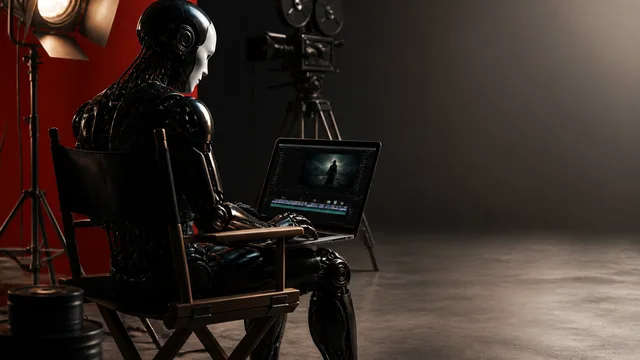
Netflix Used AI in 300 Titles. Here's What That Means.
Netflix disclosed AI use in roughly 300 titles in its Q2 2026 earnings. We break down what that number actually tells us — and what it doesn't.

Applied Computing Bets $20M on AI for Oil and Gas
Applied Computing raised $20M to build a foundation AI model for oil, gas, and petrochemical plants. Here's why that's more complicated than it sounds.