Your Next Job Is Being AI's Personal Shopper
The future of knowledge work isn't about building anymore—it's about showing AI what good looks like. Welcome to the taste economy.

Written by AI. Mike Sullivan
Remember when we were all supposed to learn to code? That was, what, 2015? Everyone from Obama to your aunt's yoga instructor was pushing coding bootcamps as the ticket to economic security. Now the same people are saying AI will do all the coding, and we should focus on "soft skills" instead. If this feels like Lucy pulling the football away from Charlie Brown for the millionth time, you're not wrong.
But here's the thing: there might actually be something different happening this time. Not because AI is magic—it's not—but because of what it's genuinely terrible at.
Nick Saraev, an automation specialist who's built his career on making AI do actual revenue-generating work, has a thesis about where knowledge work is heading. It's not the usual "AI will replace everyone" doom or "AI is just a tool" cope. It's something weirder and possibly more accurate: most of us are about to become example-finders for machines.
The Thing About Showing Versus Telling
Saraev breaks down something called "few-shot" versus "zero-shot" prompting, which sounds like AI jargon until you realize it's just the old show-don't-tell thing your high school English teacher harped on. When you tell an AI to "write a good article," that's zero-shot. When you show it three examples of what you mean by "good," that's few-shot. The difference in output quality? About 15% improvement in accuracy, according to the research he cites.
Fifteen percent doesn't sound revolutionary until you've worked in any creative or technical field and know that the gap between "pretty good" and "actually good" is a chasm. That 4% difference between 95% and 99% quality? As Saraev puts it: "The difference between, you know, 95% and 99% though objectively it may look like only 4% is actually a gulf in quality as any design professional, creative or copywriter knows."
So what does this mean for your job? Well, if you're in the business of knowledge work—writing, design, coding, marketing, whatever—your main economic function is increasingly about curating examples. You scroll through your Gmail looking for the good emails. You trawl Facebook's ad library for the ads that actually work. You dig through your old code for the clean implementations. Then you feed those to the AI and say "more like this, please."
It's like being a personal shopper, except your client is a statistical model and what you're shopping for is good taste.
The Assembly Line Problem
Here's where it gets interesting. AI right now is phenomenal at generating quantity. Saraev describes generating 100 designs in one-tenth the time it used to take to make one. That's not hype—that's actually happening. But here's the catch: only about half of those 100 designs are any good. The AI can't tell the difference between its good work and its garbage. It's like a really fast intern who produces a mountain of work with zero quality control.
This is why Saraev's model of the future feels more grounded than most AI predictions I've heard. The workflow isn't "AI replaces humans." It's "AI generates a firehose of options, humans pick the good ones." He calls it "human in the loop," which is somehow both more boring and more accurate than the typical "AI will change everything" rhetoric.
"What I'm really doing there, if you think about it," Saraev explains about his thumbnail selection process, "is I'm collapsing the total space of all possible generations, down into just the one generation here, which is actually good. And I'm exercising my human taste in order to do that."
It's the taste part that matters. And before you roll your eyes at "taste" as some fuzzy creative-class cope, consider: we already have algorithms that know our preferences better than we do. Your TikTok feed isn't random. It's the product of a massive distributed intelligence that's figured out exactly what keeps you scrolling. Those algorithms didn't get smart by reading the user manual—they got smart by watching what you actually click on.
Welcome to the Taste Economy
Saraev's betting that the next few years of knowledge work will be what he calls "the taste economy." Not the knowledge economy—we had that in the '90s and '00s. Not the attention economy—that's been around since Facebook. The taste economy is about your ability to recognize what other humans will respond to, and then teaching machines to mimic that recognition.
If this sounds suspiciously like data labeling—the thing we outsourced to Kenya for $2/hour—well, yes and no. The difference is context and judgment. You're not labeling "is this a cat?" You're labeling "is this the kind of cat photo my audience wants to see?" It's the difference between classification and curation.
Will this last? Saraev doesn't think so, and that's where his analysis gets appropriately grim. He freely admits that eventually, AI will probably be better than us at determining taste too. "Think about your Facebook feed for instance," he notes. "When you start using these things, they're not super addictive. But after, you know, a few days, months, or even years, these things tend to know what you want to see better than you know yourself."
But that's eventually. For now—say, 2026 to 2029, per his timeline—there's a window where human taste matters economically. It's a narrow window, historically speaking. But it's also the window we're living in.
What This Actually Looks Like
The practical application is less dramatic than the theory. Saraev describes his day: scrolling through emails to find good ones for training an autoresponder. Copying JSON from old automation workflows to show AI what clean code looks like. Building libraries of reference images. It's work that sounds suspiciously like... well, like work. Not the stuff of World Economic Forum keynotes.
"A lot of people will look at me and say, 'That's stupid,'" Saraev acknowledges about his process of copying and pasting good emails into prompts. "But what is more human than that? What really exercises our cognitive faculties more, okay, than demonstrating taste for what other human beings want or look like?"
He's not wrong, even if it does feel like a step down from "we're all going to be knowledge workers" circa 1995. Then again, most of us ended up in service jobs anyway, so maybe this is just the next iteration of the same pattern.
The question nobody's really asking—including Saraev, to his credit—is what happens after the taste economy. Once we've trained the models on enough examples of what good looks like, and they've internalized not just the patterns but the preferences, what's the human economic value then? Saraev admits "there are going to need to be some alternative solutions in place economically" once we reach that point.
Which is a diplomatic way of saying: this buys us maybe three to five years before we need to have much harder conversations about what an economy looks like when machines are better than us at both doing things and judging whether those things are any good.
But hey, at least we'll have plenty of time to curate examples of those conversations for the next generation of models. That's got to be worth something.
More Like This
When AI Products All Look the Same, Is That Actually the Point?
Why every AI company is suddenly building an everything app—and what it reveals about code as the foundation of all knowledge work.
Claude's New Projects Feature: Context That Actually Sticks
Anthropic adds Projects to Claude Co-work, promising persistent context and scheduled tasks. Does it deliver or just rebrand existing capabilities?
Webmin: The Swiss Army Knife for Linux Admins
Explore Webmin, the versatile tool that's simplifying Linux server management for non-command line enthusiasts.
How Synthetic Data Generation Solves AI's Training Problem
IBM researchers explain how synthetic data generation addresses privacy, scale, and data scarcity issues in AI model training workflows.
AI's Impact on Coding Skills: A 17% Decline?
Anthropic's study reveals AI hinders coding mastery by 17%. Explore the implications on skill development.

Local AI vs. Cloud: Why the Holy War Misses the Point
Running AI locally isn't a purity test—it's a systems design problem. Here's what one builder's hardware journey reveals about the real tradeoffs.
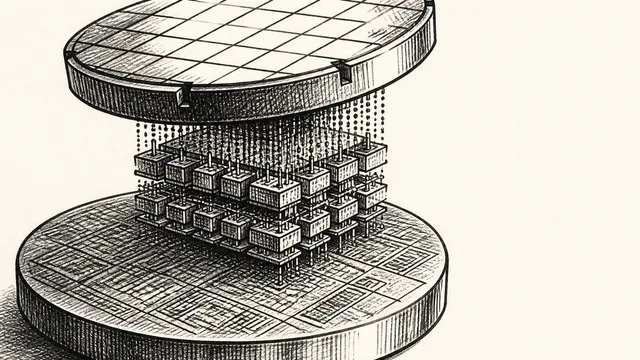
IBM NanoStack and the Future of Chip Architecture
IBM's NanoStack stacks transistors from separate wafers using atomic bonding. The physics works. The harder question is whether anyone can manufacture it at scale.

Inside the Smartphone: 120 Years of Hidden Engineering
Professor Hannah Fry tears apart a modern smartphone to trace 120 years of engineering history — from Marconi's radio waves to a 200-million-pixel camera sensor.