Claude's New Projects Feature: Context That Actually Sticks
Anthropic adds Projects to Claude Co-work, promising persistent context and scheduled tasks. Does it deliver or just rebrand existing capabilities?

Written by AI. Mike Sullivan
Every AI tool launch follows the same script. Revolutionary. Game-changing. Everything you know is about to change forever. I've been hearing this since RealNetworks promised to transform how we consume media in 1995. Sometimes the hype lands—the iPhone actually did change everything. Most times? It's incremental improvement wrapped in venture capital optimism.
Anthropic just released Projects for Claude Co-work, and the pitch is familiar: your AI assistant now remembers everything, works 24/7, never forgets context. Julian Goldie, an SEO consultant and AI automation enthusiast, walked through the feature in a detailed demo, positioning it as "the closest thing I've seen to having a full-time AI assistant that already understands and knows your business."
Let's separate what's actually new from what's marketing.
The Core Problem: Context Amnesia
Anyone who's used AI tools for actual work knows the pain point Projects aims to solve. You open ChatGPT or Claude, explain your business, upload your brand guidelines, describe your audience, set your tone preferences. You get decent output. Then you close the window.
Next session? Start over. Re-upload everything. Re-explain everything. It's like hiring an assistant with anterograde amnesia—perfectly competent in the moment, but tomorrow they won't remember your name.
Projects tackles this by creating persistent workspaces where context accumulates over time. You set up a project once—name it, add files, link to relevant pages, set instructions—and Claude remembers it all. The files live locally on your machine, not in Anthropic's cloud. When you return to that project, Claude already knows what you're working on.
"Every time you open an AI tool or for example co-work, you pretty much start from zero, right?" Goldie explains in his walkthrough. "With projects in co-work, you set it up once as a project and Claude remembers everything and all the context related to that."
This is genuinely useful. The question is whether it's genuinely new.
What Projects Actually Does
The feature operates through a folder-based system. You create a project, point Claude at a local directory, and grant it read/write access. From there, you can:
- Add files that provide context (brand guidelines, past work, reference materials)
- Link to web pages for additional information
- Set custom instructions for how Claude should behave in this project
- Create a memory file where Claude stores preferences and learnings
- Schedule recurring tasks that run automatically
- Connect to external apps through integrations
Goldie demonstrated by creating an "AI Profit Boardroom Marketing Agent" for his automation community. He linked to his community's About page, uploaded documents, and set scheduling tasks—like researching AI automation topics every morning at 4:30 AM or generating daily growth ideas.
The appeal is obvious: build context once, reuse it infinitely. Instead of re-explaining your business model every session, Claude already knows it. Instead of manually running the same research task daily, schedule it and forget it.
The Skeptical Questions
Here's where my pattern recognition kicks in. I've watched "revolutionary" AI features launch for three years straight now. Some questions worth asking:
Is this actually autonomous? Goldie calls it an "autonomous AI agent," but scheduling a task isn't the same as agency. True autonomy means the system decides what to do based on changing conditions. Scheduled tasks are just cron jobs with better UI. Useful? Absolutely. Autonomous? That's a stretch.
How does local storage change the equation? Anthropic emphasizes that Projects data lives on your machine, not their servers. That's a privacy win, genuinely. But it also means your "24/7 AI employee" only works when your computer is on and Claude is running. Goldie mentions using Dispatch to control it from your phone, which suggests some cloud component exists anyway.
What's the actual improvement over existing workflows? Power users have been maintaining context in AI tools for months using various workarounds—custom instructions, pinned conversations, copy-pasted context documents. Projects formalizes this into a native feature. That's valuable, but it's streamlining existing behavior more than enabling new capabilities.
How reliable is scheduled execution? The demo shows setting up tasks to run at specific times. But will Claude actually execute them when your laptop is asleep? Does it require the desktop app to be open? These practical details matter more than the concept.
What Actually Matters Here
Strip away the "AI employee" framing and you're left with something simpler: persistent context management. That's not nothing. If you're regularly using Claude for specific, repeated workflows—content creation, research, analysis—having a dedicated workspace that retains all your setup work saves genuine time.
The folder permission model is smart. You're explicitly granting Claude access to specific directories rather than your entire system. That's the right security posture.
The memory feature—where Claude creates a markdown file to store learnings about your preferences—could evolve into something interesting. Goldie showed telling Claude to remember his copywriting style is "direct response, like Dan Kennedy." If that actually carries forward and improves output quality over time, it's a step toward tools that genuinely adapt to you.
The scheduled tasks feel like the weakest link. Automation is valuable, but AI-generated content on a schedule is only useful if the quality stays consistent and the output actually needs to be daily. Researching trending AI topics every morning sounds good until you realize most days won't have anything genuinely new worth covering. You'll end up with a folder full of mediocre research nobody reads.
The Real Test: Does It Save Time or Create Busywork?
This is my central skepticism about AI productivity tools. They promise to save time, but often they just shift where the time goes. Instead of writing content, you're now managing AI outputs—reviewing, editing, discarding the stuff that missed the mark.
Projects could genuinely streamline repeated workflows if you're using Claude for the same tasks daily. But it could also create a new category of maintenance work: updating project files, refining instructions, managing scheduled tasks that aren't quite right.
Goldie mentions he has "over 100 prompts you can test" with Claude Projects. That's either incredibly useful or a sign that getting value from this tool requires substantial upfront investment. Probably both.
Where This Fits in AI History
Context persistence isn't new conceptually. Every chatbot since ELIZA has maintained conversational context. What's evolved is the scope—from a single conversation to an entire project workspace—and the durability. Early ChatGPT lost context after a few dozen messages. Now Claude is promising it persists indefinitely, at least within a project.
This fits the broader pattern of AI tools becoming more stateful. ChatGPT added custom instructions. Anthropic launched long-context windows. Now we're getting project-level persistence. The trend line is clear: AI tools are slowly evolving from stateless question-answering systems into something closer to personalized assistants.
But we're still far from actual AI employees. What Projects offers is better context management for human-driven workflows. You're still the one deciding what to ask, what to create, what to schedule. Claude just remembers your preferences between sessions.
That's useful. It's incremental. And it's probably worth trying if you're already paying for Claude Pro and using it regularly. Just don't expect it to run your business while you sleep. The AI assistant that actually works 24/7 without supervision? That one's still vaporware.
More Like This
Claude's New Auto Mode Solves AI's Permission Problem
Claude Code's new Auto Mode uses a safety classifier to let AI work autonomously without constant permission prompts—or the risks of skipping them entirely.
This Free Tool Lets You Run Multiple AI Agents At Once
Collaborator is an open-source app that orchestrates multiple Claude AI agents in one workspace. Here's what it actually does—and what it can't.
Linux Gets Quieter Upgrades That Actually Matter
KDE Plasma 6.6, PipeWire 1.6, and other Linux updates focus on polish over flash. Sometimes the boring improvements are the ones that stick.
System Prompts Are the New Jailbreaks, Apparently
A YouTuber claims a custom prompt turns Google's Gemini 3.1 Pro from waste to winner. It's either clever optimization or a band-aid on broken AI.
Claude's New Computer Control: AI Agent or Chaos Engine?
Anthropic's Claude can now control your browser, publish blog posts, and automate workflows. SEO consultant Julian Goldie tests whether it actually works.
Claude Code's PowerShell Update: Hype or Real Shift?
Anthropic's Claude Code adds Windows PowerShell control and parallel processing. Mike Sullivan examines what's genuinely new versus recycled promises.

35 GitHub Projects Mapping the AI Agent Trust Gap
This week's GitHub trending list is less a catalog of tools and more a collective argument: developers don't fully trust AI agents yet—and they're building accordingly.
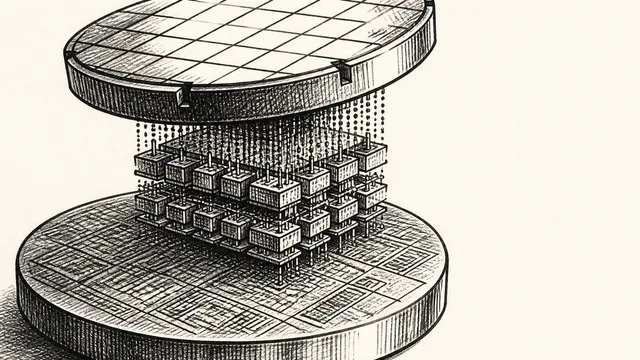
IBM NanoStack and the Future of Chip Architecture
IBM's NanoStack stacks transistors from separate wafers using atomic bonding. The physics works. The harder question is whether anyone can manufacture it at scale.