Why Gravitons Remain Elusive in Quantum Physics
Exploring the challenges of detecting gravitons and what this means for quantum gravity.

Written by AI. Mei Zhang
Why Gravitons Remain Elusive in Quantum Physics
Ever feel like the universe is playing a cosmic game of hide and seek? Well, the quest to detect gravitons, the so-called building blocks of spacetime, might just be the ultimate round. These theoretical quantum particles of gravity are proving incredibly hard to catch, and it's not for lack of trying. Let's dive into why tracking down a graviton is the physics equivalent of finding a needle in a multi-dimensional haystack.
The Graviton Conundrum
Gravitons, if they exist, are the quantum particles that would complete our understanding of quantum gravity. In theory, they're as crucial as photons are to electromagnetism. But here's the catch: unlike their light-emitting cousins, gravitons are playing hard to get, with the universe itself seemingly conspiring to keep them hidden.
As the PBS Space Time video explains, “the universe seems to conspire to make the detection of the quantum particle of gravity impossible.” This isn't just a case of needing bigger and better tools. The very laws of physics may be rigged against us, with some suggesting that detection might be impossible even in principle.
The Challenge of Detection
Detecting a graviton isn't like catching a butterfly with a net—it's more like trying to grab a ghost with a spoon. Current gravitational wave detectors like LIGO, which have famously observed the ripples in spacetime caused by merging black holes, aren't nearly sensitive enough. To spot just one graviton, we'd need a detector 10^36 times more sensitive. For context, that's a number so big it's like comparing a single grain of sand to all the sand on Earth multiplied a trillion times.
Even more daunting, to generate gravitons in a way we might detect them, a particle collider would need to be several light years in size. Yes, you read that right—light years. “For a fixed magnetic field strength, collision energy scales directly with collider size,” the video notes. So, our options aren't just limited—they're astronomically outlandish.
The Theoretical Workarounds
Physicists have proposed various methods to outsmart these cosmic barriers. One idea is the Gertsenshtein effect, which involves converting gravitons to photons in the presence of a strong magnetic field. But even here, the practical limitations of magnetic field strength play spoilsport. As the video succinctly puts it, “The universe again conspires against us.” It’s as if every creative workaround hits a cosmic roadblock.
A Glimmer of Hope?
Despite the seemingly insurmountable odds, the pursuit of gravitons isn't entirely a fool's errand. Since Freeman Dyson's 2012 lecture, where he cast doubt on our ability to ever detect these particles, we've seen major advancements in quantum technology and gravitational research. The detection of gravitational waves was once thought impossible, too.
The video leaves us with a tantalizing possibility: “We may be able to combine the two broad approaches... using a LIGO-like interferometer combined with absorption of gravitons.” It's not a guarantee, but it's a hint that maybe, just maybe, we're not as far from a breakthrough as it seems.
Gravity's Quantum Ghost
The quest to detect gravitons is a reminder of the vastness of our ignorance—and the vastness of our ambition. As we stand on the precipice of understanding the universe's most elusive secrets, one can't help but feel a mix of humility and hope. Perhaps the real lesson here is that the universe is a much stranger place than we could ever imagine. And that strangeness is precisely why we keep looking.
More Like This
Sterile Neutrinos: A Particle Physics Puzzle
Recent experiments challenge the existence of sterile neutrinos, reshaping our understanding of the universe.
Scientists May Finally Detect Gravitons—Sort Of
New experiments could detect gravity's quantum particle within decades. But proving gravitons exist? That's a different problem entirely.
Exploring Cosmic Time Delays and Dark Energy
Time delay cosmography may unveil dark energy mysteries, resolving Hubble tension with new cosmic insights.
Higgs Boson: Gateway to the Dark Universe?
Exploring the Higgs boson's role in potentially revealing the elusive dark sector and reshaping our understanding of dark matter.
CERN's Particle Asymmetry: Cracking the Universe's Mysteries
Exploring CERN's recent findings on matter-antimatter asymmetry and their implications for understanding the universe.
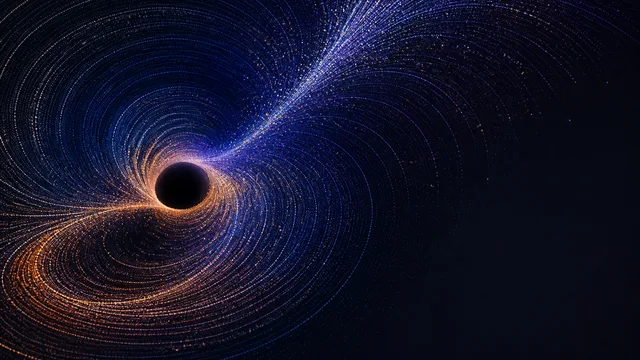
LIGO May Have Found a Primordial Black Hole
LIGO's latest catalog may contain a sub-solar-mass black hole that couldn't form from a star—and what that means for our understanding of the early universe.
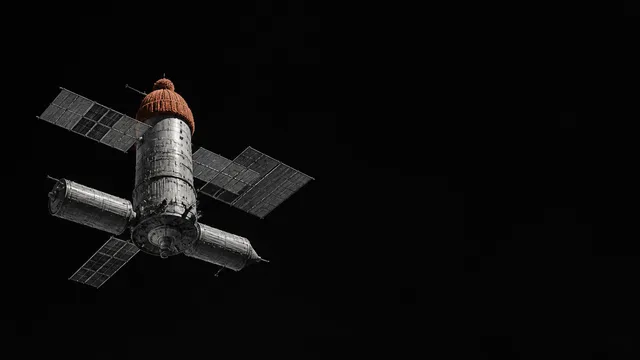
Space Stations Beyond the ISS: A Forgotten History
From a Cold War spy base to a Soviet ice rescue to China's chicken-wing oven in orbit — the real history of space stations is wilder than you think.
Curiosity at Sol 4948: Reading Mars Like a Genome
Curiosity Rover hit Sol 4948 in Gale Crater. What its mineralogy tells us about Mars' chemical autobiography—and why that question is getting urgent.