Scientists May Finally Detect Gravitons—Sort Of
New experiments could detect gravity's quantum particle within decades. But proving gravitons exist? That's a different problem entirely.

Written by AI. Nadia Marchetti
Some particles refuse to be caught. Faster-than-light communication is impossible. Breaking the second law of thermodynamics is impossible. And for decades, detecting the graviton—the hypothetical quantum particle of gravity—seemed to belong in the same category of cosmic prohibitions.
Except now physicists think they've found a workaround. Not a magic bullet, but something cleverer: a way to trick the universe into revealing whether gravity has a quantum structure after all.
The problem has always been laughably straightforward. Gravity is weak. Quantum particles are tiny. The odds of a graviton colliding head-on with another particle in a way we could detect are so astronomically low that previous proposals involved planet-sized detectors and stellar corpses as graviton sources. Practical timeline: several millennia, assuming we develop astroengineering superpowers.
But a 2024 paper by Turbar, Manacandon, Badel, and Pikovsky submitted to Nature suggests we might not need to wait quite that long.
Making Quantum Particles Human-Sized
The insight is deceptively simple: if you can't strengthen gravity and can't shrink the target, make the quantum particle bigger. Much bigger. Human-scale, in fact.
Here's how the proposed resonant mass detector works. Take a metal cylinder—beryllium or niobium, depending on what frequency you're hunting—and cool it to within a fraction of a Kelvin above absolute zero. At that temperature, something strange happens. The cylinder's vibrational modes become quantum states. Individual oscillations become discrete, quantized entities called phonons—essentially, quanta of sound.
These phonons are macroscopic quantum particles with a vastly larger interaction cross-section than individual electrons. When a graviton passes through, there's now a tiny but no longer unthinkably tiny chance it'll excite a phonon. Quantum sensing techniques could detect that excitation.
In principle, you've just detected a graviton.
The Noise Problem
Except you almost certainly haven't. The excitation energy of a single phonon is so minuscule that thermal fluctuations, seismic noise, cosmic rays, electromagnetic interference, material defects, and feedback from your measurement device all generate false signals. Even with heroic noise reduction, gravitons won't be the main source of phonon excitations you're detecting.
This is where the proposal gets genuinely clever. Since 2015, LIGO has detected hundreds of gravitational waves from merging black holes and neutron stars. If gravitons exist, a gravitational wave is just a coherent flood of them—potentially 10^36 gravitons sharing the same well-defined frequency, like photons in a laser beam.
So you build your cylinder with dimensions and mass tuned to support a vibrational mode matching expected gravitational wave frequencies. A 15-kilogram beryllium bar for neutron star mergers. A 10-ton niobium bar for black hole mergers at around 175 hertz. Cool it to one millikelvin (colder than we can currently achieve, but proposed experiments are closing the gap). Attach your phonon detector.
Then you wait.
Your detector will click constantly—mostly noise. But eventually, an excitation will occur at the exact moment LIGO detects a gravitational wave of the matching frequency. If noisy excitations are rare enough that this coincidence is statistically improbable by chance, you've likely detected a graviton.
As PBS Space Time's Matt O'Dowd explains: "We build a cylinder with mass and dimensions to support a vibrational mode with frequency equal to an expected gravitational wave frequency... eventually an excitation will occur at the exact same time that LIGO detects a gravitational wave of the same frequency."
The Photoelectric Effect Problem
But here's where things get philosophically muddy—and this is the part that makes me love physics even when it's being deliberately difficult.
Even if you detect that coincident click, you haven't definitively proven gravitons exist. Because there's another explanation: a purely classical gravitational field could still excite that phonon by slowly increasing the quantum probability of excitation, as long as it has the right frequency.
The parallel to the photoelectric effect is instructive. For a century, textbooks have claimed the photoelectric effect proved the existence of photons. It didn't—not really. It proved quantum energy levels in electrons. A classical electromagnetic field can still deliver energy to enable quantum jumps, just by gradually increasing the probability rather than delivering discrete packets.
"The photoelectric effect didn't really constitute the discovery of photons," O'Dowd notes. "It discovered quantized energy levels in atoms." The same logic applies here. Your clicks might be gravitons. Or they might be a classical gravitational field interacting with a quantized detector.
To actually prove photons exist required more sophisticated experiments with the electromagnetic field prepared in non-classical states—extremely low-intensity lasers where you could examine the distribution of energies in excited electrons and determine whether the field itself is fundamentally quantized or smooth and classical.
In principle, the same could be done with gravitons. In practice, we have no natural source of non-classical gravity and certainly no source of single gravitons.
The Optical Alternative
Which brings us to the alternative approach: the optical Weber bar proposed by Ralph Schutz. Instead of a solid resonant mass, this uses laser pulses in an interferometer-like geometry. A passing gravitational wave transfers energy to the light itself, producing a measurable phase shift.
Unlike LIGO, which reads phase changes while the wave is passing, this scheme aims to convert the wave's modulation into a permanent frequency and energy shift in the photons—essentially amplifying the effect over a much longer time. In graviton language, it's stimulated emission or absorption of gravitons by light. "It's kind of like lasing the gravitational wave itself," O'Dowd says, "although the effect is observed in the light not in the gravitational waves."
The baseline version might be feasible with present-day tools. But the version that could actually reveal quantum gravity signatures—by preparing light in strongly non-classical states and forcing gravitational waves into quantum superposition—demands even more extreme conditions than the resonant mass detector.
Where This Leaves Us
So we're left with an odd situation. The resonant mass detector might be achievable within decades rather than millennia. We could see clicks coinciding with LIGO detections. If gravitons exist, those clicks are almost certainly graviton detections—which would be extraordinary, because we didn't need a planet-sized apparatus after all.
But those clicks won't constitute formal proof that gravitons exist, because classical gravity interacting with quantum detectors looks the same. To get that proof, we'd need to prepare gravitational fields in non-classical states, which pushes us back toward seemingly impossible engineering.
The universe appears embarrassed about its quantum underbelly. It's willing to let us peek, but it won't make the reveal definitive. Not yet.
Still, there's something beautifully stubborn about these experiments. They're not trying to overpower nature's apparent prohibition on graviton detection—they're looking for loopholes, edge cases, clever reframings of the question. They're asking: what if we can't catch a graviton directly, but we can see its shadow? What if we can't prove the quantum nature of gravity, but we can rule out certain classical alternatives?
That's not quite the same as detection. But it might be enough to keep us honest about what we actually know versus what we hope to find. And in physics—maybe especially in physics at the boundaries of the possible—that distinction matters more than the clicks themselves.
More Like This
Black Holes: The Universe's Invisible Architects
Explore the enigmatic nature of black holes and their cosmic impact, from gravitational waves to the bending of spacetime.

Adobe and Nvidia Just Made 10 Million Sparkles Run at 280 FPS
Adobe Research and Nvidia developed a rendering technique that simulates millions of reflective particles in real-time without destroying your frame rate.
The Most Sensitive Dark Matter Detector Might Find Nothing
LUX-ZEPLIN sits a kilometer underground, waiting for dark matter. But success might look like silence—and that would tell us something huge.
Why Gravitons Remain Elusive in Quantum Physics
Exploring the challenges of detecting gravitons and what this means for quantum gravity.
Higgs Boson: Gateway to the Dark Universe?
Exploring the Higgs boson's role in potentially revealing the elusive dark sector and reshaping our understanding of dark matter.
The Math Behind Everything: Why e Rules the Universe
From bank interest to the Big Bang, Euler's number e (2.718...) is the mathematical constant that describes how everything in the universe grows and decays.
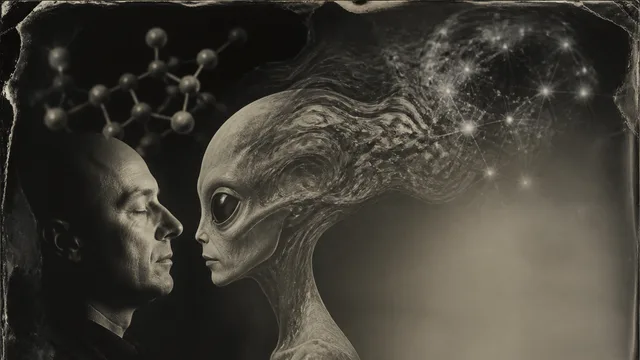
Do DMT Entities Point to Alien Consciousness?
Cognitive scientist Donald Hoffman claims DMT entities may be real alien minds. The math is real. Whether it proves anything about consciousness is a different question.
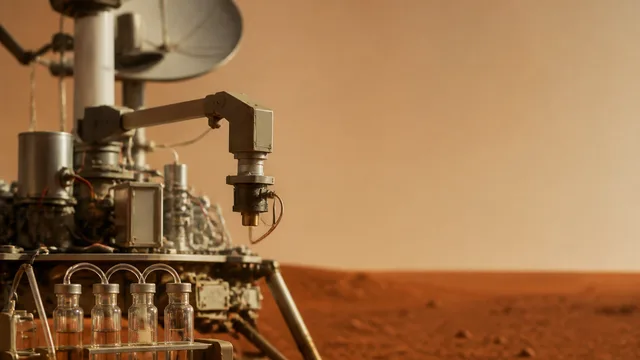
Viking Landers and the Unsolved Mars Life Debate
Fifty years after Viking landed on Mars, one experiment's positive result remains unexplained. Here's what the science actually shows—and what we've learned since.