Vibe Coding: The AI Revolution or Another Tech Fad?
Exploring vibe coding and agentic AI: game-changer or tech deja vu?

Written by AI. Mike Sullivan
Vibe Coding: The AI Revolution or Another Tech Fad?
If you find yourself feeling a bit like Homer Simpson staring blankly at a complex equation on a blackboard when it comes to terms like 'vibe coding' and 'Claudebot,' you're not alone. The latest buzzwords in the AI space might sound like they were concocted during a particularly late-night brainstorming session, but underneath the flashy names, there's a genuine conversation about the future of software development.
Ralph Wiggum Loops: The AI Autonomy Dream
The notion of Ralph Wiggum loops might conjure images of a certain yellow, naive character from 'The Simpsons.' But in the world of vibe coding, it's all about breaking down complex coding projects into bite-sized tasks that AI can handle autonomously. Think of it as putting an eager intern on repeat tasks, but without the need for coffee breaks or sleep.
The concept, attributed to Jeffrey Huntley, essentially describes a way for AI to tackle coding projects in a loop, checking off tasks while developers catch some Z's. Ryan Carson, another proponent, describes it as "an autonomous AI coding loop that ships features while you sleep." Of course, this raises the question: does this mean we can finally delegate the mundane to machines and focus on loftier goals? Or is it another bold claim reminiscent of every tech pitch since the dawn of Silicon Valley?
Claudebot: Your New Digital Employee?
Enter Claudebot, poised to be every developer's new best friend—or at least their most reliable coworker. Claudebot, described as "the AI that actually does things," operates locally to manage everyday tasks: clearing inboxes, sending emails, and even managing your calendar. It's like having a digital assistant that never complains about overtime.
But don't rush to Best Buy for a Mac Mini just yet. Despite viral memes claiming otherwise, you don't need state-of-the-art hardware to employ Claudebot. A dusty old laptop or even a Raspberry Pi might suffice. However, some skeptics warn that Claudebot's current applications seem limited to mundane tasks like summarizing emails or managing calendars.
Dave Marin, an entrepreneur who has been testing Claudebot, comments, "After a few weeks, this is the first time I felt like I am living in the future since the launch of ChatGPT." Yet, as former NVIDIA engineer Buant Tongu points out, the excitement might be overstated if most applications remain in the realm of 'corporate BS jobs.'
The Promise and the Pragmatism
The promise of agentic coding—autonomous coding processes with minimal human input—sounds like the plot of a 90s sci-fi movie. And much like those films, the reality often falls short of the hype. Michael Troll, CEO of Cursor, shared an ambitious project where "hundreds of agents" worked on a browser project. However, the experiment revealed significant bottlenecks, showing that these digital armies need more than enthusiasm to conquer complex projects.
While Riley Brown's excitement on social media adds to the frenzy, it's essential to remember that new tech often enters the scene with much fanfare only to fizzle out when faced with real-world applications. The dot-com bubble and Web 2.0 promised to change the world—but not without a few bumps along the way.
Vibe Coding's Shelf Life
As we stand on the brink of another potential tech revolution, the question remains: is vibe coding the future of software development, or just another chapter in the long book of tech industry hype cycles? Only time will tell if these AI agents become the indispensable tools they're touted to be or if they're destined to join the ranks of other overhyped technologies.
For now, it's worth keeping an eye on how these developments unfold. After all, in the ever-evolving world of technology, today's buzzword could be tomorrow's game-changer—or just another footnote in tech history.
More Like This
ASI:One Brings AI Agents to the Command Line—No UI Required
ASI:One's new CLI tool lets developers run agentic AI from the terminal. No dashboard, no playground—just HTTP calls and Python. Does it hold up?
Decoding Vibe Coding: The New AI Frontier
Explore vibe coding: AI-assisted development with potential pitfalls and transformative possibilities.
AI Coding Tools Trigger Market Panic Over SaaS Future
OpenAI's Codex app and Anthropic's Claude plugins spooked investors this week. Are we watching the software industry's Napster moment unfold in real time?
Open AI Models Rival Premium Giants
Miniax and GLM challenge top AI models with cost-effective performance.
AI Vibes: Ralph Wiggum's Coding Adventure
Explore AI's role in coding with the Ralph Wiggum method. Is AI the future of creative programming?
When AI Agents Became Real: February's Quiet Revolution
How February 2026 shifted developer workflows from coding to orchestrating AI agents—and why Wall Street, Washington, and non-developers finally noticed.

IBM NanoStack and the Future of Chip Architecture
IBM's NanoStack stacks transistors from separate wafers using atomic bonding. The physics works. The harder question is whether anyone can manufacture it at scale.
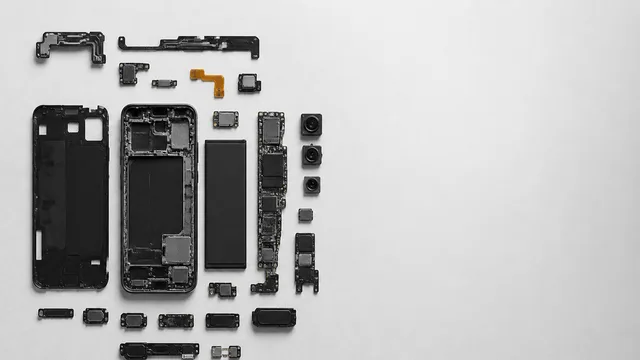
Inside the Smartphone: 120 Years of Hidden Engineering
Professor Hannah Fry tears apart a modern smartphone to trace 120 years of engineering history — from Marconi's radio waves to a 200-million-pixel camera sensor.