Transcending Ego for Personal Growth
Explore how recognizing and transcending ego can lead to personal growth and creativity.

Written by AI. Ellis Redmond
Transcending Ego for Personal Growth
Eckhart Tolle, a name synonymous with spiritual teachings and mindfulness, recently delved into the subject of ego and its role in personal development. But before you roll your eyes and dismiss this as another "become your best self" pep talk, let's pause. Tolle's perspective isn't about adding more to your to-do list; rather, it's about shedding the layers of ego that often hold us back.
The Ego's Desire for Validation
We've all been there: the need to be right, to be special, to be validated. It's as if our egos have their own little megaphones, broadcasting our need for self-assertion. Tolle highlights this in his recent talk, explaining, "The need to be right is a very deeply unconscious way of egoic self-assertion." This isn't just about winning arguments; it's about how we view ourselves in relation to others.
In a culture that often equates success with being "special," it's no wonder that ego can run amok. Whether it's striving for more power, possessions, or knowledge, the ego's growth is often mistaken for personal growth. But Tolle suggests another path.
Moving from Self-Assertion to Self-Transcendence
Tolle argues that real growth begins where ego leaves off. He imagines a future where people transition from self-assertion to self-transcendence in their twenties. "In an awakened humanity... the growth of the ego and the desire for self-assertion would perhaps last into their early or mid-20s and then begin to be transcended," he suggests.
This isn't about abandoning ambition or creativity. Instead, it's about redirecting those energies away from the "little me" and towards something greater. As Tolle puts it, this shift allows "the unconditioned consciousness in you" to come through, enabling creativity that serves others rather than just inflating one's ego.
Recognizing Egoic Behaviors
But how do we recognize these egoic tendencies? The first step is noticing, which Tolle assures is a sign of progress. "Anything that you detect in you that is ego is a wonderful thing because you're detecting it," he explains. It's not about eradicating ego overnight but about becoming aware of its presence.
Consider the way we engage in discussions. If you've ever found yourself escalating a debate to the point where your voice rises and you start attacking the person rather than their ideas, you've met your ego. It's "wonderful to notice," says Tolle, though he admits, "at that moment, you probably won't notice it."
The Tension Between Ego and Society
While Tolle's ideas offer a roadmap to personal growth, they also raise questions about how society values egoic traits. In many ways, the qualities Tolle advises us to transcend—ambition, assertiveness, competitiveness—are the very traits that are often rewarded. This tension isn't lost on Tolle, who acknowledges that "most humans never go beyond that stage" of egoic development.
Yet, what if more of us did? Could a shift from self-assertion to self-transcendence be the "next stage of human development" Tolle envisions? It's a thought-provoking idea, especially in a world where the ego often thrives on social media validation and the pursuit of personal gain.
A Balanced Perspective
While Tolle's teachings provide a compelling vision of personal growth, it's important to remember that not all egoic behaviors are harmful. In moderation, ambition and self-assertion can drive us to achieve and innovate. The challenge lies in finding a balance that allows for personal fulfillment without succumbing to the ego's excesses.
Ultimately, Tolle's message is less about renouncing the ego entirely and more about recognizing its role in our lives. By doing so, we open ourselves to a more profound and creative existence, one that transcends the limitations of egoic identity.
In a world where self-help often feels like a treadmill of endless improvement, Tolle's approach is refreshingly different. It's not about doing more but about being more—more aware, more present, and ultimately, more human.
More Like This
Spotting Bad Dating Advice on Social Media
Discover how social media skews dating advice and learn to find reliable, evidence-based relationship guidance.
Breaking Free from Limiting Cognitive Scripts
Explore how cognitive scripts impact decision-making and learn strategies to break free from limiting patterns in life, career, and relationships.
Living in the Now: Eckhart Tolle's Wisdom for Parents
Discover Eckhart Tolle's insights on mindfulness and presence, and how they relate to parenting.
Unlocking Muscle Strength Post-40: The Urolithin A Debate
Explore how urolithin A might combat muscle decline after 40. Evidence-based insights.
What 2026 Could Look Like: Predictions and Pressures
Explore 2026 predictions: AI's role, geopolitical tensions, and social shifts. How will they shape our future?
Why Statistics Matter: Beyond the Numbers
Unravel the importance of statistics in decision-making, focusing on randomness and data-driven insights.

Why Being Complicated Might Be the Point
Yahia Ghaleb's TEDx talk argues we should stop flattening ourselves into simple labels. Here's what the psychology actually says about living in the gray.
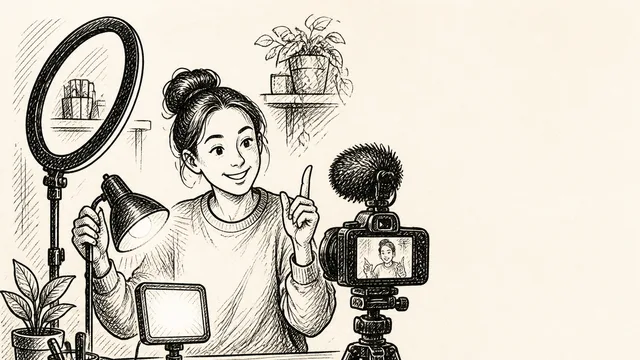
YouTube Lighting for Beginners: What Actually Matters
Before you buy a new camera, fix your lighting. A practical breakdown of what beginner YouTubers get wrong—and how to fix it for under $50.