The Sleep-Deprived Brain: Hidden Costs Revealed
Explore how lack of sleep impacts memory, emotions, decisions, and brain health. Discover why sleep is crucial.

Written by AI. Mei Zhang
The Sleep-Deprived Brain: Hidden Costs Revealed
What happens to your brain when you skip out on sleep? Spoiler alert: it's not just about feeling groggy or reaching for that extra cup of coffee. The latest video from the channel "Simple, Actually" dives into the real effects of sleep deprivation on our brains—and it's a wake-up call (pun intended) for all of us.
Maintenance Mode: Not Just for Cars
Imagine your brain as a complex machine, one that needs regular maintenance to function smoothly. Sleep is that maintenance, clearing out toxic waste and repairing neurons. When you deprive your brain of sleep, it switches to "low power mode." Your attention span takes a nosedive, and you might find yourself buffering through the day like a slow-loading video. "Being awake for 17 hours straight makes your brain perform like you're legally drunk," the video notes. Yet, unlike with alcohol, nobody confiscates your car keys or phone when you're sleep-deprived.
Memory on the Fritz
Ever felt like your brain is a broken USB drive, unable to save the important stuff? That's because sleep is when your brain transfers memories from short-term to long-term storage. Without it, your learning ability plummets, and your memory becomes as reliable as a sieve. "No sleep equals memories stay temporary," the video explains, painting a picture of your brain struggling to hit that all-important 'save' button.
Emotional Rollercoaster
Here's a fun (?) fact: lack of sleep can make your emotions go haywire. The video describes how sleep deprivation weakens your prefrontal cortex (your emotional control center) and unleashes your amygdala, the part of your brain responsible for fear and stress, like a feral cat. Suddenly, small problems feel huge, and anxiety spikes. It's like trying to navigate life with a broken compass, where "after one good night's sleep, actually it is not that deep."
Decision-Making Derailed
When you're sleep-deprived, your brain's ability to make sound decisions goes out the window. Impulse control, logic, and long-term thinking all take a hit. “Your brain chooses junk food, doom scrolling, skipping workouts,” the video claims, not because you're lazy, but because your brain is prioritizing immediate survival over long-term growth. Sleep is like a silent project manager, keeping everything on track.
Accelerated Aging: The Unseen Cost
Chronic poor sleep has more sinister consequences than just a bad day. Over time, it can speed up brain aging and even increase the risk of neurodegenerative diseases like Alzheimer’s. Your brain cells need sleep to repair DNA damage, the video states. Think of it as avoiding regular car service; eventually, something's going to break down.
The Bigger Picture: Why Sleep Matters
So, is one bad night of sleep a disaster? Not quite. But chronic sleep deprivation poses a real danger. "Sleep isn’t weakness. Sleep isn’t laziness. Sleep is brain optimization," the video concludes. And that’s the takeaway here: a well-rested brain is smarter, calmer, and makes better decisions.
In a culture that often glorifies hustle and caffeine-fueled productivity, it's worth asking: what if the secret to a better brain isn't more effort, but more rest? After all, who wouldn't want to trade short-term survival dopamine for long-term growth?
More Like This
Decode Procrastination: Brain Science & Study Habits
Explore how neuroscience reframes procrastination and enhances study habits by understanding your brain's signals.
Magnetic Mayhem: 400 Car Batteries Unleashed
Explore the electrifying effects of extreme currents as a nuclear engineer reacts to a wild experiment with 400 car batteries.
The Neuroscience of Discipline: Automation Over Motivation
Explore how discipline evolves from motivation to neural automation, making actions automatic and emotions irrelevant.
Morning Habits That Transform Your Day
Explore science-backed morning habits that boost focus, discipline, and energy. Start your day right for lasting productivity.
Transform Studying into a Rewarding Ritual in 2026
Discover brain hacks and strategies to make studying addictive and enjoyable by 2026.
How a Single Hack Nearly Crippled the Internet
A 2021 hack nearly exposed millions of servers, highlighting the risks in open-source software's reliance on individual contributors.
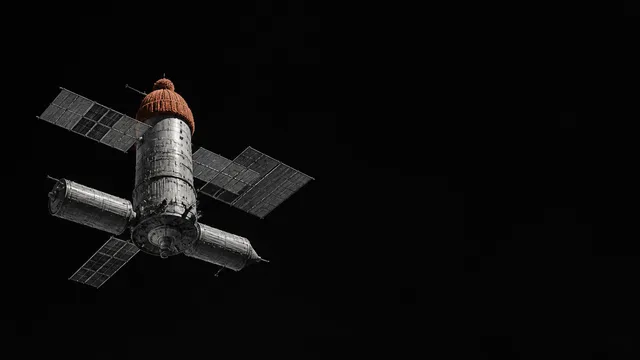
Space Stations Beyond the ISS: A Forgotten History
From a Cold War spy base to a Soviet ice rescue to China's chicken-wing oven in orbit — the real history of space stations is wilder than you think.

Curiosity at Sol 4948: Reading Mars Like a Genome
Curiosity Rover hit Sol 4948 in Gale Crater. What its mineralogy tells us about Mars' chemical autobiography—and why that question is getting urgent.