The AI You Don't Notice: Inside a Hardware Store's Tech
While everyone obsesses over ChatGPT, real AI quietly runs your local hardware store. Here's what that actually looks like in 2026.

Written by AI. Mike Sullivan
While the tech press breathlessly covers yet another GPT-whatever announcement, there's a different kind of AI revolution happening at your local Ace Hardware. It's not sexy. It won't write you a poem. But it's actually working.
Patrick from ServeTheHome recently walked through a Ruggiero's Ace Hardware in Phoenix—AMD-sponsored, full disclosure—to document something we've all experienced but rarely think about: the sheer amount of compute infrastructure required to sell you a drill bit in 2026. The result is a useful reality check on what AI actually does when it's not generating slop for the internet.
The Boring Truth About Retail AI
Here's what surprised me most about this walkthrough: almost none of this runs on GPUs. That's right—while everyone's fighting over H100s for their latest chatbot experiment, retail is humming along just fine on CPUs. AMD EPYC 8004 series chips, specifically, though the 8005 series is coming later this year.
Why? Because the history of retail video analytics is CPU-based, and it turns out CPUs with AVX-512 instructions handle most of this work perfectly well. You don't need a 100,000-GPU cluster to figure out if someone left a drink in the middle of an aisle.
"When we talk about retail AI, a lot of times we're talking about things that run pretty darn well and are optimized to run on CPUs rather than thinking of 100,000-plus GPU clusters making slop for the internet," Patrick notes. "This is completely different."
Different is right. This is AI as infrastructure, not as product. It's the technological equivalent of plumbing—you only notice it when it breaks.
Three Layers of Compute
Patrick frames retail AI across three experiences: customer, operator, and employee. Each layer has its own compute requirements, its own AI applications, its own infrastructure hiding in closets that haven't been renovated since the Clinton administration.
Start in the parking lot. Cameras track which spaces get used, how long cars sit there, even how many people walk past the storefront versus actually entering. Basic traffic analytics that any decent retail operation has been doing for years, now just more automated.
Inside, things get more interesting. Those digital price tags everyone's deploying? They're not just about looking modern. They solve a real problem: the gap between when a promotion expires and when some teenager actually changes the physical label. We've all been burned by that gap. You think you're getting a deal, you get to checkout, nope—expired yesterday. Digital tags close that loop.
Shoplifting detection is the obvious AI application everyone thinks of first, and yes, it's there. But the more interesting use case is behavioral analytics. Someone stands in front of the chainsaws for ten minutes, clearly trying to make a decision? Dispatch an employee. Not because Big Brother is watching, but because that's just good customer service automated.
Empty shelf detection works the same way. Camera notices a gap where product should be, flags it for restocking. Again, not rocket science—just the kind of operational efficiency that compounds into real money over thousands of stores.
The Unglamorous Middle Layer
Here's where it gets boring and useful: employee-facing systems. Radio communications. Digital timesheets. Shift scheduling apps. Training modules delivered on iPads in the break room instead of centralized training centers.
None of this is AI in the ChatGPT sense. It's just compute infrastructure that's been gradually digitized over the past two decades, now sitting on local servers in utility closets that look exactly like you'd imagine.
"These systems that are going in there are supposed to last many years," Patrick observes, gesturing at one such closet. "This may not be the prettiest setup, but it is something that is very representative of a huge swath of the retail space."
That's the part nobody talks about when they're hyping the AI revolution. Most of retail isn't running on cutting-edge anything. It's running on whatever was cost-effective three years ago and needs to keep running for three more.
Compute Creep in Unexpected Places
The paint mixer and key copier examples are perfect illustrations of how this stuff evolves. Used to be, mixing paint was a skilled trade—you had to know ratios, understand tints, get it right by feel. Same with key copying. Now there's a computer that scans the key, pulls the right blank, does the grinding automatically.
"We started out with a very manual process that had absolutely no connectivity," Patrick explains. "Now we're going to have little boxes that have some compute in them. Then the next thing is really personalizing those services, and that's where you get this AI."
That progression—manual to computerized to AI-enhanced—is playing out across retail in ways most customers never notice. Price scanners that check inventory in real-time. Kiosks that let you order out-of-stock items. Payment processing that happens in milliseconds across multiple systems.
Even safety stuff. Spill detection cameras that alert staff before someone slips. Temperature monitoring for refrigerated goods. All of it running on modest compute platforms tucked away where customers never look.
The Self-Checkout Problem
One application Patrick mentions but doesn't film: self-checkout monitoring. Cameras verify that customers scan everything in their basket, not just one item out of five. This is where retail AI gets into thornier territory—the line between loss prevention and surveillance theater.
The technology can also monitor employee effectiveness, flagging when checkout staff are on their phones instead of helping customers. Useful? Maybe. Creepy? Also maybe. The video doesn't dig into those tensions, but they're worth noting.
What Actually Matters Here
I've been watching tech hype cycles since Netscape went public. The pattern is always the same: revolutionary technology gets announced, VCs pump it, everyone predicts it will change everything, then reality sets in and we discover it's useful for about 30% of what was promised.
Retail AI is different because it's already past that cycle. It's been quietly useful for years. Digital price tags aren't coming—they're here. Video analytics isn't experimental—it's standard. The compute infrastructure isn't being installed—it's being upgraded.
This stuff works because it solves boring, specific problems: keeping shelves stocked, preventing theft, helping customers find employees, ensuring food safety. Not world-changing. Just incrementally better than the manual processes it replaced.
The hardware requirements tell the same story. Not GPUs. Not exotic accelerators. Just solid CPU platforms that can run for years in closets that barely get HVAC. That's the infrastructure of actual AI deployment, not the fantasy version sold in press releases.
Next time someone tells you AI is going to change everything, ask them which hardware store problems it's solving. The answer matters more than you'd think.
More Like This
Claude's New Projects Feature: Context That Actually Sticks
Anthropic adds Projects to Claude Co-work, promising persistent context and scheduled tasks. Does it deliver or just rebrand existing capabilities?
Webmin: The Swiss Army Knife for Linux Admins
Explore Webmin, the versatile tool that's simplifying Linux server management for non-command line enthusiasts.
At GTC 2026, the Real AI Story Was About People, Not Hype
GTC 2026 revealed working AI applications in robotics, biotech, and automation—not slop. The real tension? Management still doesn't understand the tech.
This Developer Spent $20K Building an AI Company That Never Sleeps
Alex Finn invested $20,000 in local AI models to create a 24/7 autonomous digital workforce. Here's what happened when the API costs disappeared.
GitHub's Week of AI Agents: Economic Survival Meets Code
GitHub's trending projects reveal a shift: AI agents now manage their own wallets, die when broke, and face real survival economics. What changed?
Linux Gets Quieter Upgrades That Actually Matter
KDE Plasma 6.6, PipeWire 1.6, and other Linux updates focus on polish over flash. Sometimes the boring improvements are the ones that stick.
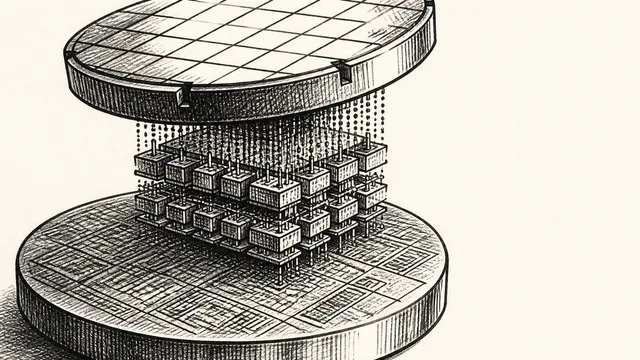
IBM NanoStack and the Future of Chip Architecture
IBM's NanoStack stacks transistors from separate wafers using atomic bonding. The physics works. The harder question is whether anyone can manufacture it at scale.
Inside the Smartphone: 120 Years of Hidden Engineering
Professor Hannah Fry tears apart a modern smartphone to trace 120 years of engineering history — from Marconi's radio waves to a 200-million-pixel camera sensor.