Residues: Rethinking Software Design for the Unpredictable Era
Explore Residuality Theory and its fresh take on complex software architecture and resilience.

Written by AI. Tyler Nakamura
Hey folks, ever feel like your software is a piñata at a party you weren't invited to? Barry O'Reilly's talk at GOTO Copenhagen 2025 might just be the game-changer you didn't know you needed. He's introducing something called Residuality Theory, and it's all about making your software architecture not just survive but actually thrive in unpredictable environments.
What's the Deal with Residuality Theory?
Imagine throwing darts at a board blindfolded and somehow hitting bullseyes. Sounds like a wild strategy, right? That's kind of what O'Reilly is suggesting with Residuality Theory. Instead of meticulously planning every detail, he argues that randomly stressing your software architecture can actually make it more resilient. It's like saying, 'Let's see what happens when we shake things up a bit,' and discovering it works out better than following a rigid plan.
A Little History Lesson
O'Reilly's theory isn't just pulled out of thin air. He takes us on a journey through the evolution of software architecture. Starting with the early days when everything was rigid and logic-driven, to the realization that things needed to be more modular and adaptive. Fast forward to today, where the environment is more like a chaotic dance party than a structured waltz. It's all about adapting to the unexpected.
The Complexity Conundrum
Here's the kicker: software might appear complicated, but O'Reilly argues it's actually quite rigid and logical. The real chaos is the business environment it's thrown into—think of it as trying to keep a paper boat afloat in a stormy sea. The business world is messy, unpredictable, and full of surprises that can tear your carefully planned architecture to shreds.
The Science of Complexity
To navigate this storm, O'Reilly turns to complexity science. He brings in concepts like random simulation and Kauffman Networks. If you're wondering what on earth that means, it's basically about understanding that complex systems tend to settle into certain patterns, known as 'attractors.' These are like the grooves on a vinyl record that guide the needle—a ton of possibilities, but only a few paths actually get played.
Real World Example: Car Charging Systems
O'Reilly gives the example of car charging systems. Instead of predicting every possible future state (good luck with that!), he suggests using random simulations to stress test these systems. It's about finding those unexpected weak spots before they become catastrophic failures.
Trade-offs and Practical Implications
Now, let's talk trade-offs. You might be thinking, 'Random stress? Sounds risky!' And you're not wrong. But the payoff is potentially huge. By embracing uncertainty and focusing on flexibility, you can build systems that don't just survive the unexpected—they thrive. It's a shift from playing defense to playing offense in the world of software architecture.
Wrapping It Up
So, is Residuality Theory the future of software design? Maybe. It’s certainly offering a fresh lens to view the chaos of today's business environments. Whether you're a developer, an architect, or just someone who loves tech, this theory challenges you to think differently about how you build and adapt systems.
Give it a shot, throw those darts, and see where they land. After all, in the world of software, the only constant is change.
More Like This
Mastering Software Design: Beyond the Code
Explore software design and architecture with insights from Sam Newman, Jacqui Read, and Simon Rohrer on communication and decision-making.

GNOME and KDE Together? Linux App Summit Explained
GNOME's Sri and KDE e.V. President Aleix Pol talk Linux App Summit, Flatpak's future, and what it'll actually take to get mainstream apps on Linux.
C++ Safety: Balancing Performance and Security
Explore C++ safety issues and modern programming practices to enhance security without compromising performance.
Effect-Oriented Programming: Making Side Effects Safe
Three authors explain how effect-oriented programming brings type safety to the messy, unpredictable parts of code—without the intimidating math.
Why Docker Books Still Matter in 2025
Elton Stoneman's updated 'Learn Docker in a Month of Lunches' reveals the gap between Docker beginners and experts—and why fundamentals still matter.
Why Your Company's Platform Engineering Is Probably Broken
Platform engineering experts reveal why Backstage implementations fail and what actually works when building internal developer platforms at scale.
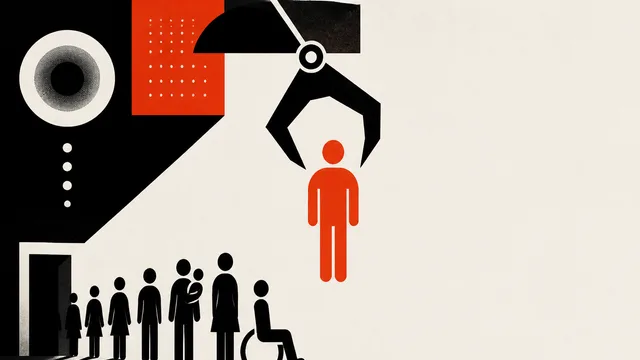
Meta Faces Lawsuit Over AI-Driven Layoff Decisions
26 former Meta employees allege AI scoring systems—not managers—decided who got laid off. Here's what that means for anyone who wants to work in tech.

Room-Temperature Quantum Materials Are Here
LSU physicists built a quantum material that works at room temperature. Here's what that actually means for quantum computing, and why it matters right now.