Exploring the Brain as Nature's Own Time Machine
Dive into how our brains perceive time, from past to future, with insights from StarTalk's latest episode.

Written by AI. Nadia Marchetti
Time is a concept that both baffles and fascinates us. In the latest episode of StarTalk, Neil deGrasse Tyson, alongside Chuck Nice and Gary O’Reilly, delves into the intricate dance between time and our brains with Dean Buonomano, a Professor of Neurobiology and Psychology at UCLA. The conversation spans everything from circadian rhythms to the philosophical underpinnings of time itself.
Time: Fundamental or Construct?
Is time a fundamental aspect of the universe, or is it merely a construct of the human mind? This question serves as the crux of the discussion. As Buonomano explains, "The brain does not work like man-made clocks." While we are surrounded by oscillators—pendulums and quartz crystals—that measure time through regular, repeating cycles, the brain has its own, more dynamic way of processing time.
The Brain's Temporal Symphony
The brain's method of timekeeping is akin to an hourglass, relying on complex neural dynamics rather than simple oscillations. This internal clock allows us to engage in what Buonomano terms "mental time travel," a unique human ability to connect past experiences with future possibilities. It’s this faculty that enables us to plan, anticipate, and navigate our lives, much like planting seeds for a future harvest.
Circadian Rhythms: Nature's Clockwork
Our biological clocks are synchronized by environmental cues, such as light, which guide our circadian rhythms. These internal clocks are crucial for anticipating environmental changes, as illustrated by the experiment with cyanobacteria. These tiny organisms, which helped oxygenate our planet, have circadian clocks that allow them to anticipate sunlight for photosynthesis. This anticipation is a survival mechanism deeply embedded in life itself.
The Philosophical Rift: Presentism vs. Eternalism
The conversation takes a philosophical turn as the team discusses Presentism—the idea that only the present is real—and Eternalism, which posits that the past, present, and future are equally real. This debate challenges our understanding of time and our place within it. The notion that time might be an illusion but a useful one is both unsettling and liberating.
A Synchronization of Minds
From the synchronization of human behavior during the Industrial Revolution to the coordination required in team sports, the ability to tell time unites us. As Buonomano notes, "Without that ability to synchronize, we wouldn’t have had the industrial revolution." Time isn't just a personal experience; it's a collective one that enables cooperation and societal progress.
The Ultimate Time Machine?
As the episode wraps up, we are left with the intriguing notion that perhaps the most sophisticated time machine doesn't require gears or electricity. Instead, it resides within us, as our brains intricately weave the fabric of time, allowing us to learn from the past and imagine the future.
This exploration of time through the lens of neuroscience and philosophy invites us to reconsider our relationship with this elusive dimension. Whether time is an illusion, a construct, or a fundamental aspect of the universe, one thing is clear: our brains are uniquely equipped to navigate its complexities.
More Like This
How Common Knowledge Influences Society
Explore how common knowledge shapes human interactions and societal norms with insights from Steven Pinker on StarTalk.
Can You Really Grow Your Own Food Anywhere?
Kevin Espiritu of Epic Gardening joins StarTalk to explore urban farming, hydroponics, gray water systems, and whether humans could grow food on the moon.
Michael Shermer on Truth, Bias, and the Post-Truth Era
Neil deGrasse Tyson and Michael Shermer unpack objective truth, motivated reasoning, and why your brain argues like a lawyer, not a scientist.
Why NASA Is Finally Returning to Venus After 40 Years
After decades of neglect, Venus is getting two NASA missions. Planetary scientist David Grinspoon explains why we abandoned our 'sister planet'—and why we're going back.

The Power of Unexpected Results in Science
Explore how unexpected scientific results challenge assumptions and drive discovery.
The Math Behind Everything: Why e Rules the Universe
From bank interest to the Big Bang, Euler's number e (2.718...) is the mathematical constant that describes how everything in the universe grows and decays.
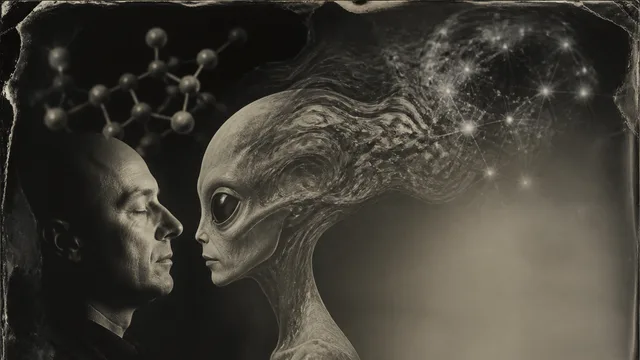
Do DMT Entities Point to Alien Consciousness?
Cognitive scientist Donald Hoffman claims DMT entities may be real alien minds. The math is real. Whether it proves anything about consciousness is a different question.
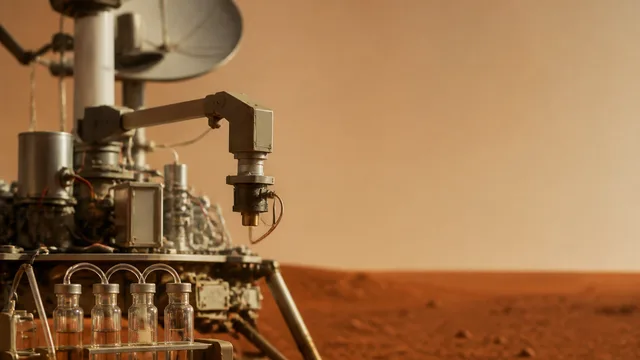
Viking Landers and the Unsolved Mars Life Debate
Fifty years after Viking landed on Mars, one experiment's positive result remains unexplained. Here's what the science actually shows—and what we've learned since.