Claude's New Monitoring Tool Fixes AI's Expensive Idling Problem
Anthropic's Claude Code Monitor lets AI agents sleep instead of burning tokens checking for problems that don't exist. It's smarter, but is it new?

Written by AI. Mike Sullivan
Here's what bothers me about the constant stream of AI updates: they're usually old ideas with better marketing. But occasionally—occasionally—someone ships something that actually addresses a real cost problem. Anthropic's new Claude Code Monitor might be one of those times.
The pitch is simple enough. Instead of having your AI coding agent constantly checking for errors like an anxious parent peeking into a kid's room every five minutes, Claude can now sit quietly and only wake up when something actually breaks. It's event-driven monitoring, which anyone who remembers the shift from polling to webhooks will recognize as Not Exactly Revolutionary. But in the context of AI agents that burn tokens every time they think, it's the kind of obvious-in-retrospect optimization that should have shipped months ago.
The Token Problem Nobody Talks About
Let's be clear about what we're solving here. Every time Claude checks your logs, reviews your code, or scans for errors—even when the answer is "nope, everything's fine"—you're paying for it. Not in dollars necessarily, but in tokens, which are effectively the compute currency of AI tools. As Julian Goldie puts it in his walkthrough of the feature: "Every time Claude checks, you know, did anything break, did anything break, did anything break, even when the answer is no, that still uses tokens, still expensive."
This is the hidden cost of running AI agents in production. It's like paying a security guard to walk your warehouse every five minutes instead of installing motion sensors. Technically it works, but it's an approach designed for a world where the guards are cheap and plentiful. In AI land, every check costs you.
The Monitor tool changes this by implementing what amounts to a notification system for AI agents. You tell Claude what to watch for—errors, pull requests, log file changes, server crashes—and it sets up a background watcher. Then Claude goes to sleep. When the watcher detects something matching your criteria, it taps Claude on the shoulder, Claude fixes the problem, and goes back to sleep.
Goldie compares it to phone notifications, which is exactly right: "Your phone doesn't check Twitter every 5 seconds manually, right? It just waits until Twitter sends a ping." Same principle, different application.
Open Source Drama (Or: Who Invented What)
Here's where it gets interesting. Technium, one of the developers behind the Hermes AI project, suggested on social media that Anthropic might have borrowed this idea from the open source community. "Even Anthropic is copying us now. We must be doing something right," he wrote, pointing out that Hermes had discussed background monitoring just three days before Claude shipped it.
I have no idea if there's actual copying happening here, and honestly, it doesn't matter much. This is how technology works—good ideas spread fast, regardless of who had them first. But Technium's comment raises a point worth considering: "Open source can move faster than sort of any centralized companies as well, because you know, they have less guidelines, they have less rules to stick to."
That's been true in pockets—Linux kernel development, certain web frameworks—but it's also wildly overstated. Open source has its own bureaucracy, just distributed across maintainer egos instead of corporate hierarchies. What's more interesting is watching the feedback loop between open source experimentation and commercial implementation compress. Three days from concept to shipped feature, if Technium's timeline is accurate, is fast by any standard.
What You Can Actually Do With This
The practical applications are straightforward enough if you're already using Claude Code. You can set watchers for:
- Error monitoring: Claude watches your app and only activates when something breaks
- Pull request reviews: When developers submit code changes, Claude can automatically review them
- Log file tracking: Claude monitors your app's logs and reacts only to significant events
- Server monitoring: For live websites or apps, Claude can catch and fix issues the moment they occur
To use it, you explicitly tell Claude to employ the monitoring tool. Simple prompts like "monitor for errors" or "watch my app and log if anything crashes" will set up the background watcher. This is important—the feature won't activate unless you specifically invoke it.
The Bigger Pattern
What strikes me about this update isn't the novelty—event-driven architectures have been around since before I started covering tech. It's that we're watching AI tools slowly rediscover every optimization that traditional software already learned.
Don't constantly poll, use events. Don't keep processes running when they're idle, sleep them. Don't check everything all the time, set triggers. These aren't insights; they're patterns we've known for decades. But they matter because AI tools initially ignored them all, burning through compute like there was no tomorrow.
Now we're in the inevitable correction phase, where the industry realizes that running AI agents in production requires the same discipline as running any other production system. You can't just throw tokens at problems and call it architecture.
The Monitor tool suggests Anthropic is learning this. Whether they learned it from Hermes or figured it out independently, the result is the same: a more efficient way to run persistent AI agents without bankrupting yourself on token costs.
The question is what took so long. This should have been table stakes from the beginning.
More Like This
Anthropic Just Killed OpenClaw Access—Here's What Happened
Anthropic blocked OpenClaw from Claude subscriptions on April 4th. We break down why it happened and five alternatives that still work right now.
Anthropic's Three Tools That Work While You Sleep
Anthropic's scheduled tasks, Dispatch, and Computer Use create the first practical always-on AI agent infrastructure. Here's what actually matters.
The No-Code AI Agent Promise: What Toolhouse Actually Delivers
A tech veteran examines Toolhouse's claim that anyone can build AI agents in minutes without coding. What works, what's hype, and what you should know.
Paperclip AI Turns Project Management Into Automation
A developer demonstrates how Paperclip AI handles tasks from Google Ads audits to content creation—but raises questions about autonomous systems.

Designing GUIs for AI Agents: An Unsolved Problem
AI agents need interfaces humans can actually understand and control. The design choices made now will shape whether AI goes mainstream or stays a developer toy.
When Agents Generate Their Own UI: The Three Flavors Explained
CopilotKit's Tyler Slaton maps the spectrum of generative UI—from pixel-perfect control to agents writing raw HTML. Each approach makes different tradeoffs.

35 GitHub Projects Mapping the AI Agent Trust Gap
This week's GitHub trending list is less a catalog of tools and more a collective argument: developers don't fully trust AI agents yet—and they're building accordingly.
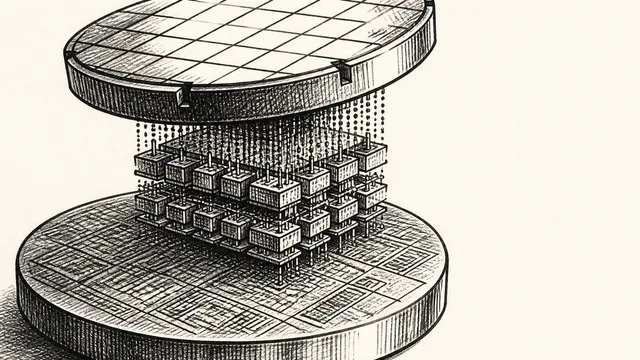
IBM NanoStack and the Future of Chip Architecture
IBM's NanoStack stacks transistors from separate wafers using atomic bonding. The physics works. The harder question is whether anyone can manufacture it at scale.