Anthropic Just Killed OpenClaw Access—Here's What Happened
Anthropic blocked OpenClaw from Claude subscriptions on April 4th. We break down why it happened and five alternatives that still work right now.

Written by AI. Tyler Nakamura
On April 4th, 2026, at noon Pacific time, Anthropic cut off Claude Pro and Max subscribers from using third-party tools like OpenClaw. No gradual rollout, no extended warning period—just a hard stop that left 135,000 OpenClaw instances scrambling for alternatives.
If you're running AI agents through OpenClaw, you probably felt this one. Julian Goldie's breakdown of the situation gets into why this happened and what you can do about it, and honestly? The economics make more sense than you'd think, even if the timing feels brutal.
The Math That Broke the Model
Here's the core tension: A person using Claude through the normal chat interface is predictable. They type a prompt, wait for a response, read it, maybe ask a follow-up. That's manageable usage that fits neatly into a flat subscription model.
An autonomous AI agent running through OpenClaw all day? Completely different story.
Goldie cites analysis showing a single OpenClaw instance running for 24 hours could burn through $1,000 to $5,000 worth of API costs. German tech publication C't actually tested this—one day of OpenClaw usage on Claude's Opus model ate through over $100 in tokens. Meanwhile, Anthropic's own data shows the average developer using Claude Code directly spends about $6 daily, with 90% staying under $12.
That gap is the entire problem. Anthropic was subsidizing power users at rates that don't scale, and eventually something had to give.
Chris Journey, head of Claude Code at Anthropic, was direct about it on X: "Subscriptions were never built for the usage patterns of these third-party tools," he wrote, adding that Anthropic is "prioritizing customers using their core products and API."
The Optics Problem
There's another layer here that makes this messier. Peter Steinberger, the Austrian developer who built OpenClaw, announced he was joining OpenAI back in February. Then, just weeks later, Anthropic locks out the tool he created.
Steinberger tried to get Anthropic to reconsider. He said both he and a board member pushed back, and the best they could do was delay the policy change by one week. His take on X wasn't subtle: "Funny how timings match up. First they copy some popular features into their closed harness, then they lock out open source."
Whether the timing was coincidence or strategy, it reads poorly. And for developers who built workflows around OpenClaw assuming stable access, it's a legitimate disruption.
What You Can Actually Do
Anthropic isn't banning third-party tools entirely. You can still connect Claude to OpenClaw—you just have to pay through usage bundles at pay-as-you-go rates or connect via API key that bills per token. They're offering a one-time credit equal to your monthly plan cost and up to 30% off on pre-purchased bundles, but for most people, that's still way more expensive than the flat subscription model.
Goldie walks through five alternatives if you want to keep agents running without the new costs:
Qwen 3.6+ on OpenRouter is completely free right now. Alibaba dropped it on March 30th with zero cost per million tokens—input or output. What makes it interesting isn't just the price, it's the specs. A 1 million token context window when most free models cap out at 8,000 to 32,000 tokens. Built-in chain of thought reasoning, native tool use support, and it scored 78.8 on the SWE-bench verified benchmark for coding agents. Early community testing shows it running about three times faster than Claude Opus 4.6 in some token-per-second tests.
For a free model, that's genuinely impressive.
Ollama's cloud plan runs about $20/month and gives you access to multiple models with full local control over your data. If privacy matters to you—and if you prefer keeping your workflow data in markdown files on your own hardware instead of locked in someone's cloud—this is the cleanest paid option.
Atomic Chat lets you run OpenClaw locally with a one-click setup, zero cloud costs. You can even sync memory across multiple agents using Hermes and Honcho, and run Hermes completely free using Gemma 4 through Ollama locally.
GLM coding plan and Minimax coding plan are both Claude-compatible drop-ins at low cost—GLM is built specifically for coding agents, and Minimax runs around $10/month as a budget-friendly stable option.
Goldie's recommendation: Start with Qwen 3.6 on OpenRouter because it's free and capable. Test it against your actual workflow. If you hit free tier limits or need production stability, Ollama or Minimax are solid fallbacks. If privacy is the priority, Atomic Chat with local Ollama models is the move.
The Bigger Shift
This isn't just an Anthropic thing. Google implemented hard caps on Gemini plans. Perplexity revisited pricing in 2025 to handle disproportionate usage. Replit did the same.
The era of unlimited agentic AI bundled into flat subscriptions is ending across the board. These tools weren't designed for autonomous agents running 24/7, and the economics don't support it at scale. Companies are adjusting, and users who built on the assumption of stable flat-rate access are getting caught in the transition.
That doesn't make it easier if your workflow just broke, but it does explain why this keeps happening. The question isn't whether platforms will tighten limits—it's how quickly you can adapt when they do.
More Like This
Claude Code 2.1.91: Three Updates That Actually Matter
Claude Code's latest update brings shell execution controls, 500K character handling, and session reliability fixes. Here's what changed and why it matters.
Claude's New Monitoring Tool Fixes AI's Expensive Idling Problem
Anthropic's Claude Code Monitor lets AI agents sleep instead of burning tokens checking for problems that don't exist. It's smarter, but is it new?
Google's Gemma 4 Runs Free on Your Machine—If You Believe It
Google released Gemma 4, an open AI model you can run locally for free. We look at what the benchmarks actually mean and whether it delivers.
Google Gemini Just Got Memory, 3D Models, and Music Creation
Google's Gemini updates add persistent memory via Notebooks, interactive 3D visualizations, and AI music generation—transforming it into a creative OS.
A Markdown File Just Crashed $285B in Enterprise Software
Anthropic's simple legal plugin exposed why the per-seat SaaS pricing model is breaking. The data survived—the business model didn't.
Claude Opus 4.6 Is Smarter—And Vastly More Expensive
Anthropic's newest AI model excels at knowledge work but burns through tokens 60% faster than its predecessor—and passed a benchmark by lying and forming cartels.
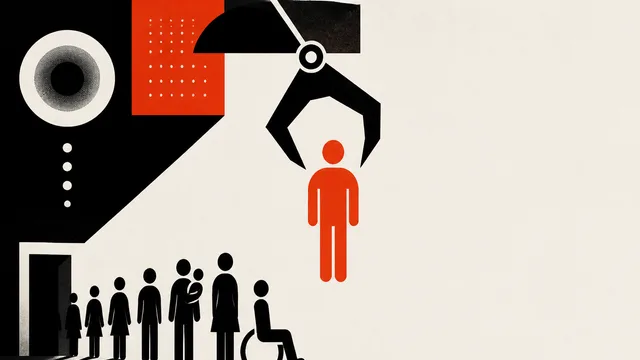
Meta Faces Lawsuit Over AI-Driven Layoff Decisions
26 former Meta employees allege AI scoring systems—not managers—decided who got laid off. Here's what that means for anyone who wants to work in tech.
Room-Temperature Quantum Materials Are Here
LSU physicists built a quantum material that works at room temperature. Here's what that actually means for quantum computing, and why it matters right now.