Diving into Apple's M5: Moore's Law & Microchip Marvels
Explore Apple's M5 chip, Moore's Law, and the evolution of microchips over decades.

Written by AI. Mike Sullivan
The tech world has a penchant for grand promises and futuristic visions, and what better way to illustrate these than by shrinking down to the size of a microchip? Marques Brownlee takes us on a journey through Apple’s latest M5 chip, a tour de force of miniaturization that’s more mind-boggling than your first time seeing a floppy disk.
Moore’s Law: The Everlasting Gobstopper of Tech
Back in the 80s, Gordon Moore made a prediction that would become the tech equivalent of a rockstar's hotel room legend. Moore's Law posited that the number of transistors on a microchip would double approximately every two years. For decades, this prediction has been the heartbeat of the semiconductor industry, driving the relentless march of progress. But like any good rockstar, it's worth asking how long the party can last. Brownlee’s video reminds us that while Moore's Law has held true for a remarkable stretch, we're now playing in the atomic sandbox.
Brownlee’s visual journey through the scale of technology is like watching a history of music go from vinyl to Spotify playlists. He notes, “Technology only gets better because of the people working really hard on it.” And it's true. Those folks in lab coats are the unsung heroes of our pocket-sized supercomputers.
Photolithography: The Magic Behind the Curtain
Creating transistors today involves photolithography, a process that might as well be magic to the uninitiated. Imagine trying to paint the Mona Lisa on a grain of rice, and you'll start to get an idea of the complexity involved. Brownlee likens it to developing a photo with light projected through a microscope, but instead of capturing your awkward high school photo, you’re etching circuits on a silicon wafer.
Now, if you’ve seen the 1985 classic, Back to the Future, you might remember Doc Brown’s flux capacitor. Photolithography is our real-world equivalent of time-traveling DeLorean magic, turning the impossible into Tuesday’s work.
From Room-Sized Behemoths to Pocket-Sized Titans
Remember when computers were the size of a room? Neither do I, but I hear they were quite the spectacle. The first electronic computer, the ENIAC, was the size of a small house. If we still built computers that way, your iPhone would need to be the size of New Jersey, as Brownlee humorously points out.
The evolution from room-sized titans to pocket-sized marvels isn't just a tale of technological prowess; it's a saga of human ingenuity. The drive to make things smaller, faster, and cheaper is as much a part of our DNA as our love for Star Wars and The Matrix.
The Future: A Shrinking Horizon?
So, where do we go from here? Brownlee himself wonders about the future of Moore’s Law as we approach the physical limits of miniaturization. It's like the end of a great 90s sitcom—will there be a satisfying resolution, or are we destined for a sequel that never quite captures the magic of the original?
In the video, Epic Spaceman, a collaborator, says, “Even when you can stand on them, I still struggle to get my head around how many transistors there are here.” It’s a sentiment that echoes through the tech community. As we continue to shrink down, the challenges grow, but so do the possibilities.
This journey through the M5 chip is a reminder of the incredible progress we've made, yet it's also a call to appreciate the hard work and creativity that continue to drive us forward. Like any good GenX-er, I’ll keep one eye on the future and one foot firmly planted in the past, ready to call out the hype while celebrating the genuine marvels of modern technology.
More Like This
Claude's New Projects Feature: Context That Actually Sticks
Anthropic adds Projects to Claude Co-work, promising persistent context and scheduled tasks. Does it deliver or just rebrand existing capabilities?

Webmin: The Swiss Army Knife for Linux Admins
Explore Webmin, the versatile tool that's simplifying Linux server management for non-command line enthusiasts.
Apple's M5 Pro & Max Just Changed Everything About Chips
Apple's M5 Pro and Max use chiplets for the first time, ditching efficiency cores entirely. Here's what that means for performance and why it matters.

The Security Risks Hiding in Your $50,000 Desk Setup
A tech reviewer's decade-old workspace reveals what happens when premium gear outlives its security updates. The Mac Pro problem nobody wants to discuss.
Why Moore's Law Explains Almost Nothing About Computing
The story of computing isn't about transistor counts—it's about the technological shifts that happened between them. Here's what really drove progress.

Linux Gets Quieter Upgrades That Actually Matter
KDE Plasma 6.6, PipeWire 1.6, and other Linux updates focus on polish over flash. Sometimes the boring improvements are the ones that stick.
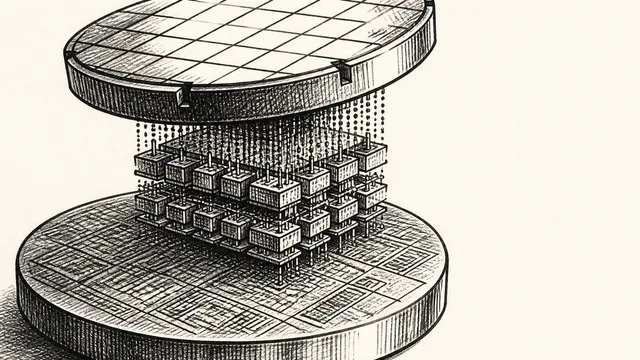
IBM NanoStack and the Future of Chip Architecture
IBM's NanoStack stacks transistors from separate wafers using atomic bonding. The physics works. The harder question is whether anyone can manufacture it at scale.
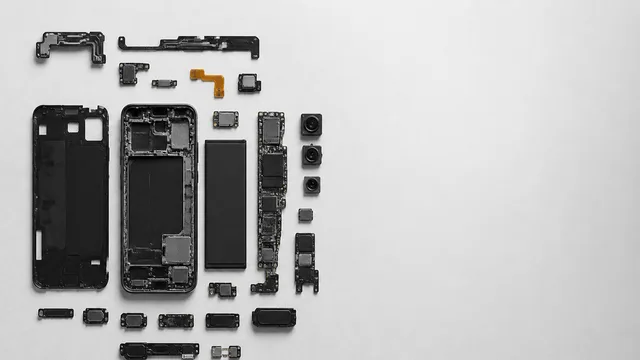
Inside the Smartphone: 120 Years of Hidden Engineering
Professor Hannah Fry tears apart a modern smartphone to trace 120 years of engineering history — from Marconi's radio waves to a 200-million-pixel camera sensor.