AI Coding Tools Trigger Market Panic Over SaaS Future
OpenAI's Codex app and Anthropic's Claude plugins spooked investors this week. Are we watching the software industry's Napster moment unfold in real time?

Written by AI. Marcus Chen-Ramirez
The AI industry had a spicy week. OpenAI and Anthropic both dropped major coding-focused releases within 15 minutes of each other—Anthropic apparently couldn't resist front-running by a quarter hour—and the market's response was instructive. Software stocks wobbled. Not crashed, but wobbled in that way that suggests investors just realized they might be holding the Blockbuster Video of 2025.
The panic catalyst? Anthropic announced plugins for Claude Co-work that let users build custom tools for sales, finance, legal, and marketing workflows. The kind of stuff companies currently pay five or six figures annually to access through traditional SaaS platforms.
"New plugins tailored for specific industries like sales, finance, data marketing, and legal launched on Friday that sent software stocks into a spiral, raising fears that the bread-and-butter software as a service business model that's driven the tech and digital service industries is now at risk of disruption," tech YouTuber Matt Wolfe noted in his weekly AI roundup.
Wolfe's read on the freakout: "If that's not an understatement, I don't know what is. The SaaS world has been at risk of disruption for the past 3 years. We're just seeing these coding models get good enough where everybody's like, 'Oh crap, this happened faster than we thought.'"
He's not wrong. But the question isn't whether AI coding assistants can theoretically replace parts of the software stack—of course they can. The question is what that replacement actually looks like in practice, and whether the market panic reflects reality or the tech industry's perpetual habit of overreacting to demos.
The Parallel Agent Problem
OpenAI's contribution to the chaos is Codex, a new IDE (integrated development environment) that positions itself as a "command center for agents." The pitch is seductive: spin up multiple AI coding agents, each working on different projects simultaneously. Want a retro space shooter, a portfolio website, and a Pomodoro timer all built at once? Just fire up three agents and let them run in parallel.
Wolfe tested this live. He prompted one agent to build a 3D space shooter, another to create a personal website, and a third to make a productivity timer. All three projects ran concurrently. Within minutes, he had functional prototypes. The space game had bugs—it froze on death—but it was playable. The website looked decent for a single-prompt effort. The timer worked.
Codex is built on OpenAI's new GPT-5.3-Codex model, which they released the same day. Unlike traditional IDEs like VS Code or Cursor, Codex feels deliberately stripped down. Fewer options, less visual noise. You tell it what you want, it writes the code. There's a terminal, a diff panel for tracking changes, GitHub integration for version control, and a "skills" system—bundles of instructions the AI can invoke to handle specific workflows.
The simplicity is strategic. OpenAI is betting that most people don't want to become expert coders—they just want their ideas turned into working software. Codex is free on ChatGPT's basic tier "for a limited time," which is OpenAI's way of getting people hooked before the paywall drops.
When Plugins Eat SaaS
Anthropic's move is arguably more threatening to established software companies. Their new plugins for Claude Co-work go beyond simple coding assistance. These plugins connect to APIs, bundle multiple skills together, and are explicitly designed for industry-specific workflows. Bio research. Customer support. Enterprise search. Marketing automation.
The plugins are built by Anthropic, but users can also add custom ones pulled from GitHub. That's the detail that likely spooked investors. If businesses can build—or download—plugins that replicate their expensive CRM, analytics dashboard, or project management suite, why keep paying the subscription fees?
Wolfe's take: "It's only a matter of time before every company's hiring an in-house vibe coder who's sort of vibe coding up their software to replace the marketing stack that they're paying six figures a month for."
The phrase "vibe coder" deserves unpacking. It refers to people who don't have formal software engineering backgrounds but can describe what they want clearly enough for AI to build it. This isn't new—low-code and no-code tools have existed for years. What's different is the sophistication ceiling. Previous generations of these tools could build simple workflows and basic apps. Current AI coding assistants are building flight simulators.
Actually, about that flight simulator: Developer Alistair McCleay reportedly used Claude Opus 4.6 and GPT-5.3-Codex together to build a playable flight sim in about an hour. It lets you fly strike fighters over real cities using what appears to be Google Maps data. Wolfe tested it and seemed genuinely surprised it worked. So am I.
The Enterprise Question
Here's where skepticism is warranted. Will Fortune 500 companies immediately fire their SaaS vendors and start building everything in-house with AI? Probably not. Enterprise software decisions are driven by compliance requirements, security audits, vendor relationships, and institutional inertia. "Move fast and break things" is not how legal departments think.
Wolfe acknowledges this: "Are a lot of big enterprise companies going to go and do this? Probably not for a while. They'll probably still rely on a lot of the enterprise solutions that are out there."
But startups don't have that baggage. Neither do mid-sized companies with technical talent and tight budgets. The question isn't whether AI tools will eliminate SaaS entirely—they won't—but whether they'll compress margins, slow growth, and force vendors to compete on integration and support rather than basic functionality.
SaaS companies have survived disruption before. Cloud computing didn't kill software—it transformed the business model. Mobile didn't eliminate desktop apps—it created new categories. AI coding assistants might follow a similar pattern: forcing adaptation rather than extinction.
Or maybe this time is different. The speed at which these models are improving is genuinely unusual. Wolfe built three functional apps in minutes with Codex. McCleay built a flight simulator in an hour. A year ago, those timelines would have seemed absurd.
What's Actually Getting Built
Beyond the business model handwringing, the rest of Wolfe's video covered the usual AI product churn. XAI released Grok Imagine 1.0, a video generation model that produces 10-second clips at 720p. Kling AI launched version 3.0, which Wolfe considers "probably the best model for videos right now" based on visual realism. Krea added a real-time camera filter to their iOS app that transforms live video—Wolfe gleefully set himself on fire and turned into an underwater guitar-playing fish-man.
Ideogram introduced prompt-based image editing that's surprisingly contextual—Wolfe asked it to add a baseball stadium background and it correctly chose Petco Park, home of the San Diego Padres, based on the cap in the image. ElevenLabs launched voice synthesis v3. Mistral released an open-source speech transcription model. Roblox announced a 4D foundation model for procedural game content.
Elon Musk reportedly merged SpaceX with XAI and X, which—yeah, that's happening too.
The volume of releases is almost numbing. Every week brings another model, another feature, another demo that would have been headline news six months ago. Wolfe's comment feels apt: "Keeping up with AI news right now is borderline impossible."
The question lurking behind all these launches is what actually matters versus what's just noise. Codex and Claude plugins feel significant because they target a concrete, expensive problem: building and maintaining software. A better video generation model is impressive, but it's iterative. Real-time camera filters are fun, but they're toys.
Tools that let non-programmers build functional applications threaten established business models. Whether that threat materializes as quickly as the market fears—or whether we're watching another round of demo-driven hype—depends on factors that won't be clear for months or years. Adoption curves, enterprise sales cycles, security requirements, regulatory responses.
For now, we're in the territory where it's possible to build a flight simulator in an hour and investors are genuinely unsure whether that's a party trick or the future of software development. Both things can be true.
More Like This
Anthropic's Claude Code Guide Shows What We're Doing Wrong
Anthropic published official Claude Code best practices. Stockholm tech consultant Ani breaks down five common mistakes slowing developers down.
Spec-Driven Development Tools Promise to Fix AI Coding
Tracer's Epic Mode tackles 'vibe coding' with structured specifications. But can better documentation really solve AI development's consistency problems?
AI Coding Tools Just Got Serious—And So Did The Risks
OpenAI, Google, and Anthropic are racing to deploy autonomous AI coding agents. Meanwhile, security researchers are sounding alarms about what happens next.
What 1,600 Hours With Claude Code Actually Teaches You
Ray Amjad spent 1,600 hours with Claude Code and learned it's not about the AI—it's about understanding how you work. Here's what actually matters.
OpenAI's GPT-5.4 Can Now Test Its Own Code Like a Human
OpenAI's new GPT-5.4 model can interact with computers to test code, build apps, and generate websites—while cutting token usage by two-thirds.
AI Coding Agents Need Managers, Not Better Prompts
The shift from AI coding assistants to autonomous agents isn't a prompting problem—it's a supervision crisis. Here's what changes when AI stops suggesting and starts executing.

AI Coding Tools May Erode Developer Skills
A small but pointed Anthropic study finds junior developers who use AI score worse on coding quizzes—especially in debugging. Here's what the data actually says.
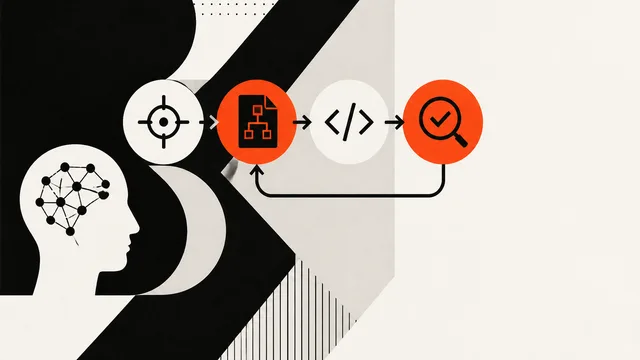
AI Coding's Babysitting Problem Has a Structured Fix
The BMAD Method's QuickDev tool folds planning, coding, and review into one loop—less hand-holding, more discipline. Here's what it actually does.