Can X-ray Lithography Shake Up Chipmaking Giants?
Substrate's X-ray tech could revolutionize chipmaking, challenging TSMC and ASML's dominance.

Written by AI. Zara Chen

Can X-ray Lithography Shake Up Chipmaking Giants?
Picture this: the semiconductor world is like a high-stakes poker game, and Substrate, a U.S.-based startup, just walked in with a wildcard—a new technology called X-ray lithography. This could potentially disrupt the current leaders, TSMC and ASML, who have been holding the best hands for years. But is this new player really a game-changer or just bluffing? Let's dive in.
The Current Giants: TSMC and ASML
First, let's chat about the reigning champs. TSMC is like the Starbucks of chipmaking—ubiquitous and dominating. However, the claim that they produce roughly 90% of the world's most advanced chips might be a bit of a stretch. According to Counterpoint Research, TSMC holds about 54% of the total foundry market as of 2022, with a significant share in advanced nodes.
On the other side, we have ASML, the sole provider of EUV lithography machines, which are vital for producing the tiniest, most powerful chips. These machines are like the Ferraris of the semiconductor world—complex, pricey, and exclusive. Each one costs around $400 million, but they’re worth every penny since they print chips that power everything from iPhones to AI servers.
Enter Substrate: A New Contender
Enter Substrate—a U.S.-based startup with ambitions as bold as a TikTok dance challenge. They're betting big on X-ray lithography, a tech that's been chilling in research papers like a hidden gem waiting for its spotlight moment. Substrate claims this method can print chips at a fraction of the cost of EUV machines, potentially democratizing chip manufacturing. But hold up, are these claims legit?
X-ray Lithography: The Plot Thickens
X-ray lithography isn’t exactly new; it’s been the nerdy kid in the back of the class, overlooked because of its complexity. X-rays have a much shorter wavelength than the light used in EUV, which theoretically allows for finer, denser chip features. However, controlling these X-rays has been trickier than getting a cat to take a bath.
Substrate claims they've cracked the code, achieving 12 nm feature printing. This is a big deal because it’s relevant for creating sub-2 nm transistors. But without third-party validation, these claims need a healthy dose of skepticism. Until we see verified results, it's like hearing about a new restaurant and waiting for Yelp reviews before you book a table.
Why This Matters
The implications extend far beyond tech specs and manufacturing lines. If Substrate can deliver, they could lower the financial barrier to entry in chipmaking, allowing smaller companies to enter the ring. Imagine a world where startups can compete in the semiconductor space without needing a billionaire sugar daddy.
Moreover, the geopolitical stakes are higher than a cat meme's virality potential. Chipmaking is not just about gadgets; it's about economic power and national security. In a world where chips are the new oil, whoever controls the production controls the narrative.
The Road Ahead
The road to revolutionizing chipmaking isn't just paved with good intentions; it's filled with challenges. Substrate plans to build their own factories and offer foundry services, directly challenging established players. But remember, TSMC didn't just spring up overnight. They've been perfecting their processes over decades, with scale and experience that are tough to beat.
Substrate's vision is ambitious, but they’re not alone. Other companies like xLight are also working on particle accelerators as light sources, focusing on enhancing current lithography rather than replacing it entirely.
Final Thoughts
So, will Substrate's X-ray lithography be the next big thing or just a flash in the pan? Only time will tell. But one thing's for sure: the semiconductor industry is on the brink of a potential shake-up, and if Substrate succeeds, the ripple effects could be monumental. Just like SpaceX did with rockets, lowering costs could open up new markets and spur innovation.
In the end, whether Substrate ends up as the next big disruptor or a cautionary tale, the journey will be worth watching. After all, in the world of tech, the only constant is change—and who doesn't love a good plot twist?
More Like This
Chips: The Tiny Titans Powering Our World
Explore how tiny chips shape tech, global politics, and even fitness, with insights from Chris Miller.
Cloudflare Just AI-Cloned Next.js and Open Source Is Shook
Cloudflare used AI to recreate Next.js in a week. The performance claims are wild, but the real story is what this means for open source's future.
Two Hidden Claude Code Commands That Actually Matter
Most Claude Code users ignore /power-up and /insights. Here's why these slash commands might be the productivity hack you didn't know you needed.
Intel's 18A Chip: A $20B Bet That Breaks Every Rule
Intel's Fab 52 is producing chips with two radical innovations at once—something the industry never does. Here's why that's either genius or catastrophic.
This Free Tool Lets You Run Multiple AI Agents At Once
Collaborator is an open-source app that orchestrates multiple Claude AI agents in one workspace. Here's what it actually does—and what it can't.
Diving into Apple's M5: Moore's Law & Microchip Marvels
Explore Apple's M5 chip, Moore's Law, and the evolution of microchips over decades.
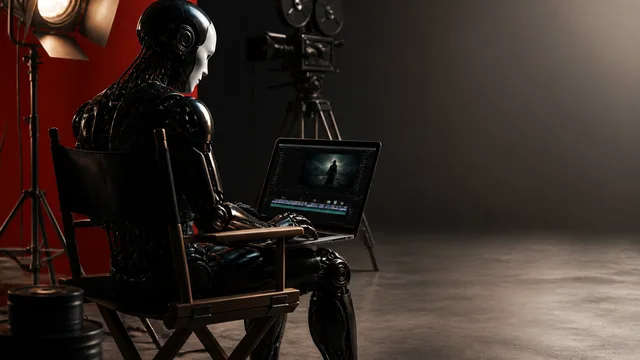
Netflix Used AI in 300 Titles. Here's What That Means.
Netflix disclosed AI use in roughly 300 titles in its Q2 2026 earnings. We break down what that number actually tells us — and what it doesn't.

Applied Computing Bets $20M on AI for Oil and Gas
Applied Computing raised $20M to build a foundation AI model for oil, gas, and petrochemical plants. Here's why that's more complicated than it sounds.