Why Your AI Videos Still Look Amateur (And How to Fix It)
AI video tools are powerful, but most creators treat them like slot machines. Here's the systematic approach that actually produces cinematic results.

Written by AI. Marcus Chen-Ramirez
The models can do things now that would have seemed impossible six months ago. Realistic faces. Physics that mostly works. Lighting that looks like someone knew what they were doing. And yet walk through any AI video community and you'll see the same problem: outputs that look like they wandered out of an early alpha test.
The issue isn't the technology. Content creator Chase AI argues the problem is methodological—most people are treating sophisticated AI video tools like scratch-off lottery tickets. "You have no system and you have no framework that you apply to AI content creation," he explains in a recent tutorial. "And because of that, it's essentially a giant lottery."
What he's describing is the gap between capability and control. The tools can theoretically produce cinema-quality work, but without a repeatable process, you're just generating variations on randomness and hoping something works.
The System That Actually Works
Chase's framework breaks AI video production into five stages, each building on the last: storyboarding, foundation images, key frame generation, video generation, and editing. It's prosaic stuff—the kind of structure any film student would recognize. Which is precisely the point.
The storyboarding phase uses AI (Claude or ChatGPT) not as a generator but as a collaborator. Feed it a template that asks for five specific elements: the narrative concept, visual references and tone ("The Revenant meets The Northman"), setting details, character definitions, and a shot-by-shot breakdown. The back-and-forth with AI isn't about getting a perfect script on the first try—it's about forcing yourself to make concrete decisions before touching any generative tools.
Here's where it gets interesting: Chase recommends Shot Deck, a repository of film stills with technical metadata. Want that blue-hour campfire scene? Don't just prompt "nighttime campfire cinematic"—pull up The Revenant on Shot Deck, grab the frame you want to reference, and copy the technical specs. "Does the average person know what an ARRI Alexa 65 camera is?" Chase asks. "I don't even know if I even pronounce that right. Yet, if we use language like that when we're creating things... it's going to be able to use that sort of cinematic language."
This is the part that feels like cheating but isn't. You're not a cinematographer. Why pretend to reinvent what actual cinematographers spent careers perfecting? The AI understands "ARRI Alexa 65, ultra vista lens, shallow depth of field, natural light cinematography" far better than it understands your fuzzy intention.
Character Consistency Is Still The Hard Part
The foundation image phase solves—or attempts to solve—the perpetual problem of getting the same character to appear across multiple scenes. Chase creates what he calls a "medium shot" of his main character: not so close that you lose body context, not so wide that facial details blur.
The prompt he uses is technical bordering on obsessive: camera specs, lens details, and then this crucial bit: "visible pores, fine facial hair, natural skin imperfections, ultra realistic, no retouching, no skin smoothing." He's actively fighting against the AI's default tendency toward that Instagram-filter plastic look.
This reference image becomes an anchor. Every subsequent scene that features this character gets this image fed back into the prompt: "Hey, character one in image one does A, B, and C." It's not perfect—AI video still struggles with consistency—but it's the difference between vaguely similar characters and actual continuity.
Where The System Shows Its Limits
Chase demonstrates the workflow's breaking point with a fight scene between two warriors. The result is... well, it's something. Physics that's impressive in isolation. Characters who are recognizable for about three seconds before morphing into strangers. Action that looks dynamic until you notice the wrong person showed up mid-scene.
"Obviously that was kind of a mess," Chase admits. "Yet you will notice we did take some stuff out of this and put it into the video you saw at the beginning."
This is the reality underneath the system: even with perfect preparation, you're often mining 15-second generations for 2-3 seconds of usable footage. Chase frames this as success—"is there like 2 to 3 seconds here that fits what I'm trying to create? If so, that's a win"—but it reveals how much the workflow is about managing expectations as much as managing tools.
The video generation phase, despite being step four of five, ends up being almost anticlimactic. With strong key frames already created, the prompts can be surprisingly simple: "Static camera. Woman sitting by the fire. She looks up as a new character slowly walks into the frame and plants their sword." The heavy lifting happened earlier.
The Unspoken Trade-Off
What Chase has built is essentially a constraint system. Every decision point—storyboard structure, visual references, character angles, shot composition—removes degrees of freedom. This is the opposite of how most people approach AI tools, where the appeal is infinite possibility.
The question isn't whether his system works—the before-and-after comparisons make that clear. The question is whether you want to work this way. Creating a two-minute cinematic sequence using this method requires: extensive pre-production with AI chat tools, hunting through Shot Deck for reference frames, iterating on foundation images until characters look right, generating key frames for every scene, producing multiple takes of each video segment, and editing the usable seconds together.
It's filmmaking. Just with different tools.
The models will keep improving. Multi-shot features will get better at maintaining character consistency. Action sequences will become less chaotic. But the fundamental tension Chase is addressing won't disappear: powerful tools without systematic approaches produce powerful randomness.
For anyone frustrated that their AI videos don't match the demo reels, his framework offers a path forward. It just turns out the path looks a lot like traditional production pipelines, with AI slotted into specific roles rather than replacing the entire process. Whether that's disappointing or clarifying probably depends on what you thought you were signing up for.
More Like This
Why Junior Developers Matter in the AI Era
Exploring the irreplaceable role of junior devs in AI-driven software development.
Crafting AI Films: From Prompt to Cinematic Magic
Explore AI filmmaking with a single prompt, integrating tools like Art List for seamless, cinematic sequences.

AI Business Models for 2026: Guide or Gamble?
Explore 11 AI business models for 2026. Are they groundbreaking opportunities or just hyped-up gambles?
AI Video Tool Promises Cinematographer Control
Higgsfield Cinema Studio claims to replace prompt guesswork with precise camera, lens, and lighting controls. Can AI actually replicate cinematography?
YouTube Creators Face AI Flood: What Actually Works Now
As AI-generated content floods YouTube, the vidIQ team argues success still requires taste, craft, and judgment—whether you use AI tools or not.
ByteDance's Seaweed 2.0 Rewrites AI Video Generation Rules
ByteDance's Seaweed 2.0 video model generates frighteningly realistic clips—and highlights how different regulatory approaches shape AI capabilities.
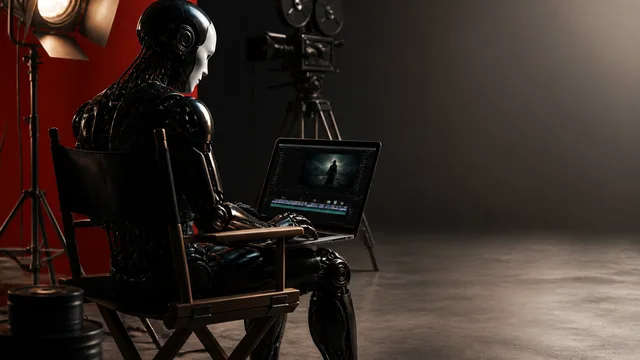
Netflix Used AI in 300 Titles. Here's What That Means.
Netflix disclosed AI use in roughly 300 titles in its Q2 2026 earnings. We break down what that number actually tells us — and what it doesn't.

Hugging Face ML Intern Automates AI Development
Hugging Face's ml-intern is an open-source agent that automates the full ML research loop. Here's what it does, what it can't, and what it signals.