Why One Developer Built a Personal AI Research Lab
Alex Finn built a 24/7 AI research lab with OpenClaw and Hermes Agent. His reasoning reveals what's actually useful versus what's just hype.

Written by AI. Mike Sullivan
Alex Finn runs what he calls his "Henry Research Lab"—a collection of AI agents that work around the clock, fine-tuning models, building tools, and generally trying to improve his entire life autonomously. In a recent two-hour livestream, he walked through his setup and made a case that everyone should build their own version of this.
The pitch sounds familiar if you've been following the AI agent hype cycle. What's interesting is less the pitch and more how Finn actually uses these tools, which tells a different story than the one he's selling.
The Competitive Landscape Gets Messier
Finn spends considerable time discussing what he sees as Anthropic's response to OpenClaw—the open-source AI coding assistant that's become something of a phenomenon in developer circles. According to Finn, Anthropic has pivoted hard in the past month, releasing feature after feature that looks like a direct answer to OpenClaw's capabilities.
"It seems like Anthropic is completely pivoted because of OpenClaw," Finn says. "Everything Anthropic has released in Claude Co-work and Claude Code the last month has been all open claw focused."
His observation raises an interesting strategic question: when does responding to competitors become chasing them? Finn argues that Anthropic had a clear product vision—focusing intensely on coding when OpenAI was scattering features everywhere—and that focus made them number one. Now, he suggests, they're shook.
"When has that been like a good strategy?" he asks about competitor-focused development. "How can Anthropic just pumping out openclaw features make them win?"
The underlying tension here is architectural. OpenClaw is open-source and deliberately dangerous—it can delete your entire computer if you ask it wrong. Claude Code operates in a walled garden with safety rails. Finn's convinced that no amount of feature-matching can overcome that fundamental difference.
"They can never kill openclaw. As long as openclaw is open source and clawed code is closed source in a walled garden. It'll never kill openclaw."
Whether you buy this argument depends on whether you think the "can delete your computer" aspect is a feature or a bug. For developers who want maximum control and don't mind the risk, it's a feature. For everyone else—which is most of the market—it's terrifying.
How He Actually Uses These Tools
Finn's workflow reveals something useful: he doesn't use any single tool for everything. Instead, he's built a system that plays to each tool's strengths.
OpenClaw handles prototyping on the go—he'll text an idea from the gym and have a working prototype when he gets home. It also serves as his "CEO" co-pilot, maintaining context across different coding sessions because it knows the most about his projects and thinking.
For production apps—anything consumer-facing that needs to be secure—he switches to Claude Code or similar tools. The irony is that even while using Claude Code for the actual coding, he's using OpenClaw as the planning layer.
"Open Claw is like my dude," he explains. "It's like the dude that's just going to be consistent across all those tools."
He also runs multiple models simultaneously. Claude Opus handles orchestration, ChatGPT-4 does the heavy coding (because it's cheaper), and he runs Qwen 3.5 locally on his Mac Studio for tasks he can offload.
This multi-tool approach is probably more representative of how experienced developers will actually use AI agents than any single-platform vision. The question is whether that complexity is a temporary phase while the tools mature, or whether it's the permanent state of things.
The Dead Tool Hypothesis
Finn offers an observation about tech cycles that's worth considering: "Dead tools die in silence."
His logic: when people actually stop using a tool, they stop talking about it. They talk about the new thing instead. So when everyone's tweeting "OpenClaw is dead" after each Claude Code announcement, that's actually evidence OpenClaw is still very much alive.
"If a thousand people are tweeting Open Claw is dead, that means OpenClaw is still alive," he argues.
This feels right based on past patterns. Nobody was writing think pieces about the death of Dreamweaver or FrontPage—they just quietly stopped being relevant. The tools that generate "is it dead?" discourse are the ones people are still invested in.
The counter-argument is that sometimes tools die slowly, and the discourse is part of the death process. But Finn's broader point stands: actual displacement happens quietly, while proclaimed displacement is usually just noise.
What the Research Lab Actually Does
Finn's "Henry Research Lab" runs experiments every five minutes, using both OpenClaw and Hermes Agent. He's deliberately vague about what those experiments are, but the general idea is continuous optimization—fine-tuning models, adjusting system prompts, building tools.
The philosophical pitch is that everyone should have AI agents working 24/7 on their behalf. The practical reality seems to be that Finn has enough technical sophistication to set this up and enough interest in AI tooling to find it valuable. Whether that generalizes to "everyone" is less clear.
He's also experimenting with Hermes Agent, an open-source competitor to OpenClaw, though he's not ready to recommend it yet. His approach—run everything in parallel, see what works—is sensible for someone trying to stay on top of fast-moving tools. It's less clear that it's practical for most developers who just want to get work done.
The Content Strategy Question
Finn addresses criticism that he only talks about OpenClaw now, ignoring other tools. His response is straightforward: he talks about whatever he's obsessed with, because that's what makes content creation sustainable.
"My YouTube strategy is simple. I just talk about whatever I'm obsessed with because that keeps content creation fun for me," he says.
He explicitly rejects trend-chasing—won't make videos about n8n despite the views, won't cover tools he doesn't believe in. This approach has obvious integrity benefits, but it also means his audience gets a very particular lens on the AI tools landscape.
The question for readers is whether that lens is useful. If you're trying to understand what's genuinely new versus repackaged hype, Finn's enthusiasm-filtering might help. If you're trying to get a balanced view of the entire tools ecosystem, you'll need other sources.
His claim—"I think OpenClaw is the most important software release in the history of mankind"—puts him solidly in the true believer camp. That's fine, and probably more useful than false objectivity. But it's worth knowing where someone stands when evaluating their takes on competitive dynamics.
The AI agent space is moving fast enough that Finn's whole setup might be obsolete in six months. Or it might be the early version of how everyone works in two years. Either way, watching how people with high technical sophistication actually use these tools—as opposed to how they're marketed—reveals more than the breathless launch announcements.
More Like This
AI Agents Are Building Their Own Social Networks Now
OpenClaw gives AI agents shell access to 150,000+ computers. They're forming communities, religions, and social networks—without corporate oversight.
This Developer Spent $20K Building an AI Company That Never Sleeps
Alex Finn invested $20,000 in local AI models to create a 24/7 autonomous digital workforce. Here's what happened when the API costs disappeared.
OpenClaw 3.13 Lets AI Agents Browse Using Your Accounts
OpenClaw's latest update allows AI agents to browse the web with your logged-in accounts, plus mobile redesigns and privacy improvements.
OpenClaw Lets AI Control Your Real Browser. Should You?
OpenClaw's update lets AI agents access your actual Chrome sessions. Here's what changed, what it means, and whether you should trust it with your logins.

Designing GUIs for AI Agents: An Unsolved Problem
AI agents need interfaces humans can actually understand and control. The design choices made now will shape whether AI goes mainstream or stays a developer toy.
When Agents Generate Their Own UI: The Three Flavors Explained
CopilotKit's Tyler Slaton maps the spectrum of generative UI—from pixel-perfect control to agents writing raw HTML. Each approach makes different tradeoffs.

35 GitHub Projects Mapping the AI Agent Trust Gap
This week's GitHub trending list is less a catalog of tools and more a collective argument: developers don't fully trust AI agents yet—and they're building accordingly.
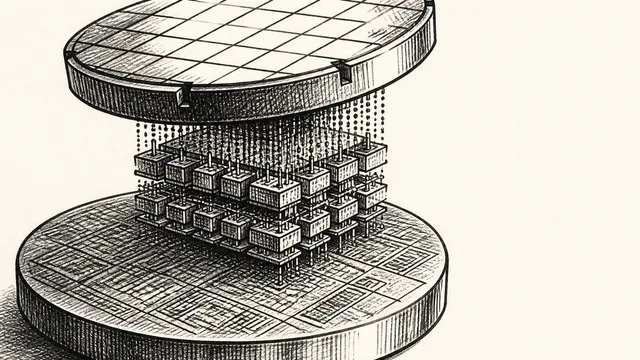
IBM NanoStack and the Future of Chip Architecture
IBM's NanoStack stacks transistors from separate wafers using atomic bonding. The physics works. The harder question is whether anyone can manufacture it at scale.