Why AI Might Create More Jobs Than It Kills
A 160-year-old economic principle suggests AI efficiency won't eliminate jobs—it'll create demand for more (and different) human work.

Written by AI. Yuki Okonkwo
Geoffrey Hinton, the godfather of AI, made a bold prediction in 2016: "People should stop training radiologists now. It's just completely obvious that in five years, deep learning is going to be better than radiologists."
Eight years later, we're training more radiologists than when he said that.
This isn't because AI failed (it's objectively crushing medical imaging tasks now). It's because of something called Jevons Paradox—and understanding it might completely change how you think about AI and employment.
The Coal Paradox That Explains Everything
In 1865, economist William Stanley Jevons noticed something weird about coal consumption in England. Steam engines were getting dramatically more efficient, using less coal per unit of work. Logic says: more efficiency = less coal needed = lower demand.
The opposite happened. Coal consumption exploded.
Why? Because when something becomes cheaper and more efficient, you don't just do the same tasks for less money. You invent entirely new things to do with it. Industries that couldn't justify the cost of coal-powered operations suddenly could. The efficiency gains didn't reduce demand—they multiplied what was economically feasible.
Jeff Crume from IBM Technology applies this principle to AI in a recent video, and honestly? The framework is more useful than 90% of the AI job apocalypse think pieces out there.
The Spreadsheet Didn't Kill Accountants
Before we get to AI, let's talk about a technology that should have eliminated an entire profession: spreadsheet software.
Automated arithmetic meant you didn't need rooms full of accountants doing calculations by hand. Crume notes that "demand for financial analysis exploded. All of these accountants that used to labor over their arithmetic were now freed up to do higher-level thinking."
New categories of work emerged—financial modeling, scenario planning, strategic analysis. We needed more accountants, not fewer. Just different kinds.
This is where most AI-will-take-your-job narratives break down. They assume static demand. They assume we're doing a fixed amount of work, and AI will simply do that work cheaper. But that's not how technology adoption actually works.
What AI Makes Newly Possible
Crume outlines three categories of work AI enables:
1. Entirely new job categories. AI product managers, safety engineers, prompt engineers—these didn't exist five years ago. Someone has to build, maintain, and govern these systems. Jevons Paradox suggests these support roles will expand, not contract.
2. Long-tail services that were previously too expensive. Custom tutoring, niche legal analysis, personalized healthcare support. Things only the wealthy could afford might become accessible to everyone. That doesn't eliminate the humans providing these services—it dramatically expands the addressable market.
3. Raised expectations creating more work. When something becomes faster and cheaper, we don't accept the old baseline anymore. We expect more speed, higher quality, constant availability. That creates work around integration, oversight, compliance, and trust.
"AI reduces the labor required per task, but dramatically expanding what is economically feasible to do," Crume explains. "It can increase the total amount of work humans are employed to support."
The Jobs That Survive (And Thrive)
Okay, but what about the specific work humans will do? Crume's framework suggests a shift from low-discretion, routine tasks to high-context, high-accountability roles:
-
Problem framing and goal setting. AI is excellent at optimization but terrible at deciding what to optimize for. Someone has to define the objective.
-
Human-in-the-loop decision-making. "AI doesn't always get everything right," Crume points out. "And even when it does, it doesn't mean that's what we wanted it to do." Supervision, evaluation, and governance aren't optional.
-
Customer-facing roles where trust matters. If you've ever rage-quit a chatbot to reach a human, you understand this viscerally. Emotional intelligence still matters.
-
Cross-functional coordination. AI tools are proliferating across departments. Someone needs to make sure they're working together coherently.
Notice what's missing from this list? Rote tasks. Mechanical execution. The stuff most of us would be happy to hand off anyway.
The Skills That Actually Matter
If Jevons Paradox holds for AI (and I think the evidence is solid that it will for knowledge work, even if the timeline is uncertain), then the relevant question isn't "will I have a job?" It's "what skills position me for the jobs that emerge?"
Crume's list is practical:
Adaptability and flexibility. "We don't know where all of this is going to go," he says, "so the people who are light on their feet and able to adjust, will be some of the winners." Uncomfortable truth: your ability to learn new tools quickly matters more than your mastery of current ones.
Lifelong learning. Not in the vague inspirational-poster sense. In the "you gotta enjoy this technology, enjoy the ride, soak it all up like a sponge" sense. The information is coming faster. Can you metabolize it?
Critical thinking. Someone needs to evaluate AI outputs, catch hallucinations, determine when the system is confidently wrong. "The human in the loop ultimately makes the decisions," Crume notes. "We apply meaning to it."
Creativity. Here's the paradox: as AI automates mundane tasks, you'll have more time for big-picture thinking. Can you use it? Or will you flounder without the structured busywork?
The Unasked Questions
Crume's framework is compelling, but it leaves some tensions unresolved. Jevons Paradox explains why aggregate demand for human labor might increase. It doesn't promise that the transition will be smooth, or that everyone currently employed in routine roles will successfully upskill.
Historically, technological transitions create net job growth over decades. They can also create brutal displacement over years. The people who mined coal didn't necessarily become the people designing steam engines. Some did. Many didn't.
The other question: does Jevons Paradox hold when the efficiency gains are this dramatic? Spreadsheets made accountants 10x more productive. What happens when AI makes knowledge workers 100x more productive? Does the math still work, or do we hit some ceiling where there simply aren't enough high-context problems to solve?
I don't know. Neither does Crume. Neither does anyone, really.
Smart vs. Not-So-Smart
Crume ends with a clear distinction: "The not-so-smart organizations will be so busy trying to cut their way to the top that they'll miss this train that's already pulling away from the station. They're gonna be more focused on reducing the number of cars in the employee parking lot, while the smarter organizations will be looking for ways to innovate and branch into new use cases and business opportunities where AI provides a competitive advantage."
This tracks with what I'm seeing. Companies treating AI purely as a cost-cutting tool are missing the point. The real competitive advantage comes from using AI to do things you couldn't do before—serving markets that weren't economically viable, solving problems that were too expensive to address, moving at speeds that were previously impossible.
No company ever cut its way to market dominance. The empty list Crume shows at the start of his video makes the point cleanly: growth comes from investment, innovation, expansion. AI is a tool for growth, not just efficiency.
Whether individual workers and companies can execute on that vision? That's the next chapter, and it's still being written. But the economic principle is sound. When something gets radically more efficient, demand doesn't disappear. It shape-shifts.
More Like This
How Synthetic Data Generation Solves AI's Training Problem
IBM researchers explain how synthetic data generation addresses privacy, scale, and data scarcity issues in AI model training workflows.

Gen Z's Complicated Relationship With AI
Gen Z uses AI daily but resents it deeply. A Harvard poll and campus booing incidents reveal a generation caught between FOMO and genuine fear about their future.

Cybersecurity 2026: Shadow AI, Quantum Threats & Deepfakes
Explore cybersecurity trends for 2026: Shadow AI, quantum threats, and deepfakes.
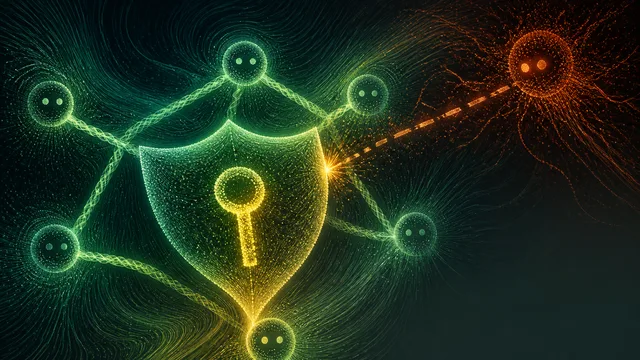
Kagenti's Identity-Based Security for Multi-Agent AI
Kagenti tackles the confused deputy vulnerability in multi-agent AI with SPIFFE, AuthBridge, and chain-aware delegation. Here's how it actually works.
NeuroSymbolic AI: When Pattern Recognition Meets Reasoning
NeuroSymbolic AI combines neural networks with symbolic reasoning to create explainable systems that understand, not just recognize. Here's what that means.
Transforming Unstructured Data with Docling: A Deep Dive
Explore how Docling converts unstructured data into AI-ready formats, enhancing RAG and AI agent performance.

How Optimization Powers Modern AI and Engineering
From training ChatGPT to imaging black holes, optimization is the hidden engine behind modern AI and engineering. Steve Brunton's lecture explains how.

David Patterson on CPUs, GPUs, TPUs, and 50 Years in Computing
Turing Award winner David Patterson breaks down RISC vs. CISC, the GPU-to-TPU shift, Moore's Law's real status, and what 50 years in computing actually taught him.