Unlocking Trust: AI in Business Needs Reversible Processes
Exploring why trust and reversible processes are key for AI in business decisions.

Written by AI. Zara Chen
Unlocking Trust: Why AI in Business Needs Reversible Processes
AI in business is like that friend who looks great in a LinkedIn photo but struggles to pick an outfit for brunch IRL. The capability we see in demos often fades when it's time to make real-world decisions. This isn't because AI is dumb—it's because trust is missing. And to build that trust, we need reversible processes. Let's dive into this fascinating conundrum and see how we can make AI a welcome guest at the business table.
The AI Demo Mirage
We've all been there: watching an AI demo that feels like magic—documents crafted, spreadsheets updated, websites navigated. But then comes the harsh reality check. When deployed, these agents become glorified assistants. The issue isn't AI's intelligence; it's our trust in it. As Nate B Jones from AI News & Strategy Daily puts it, "The deeper bottleneck is trust. And trust is not about how smart your agent is. Trust is about the structure of decisions in the business environment."
Why Trust is the Bottleneck
In business, decisions are categorized into two types: reversible (two-way doors) and irreversible (one-way doors). Changing a meeting time? Easy peasy. But sending the wrong customer message? Not so much. The stakes are high, and mistakes can be costly. This tension between what AI can theoretically do and what businesses allow it to do is the crux of the "human throttle" problem.
Software engineering offers a blueprint here. Decades of experience have turned software decisions into two-way doors, creating an environment where mistakes are survivable. The same can't be said for most business processes. As Jones notes, "Software became the easiest place for AI doing work precisely because we spent decades turning a huge number of software decisions into two-way doors."
Building Reversibility into Business Decisions
To integrate AI effectively, businesses need to adapt software engineering principles, creating processes that allow for reversibility. Here's how:
1. Drafting Phase
Before finalizing important decisions, establish a drafting phase. This allows decisions to be proposed and reviewed, reducing the risk of irreversible errors. "Nothing important should go straight from idea to done," says Jones.
2. Preview Functionality
Make sure any changes are clearly previewed in plain language. This transparency builds trust in automation by showing what the impact will be before anything is finalized. Think of it as the "diff" in business operations.
3. Time Windows
Introduce delays before actions become final. This creates a window for reversibility. For example, Amazon delays order processing to allow for cancellations, and email services like Superhuman offer an "undo" button right after sending.
4. Systematic Repair Plans
For actions that can't be undone, develop consistent repair plans. Businesses often treat error recovery like a fire drill, but a systematic approach is necessary for AI to act at machine speed.
5. Permanent Record
Maintain a detailed history of agent-driven actions. This isn't about bureaucracy; it's about accountability and learning. Knowing what was done, why, and by whom can help refine processes over time.
The Bigger Picture: Reversible vs. Irreversible
The era of AI challenges us to rethink how much of our world should be designed around reversible commitments. While some irreversibility is essential for trust and fraud prevention, much of it is a relic of our past. Jones suggests that "for the first time in our species history, with machine speed and machine intelligence, we can now intentionally choose what is the correct allocation of reversible commitments and irreversible commitments."
Reversibility as a Trust Signal
As businesses look to AI for efficiency and innovation, the importance of trust cannot be overstated. By borrowing from software engineering, we can create systems that are both safe and agile, allowing AI to thrive in business environments. It's not just about making decisions; it's about making them wisely and safely. And that, my friends, is how we bring AI from the demo reel to the boardroom.
More Like This
Optimizing Claude Code with MCP Launchpad
Learn how MCP Launchpad streamlines tool access for Claude Code, conserving context and enhancing efficiency.
AI Agents vs. LLMs: Navigating Task Complexity
Explore when to use AI agents or LLMs for task complexity, autonomy, and decision-making.
AI Agents Are Building Their Own Social Networks Now
OpenClaw gives AI agents shell access to 150,000+ computers. They're forming communities, religions, and social networks—without corporate oversight.
Anthropic Bet on Teaching AI Why, Not What. It's Working.
Anthropic's 80-page Claude Constitution reveals a fundamental shift in AI design—teaching principles instead of rules. The enterprise market is responding.
AI Agents Are Running Way Below Their Actual Capability
Anthropic's new study reveals people use AI agents for just 45 seconds on average—despite their ability to work autonomously for 45+ minutes.
Do Smarter AI Models Really Matter Anymore?
Explore the debate on AI model improvements, user experience, and practical applications. Are we focusing on the right things?
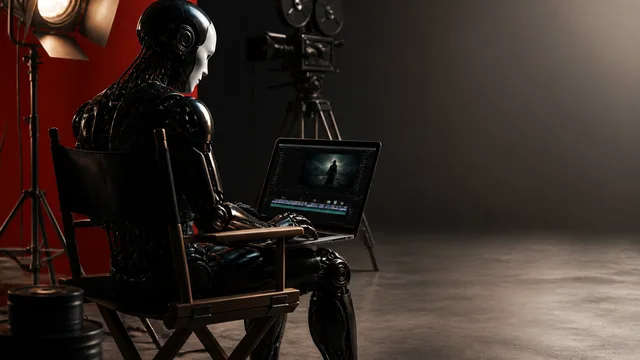
Netflix Used AI in 300 Titles. Here's What That Means.
Netflix disclosed AI use in roughly 300 titles in its Q2 2026 earnings. We break down what that number actually tells us — and what it doesn't.

35 GitHub Projects Mapping the AI Agent Trust Gap
This week's GitHub trending list is less a catalog of tools and more a collective argument: developers don't fully trust AI agents yet—and they're building accordingly.