Television: A Fuzzy Finder That Replaced Seven Tools
A Rust-based fuzzy finder called Television promises to consolidate terminal workflows. One developer replaced seven utilities. Should you?

Written by AI. Bob Reynolds
I've watched terminal tools come and go for half a century. Most arrive with fanfare and vanish quietly. A few stick around long enough to become habits. FZF became one of those habits—a fuzzy finder that solved a real problem without pretending to revolutionize computing.
So when a DevOps developer with 12 years of terminal experience says a new tool replaced seven utilities in his workflow, I pay attention. Not because the claim is impressive—anyone can consolidate tools—but because the specific number suggests actual counting, not marketing.
The tool is Television, written in Rust (which will excite half of you and send the other half elsewhere). Its core innovation isn't speed or performance. It's channels.
What Makes Television Different
Every fuzzy finder lets you search files. Television does that, but then adds what its creator calls channels—pre-configured interfaces for different tasks. Git repositories. Docker containers. Kubernetes clusters. AWS buckets. Tmux sessions. Even your downloads folder.
"These can track Git, Docker, Kubernetes, npm, Tmux, AWS, your downloads, even SSH hosts," the developer explains in his walkthrough. "And if that long list doesn't have what you're after, it has a very easy template to build your own channel."
This is where the utility replacement happens. Instead of maintaining separate tools for Kubernetes context switching, Git repository browsing, and log parsing, you learn one interface. The channels metaphor makes sense: you're not switching tools, just changing what you're looking at.
The developer who tested it replaced Ranger (terminal file browser), kubectl logs viewers, kubectx (Kubernetes context switcher), and several other specialized utilities. The interesting part isn't that Television can do what these tools do—it's that doing everything through one interface proved more efficient than context-switching between seven.
The Shell Integration Question
Television integrates with Nushell, providing Ctrl+R for history (which works but apparently not as well as existing tools) and Ctrl+T for smart directory completion with preview. This matters because shell integration is where fuzzy finders either become daily tools or remain occasional conveniences.
FZF succeeded partly because it hooked into shells so naturally that users forgot they were using it. Television appears to be following that path, though compatibility issues with Nushell required the developer to manually fix several channels. He pushed his corrections to his dotfiles repository and continues working through them.
AI didn't help. "I even tried throwing [AI at] it with their free model which caused even more chaos. So, please don't," he notes. Some problems still require human understanding of what the code actually does.
Configuration Realities
The developer spent considerable time on configuration, and his complaints reveal Television's current limitations. The default keybindings assume users have a clean slate of Ctrl combinations available. "It's quite naive expecting the user to have all their control combos just available for one application," he observes.
He added F-keys to a custom keyboard layer just to access the help menu. That's dedication, but it also indicates a tool still finding its ergonomic footing.
The configuration file lives at ~/.config/television/config.toml, and the developer found the inline comments helpful but insufficient. He wants a leader key (like Vim's) rather than assuming Ctrl availability. He wants more modifier options. He wants dynamic preview sizing that adjusts on the fly.
None of these requests are unreasonable. They're the kind of friction that emerges when a tool moves from "interesting experiment" to "daily driver."
What's Actually Useful
Log parsing stood out in the demonstration. The developer piped system logs and Kubernetes metrics through Television, and his reaction was genuine: "To be really honest, that's one of the nicest ways I've ever read and search logs."
This matters because log parsing is brutally practical work. If Television makes it noticeably better, that's a real win, not a theoretical one.
The Kubernetes channel also impressed. Context switching with preview—seeing cluster information before committing to the switch—is exactly the kind of workflow improvement that saves time in aggregate. Not revolutionary, but solidly useful.
The developer even discovered Television could replace Session X, a Tmux session switcher he'd spent months building. That's the kind of discovery that's either disappointing or liberating, depending on your attachment to your own code.
The Rough Edges
Television isn't finished. The developer lists several missing pieces: better CLI execution flags, dynamic preview adjustments, a proper leader key system, and fixes for Nushell compatibility bugs.
Some default behaviors don't make sense. Selecting a file returns you to the shell with the filename echoed—useful if you're piping to another command, confusing if you just want to open the file. The fix requires editing the files channel to map Enter to opening your editor instead of exiting.
The status bar is "quite useless," according to the tester. Preview sizes can't be adjusted during runtime. Regular expression support exists but feels incomplete.
These aren't dealbreakers for early adopters. They're friction points that will determine whether Television becomes mainstream or remains a power-user tool.
Whether This Matters
Television represents a familiar pattern: take something that works (FZF), identify what it doesn't do elegantly (task-specific interfaces), and build that functionality in a modern language (Rust) with a fresh architecture (channels).
The question isn't whether this approach works—the developer's testimony suggests it does. The question is whether enough people have the same seven-tool problem to make Television worth learning.
If you're using FZF casually—just fuzzy-finding files occasionally—Television is probably overkill. If you're maintaining separate tools for Kubernetes, Docker, Git, and AWS operations, and you're tired of remembering different interfaces, Television might consolidate your workflow.
The developer who tested it is keeping it. He's building custom channels. He's working through the configuration quirks. For him, replacing seven utilities justified the learning curve. Whether it justifies yours depends on which seven utilities you're replacing.
More Like This
Why Developers Are Switching to Sesh for Tmux Sessions
Sesh brings deep configurability to Tmux session management—but the learning curve might not be for everyone. Here's what makes it different.
Dozzle: The Docker Log Viewer That Does Less (On Purpose)
Dozzle is a 7MB tool that streams Docker logs to your browser. No storage, no database, no complexity. Better Stack shows why that's the point.
Anthropic's Three Tools That Work While You Sleep
Anthropic's scheduled tasks, Dispatch, and Computer Use create the first practical always-on AI agent infrastructure. Here's what actually matters.
Dokploy Promises Vercel Features at VPS Prices
A new tool claims to deliver platform-as-a-service convenience on cheap VPS infrastructure. Better Stack demonstrates what works and what doesn't.
Zed Wants to Fix Code Editors' Two Biggest Problems
Zed code editor tackles lag on large codebases and solo-first design. But can a Rust-native editor really beat Cursor at its own game?
AI Models Now Run in Your Browser. That Shouldn't Work.
Transformers.js v4 brings 20-billion parameter AI models to web browsers. The technical achievement is remarkable. The implications are just beginning.
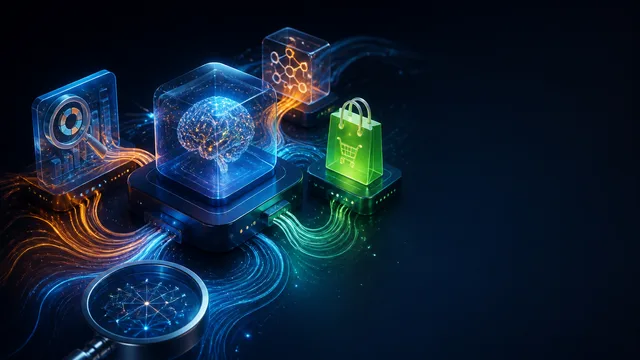
Claude Code and AI-Driven SEO for Shopify Stores
A live walkthrough of using Claude Code, SEMrush MCP, and Shopify to build AI-optimized pages raises real questions about where SEO is heading.

Garry Tan's Blueprint for the AI-Native Company
Y Combinator's Garry Tan argues that how you organize AI matters more than which AI you use. Here's what that means in practice.