Supermicro B300: A Nostalgic Journey in Modern Racks
Explore Supermicro's B300, blending nostalgia with cutting-edge tech in data center solutions.

Written by AI. Mike Sullivan
Ah, the server rack. A staple of the tech world that has evolved more times than Madonna's career. Remember when we thought a Pentium II was the height of computing power? Fast forward to today, and we're talking about Supermicro's latest offering—the B300. This isn't your grandfather's server rack (unless your grandfather is way cooler than mine).
The Backbone of the Data Center
At the heart of the B300 is a choice between AMD Epic and Intel Xeon platforms. It's like choosing between Coke and Pepsi, except with a lot more zeros on the price tag. This x86 architecture is nothing new, but it's the familiarity that keeps enterprises coming back. No one wants to reinvent the wheel, especially when that wheel supports NVIDIA's cutting-edge GPU capabilities.
Faster, Better, Stronger
The B300 integrates PCIe Gen 6 technology, promising speeds that make PCIe Gen 5 look like dial-up. As Wendell from Level1Techs puts it, "The network is the fabric. The fabric is the network, and it moves data at literally double the rate of PCIe Gen 5." Now, if only my home internet could catch up.
The move from 400G to 800G networking capabilities is like upgrading from a 56k modem to fiber optics. It's not just about speed; it's about breaking the barriers of latency and throughput, which is crucial for AI-driven solutions. Remember when AI was just a concept in sci-fi movies? Now, it's dictating how fast we can transfer cat videos across the globe.
Plug and Play Deployment
Supermicro's B300 is designed to make deployment as easy as slipping a new cartridge into a Game Boy. Pre-assembled racks mean you can plug and play, reducing setup time and letting you focus on the important things—like optimizing your data center or catching up on the latest season of "Stranger Things."
Cooling Options for All
Whether you prefer air or liquid cooling, the B300 has you covered. The air-cooled model is like sticking with your trusty box fan, while the liquid-cooled option lets you dip your toe into the future without fully committing to a waterbed just yet. As they say, "It's not the heat, it's the humidity."
A Nod to Nostalgia
For those who can't bear to part with the x86 architecture, the B300 offers a comforting hug of familiarity. "Many customers want the B300 over the GP300 precisely because it's x86," notes Wendell. It's like choosing to stick with Windows 95 because you know where all the buttons are.
Rack-Mount Nostalgia Meets Modern Demand
As we stand on the precipice of AI-driven everything, the B300 is a reminder that sometimes, the best way forward is to take a bit of the past with you. Will Supermicro's latest offering be the next big thing, or just another chapter in the ongoing saga of server rack evolution? Only time will tell, but one thing's for sure: it's going to be an interesting ride.
More Like This

Anthropic's Claude Code Leak Reveals Unglamorous Truth
The Claude Code leak shows what actually makes AI agents work at scale: boring infrastructure, not flashy features. Two leaks in one week raise questions.
AMD's $900 Ryzen 9950X3D2: A CPU Looking for Its People
AMD's dual 3D V-Cache flagship seems engineered for users who don't exist yet. Level1Techs tests the $900 processor nobody asked for but some will buy anyway.
Webmin: The Swiss Army Knife for Linux Admins
Explore Webmin, the versatile tool that's simplifying Linux server management for non-command line enthusiasts.
Navigating the DDR5 Landscape: Heat, Stability, and Design
Explore DDR5 memory's quirks, from overheating issues to server vs. desktop designs, and learn how to manage system stability.
The AI Factory Isn't What You Think It Is
Nvidia's 'AI factory' sparks confusion and backlash. Here's what the term actually means in infrastructure terms—and why it matters for policy.

Alibaba’s Zhenwu V900 Claims Still Need More Evidence
Alibaba says its Zhenwu V900 triples prior performance. Disclosed specs, Huawei comparisons and cloud plans show what can and cannot yet be verified.
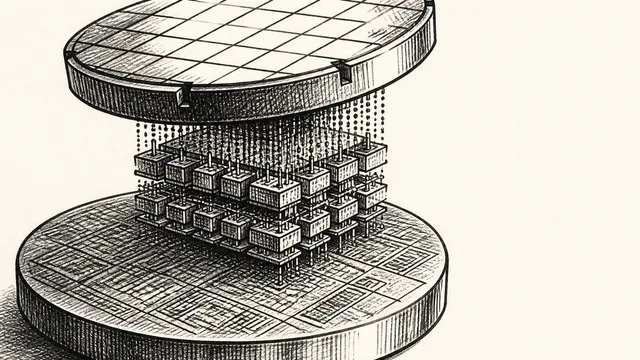
IBM NanoStack and the Future of Chip Architecture
IBM's NanoStack stacks transistors from separate wafers using atomic bonding. The physics works. The harder question is whether anyone can manufacture it at scale.
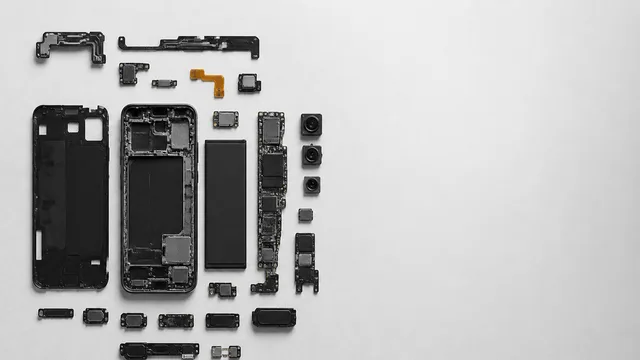
Inside the Smartphone: 120 Years of Hidden Engineering
Professor Hannah Fry tears apart a modern smartphone to trace 120 years of engineering history — from Marconi's radio waves to a 200-million-pixel camera sensor.