Physics Breakthrough: Solving Fluid Dynamics Glitches
New physics technique resolves simulation glitches, enhancing fluid dynamics and offering life advice.

Written by AI. Mei Zhang
Imagine trying to dance a tango with a partner who weighs 800 times less than you. Welcome to the world of fluid dynamics in computer simulations—where water, the sumo wrestler, tries to waltz with air, the nimble mouse, without causing chaos. Traditionally, this dance has been a nightmare for researchers aiming to create realistic simulations. But a recent breakthrough, as discussed on Two Minute Papers, has turned this chaotic mosh pit into a synchronized ballet, resolving a long-standing physics glitch where objects notoriously clip through water.
The essence of this innovation lies in something called "two-way coupling." Before you start imagining a romantic duet, let’s break it down: it’s a method where both the fluid (like water) and the object (say, a boat) influence each other in a simulation. Think of it as a proper conversation where both parties listen as much as they speak—something that, according to the video’s host, offers "excellent life advice."
The Challenge of Realism
The challenge in simulating fluids, as highlighted in the video, stems from the massive difference in density between water and air. Picture this: water is like a heavyweight champion, while air is a featherweight contender. In the realm of simulations, this disparity can lead to instability, much like a sumo wrestler trying to tango with a mouse. Most simulations have managed this by resorting to shortcuts, avoiding the tricky math that can lead to a system "blowing up."
However, the researchers behind this new technique decided to tackle the problem head-on, refusing to "cheat" the system. Their solution uses the Lattice Boltzmann method, a framework that might sound like a manager whispering instructions to each dancer rather than shouting over a megaphone.
A New Kind of Dance
The result? A fluid simulation that's not only more stable but performs faster than previous methods by a factor of four, despite initially seeming to demand ten times more computational effort. This technique even allows for simulating phenomena that were previously out of reach, like the delicate art of stone skipping across water. This is achieved by modeling the air layer between the stone and water, giving each particle its own "personal space" on the dance floor.
The video paints a vivid picture of the simulation’s prowess, describing a scene where a key slices through water, creating a "bridal veil made of bubbles." Such imagery highlights the beauty and complexity of what these simulations can achieve, evoking nature's own two-way coupling that mother nature performs flawlessly.
Beyond the Simulation
This leap in simulation technology is more than just an academic triumph. It opens the door to more realistic video games and training simulations, potentially revolutionizing fields like virtual reality training and digital media.
Yet, there's an underlying lesson here that transcends the technical. The video draws parallels between these scientific principles and life itself. Just as particles require time to move and interact, we too need time management in our daily lives. Successful relationships, whether in physics or with people, thrive on mutual influence and balance, a concept the video beautifully encapsulates.
Looking Ahead
As we marvel at this scientific achievement, one can't help but ponder what lies ahead. Could these simulations help us understand even more complex natural phenomena, or perhaps aid in solving real-world engineering challenges? The possibilities seem as endless as the bubbles in a turbulent stream.
In the end, this breakthrough in fluid dynamics is a reminder of the elegance and complexity of the natural world—a world where, much like in our personal lives, balance and communication are key. As the video concludes, it encourages us to observe and learn from nature, for it computes these intricate dances with grace and speed far beyond our current capabilities.
More Like This
The Math Trick Behind Physics' Greatest Hits
Discover how Taylor series simplifies complex physics, connecting math, sine, and Euler's formula with ease.

NVIDIA's Omnimat Zero: Real-Time Video Magic
Explore NVIDIA's Omnimat Zero, an AI that removes video objects while preserving shadows and reflections in real-time.
NVIDIA's AI Transforms Photos with PPISP Tech
Explore NVIDIA's PPISP AI that enhances 3D reconstructions by correcting lighting and exposure, revolutionizing fields like VR and photography.
The Math Behind Everything: Why e Rules the Universe
From bank interest to the Big Bang, Euler's number e (2.718...) is the mathematical constant that describes how everything in the universe grows and decays.
The Enigma of Simultaneity in Relativity
Explore how the relativity of simultaneity reshapes our understanding of time and challenges the concept of a universal 'now.'
Can Objects Fall Faster Than Gravity?
Exploring phenomena where objects appear to fall faster than gravity due to constraints and mechanics.

Ancient Egyptian Princesses Were Trained Weapon Users
New skeletal analysis of five Middle Kingdom mummies reveals ancient Egyptian princesses used bows and daggers — and a bias that buried that fact for decades.
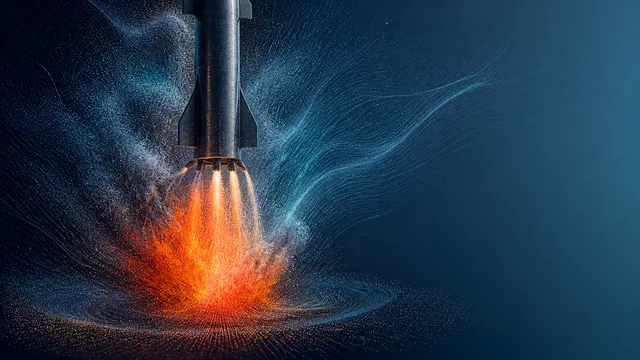
SpaceX Starship Flight 13 Aborts at Launch
SpaceX's Starship Flight 13 aborted at the last second when engines failed to ignite. What the scrub reveals about iterative testing, redundancy, and real stakes.