OpenClaw Acquisition Raises Questions About Startup Exit Timing
Tech streamer Theo discusses OpenClaw's acquisition amid launch preparations, revealing the complex calculus behind when startups should sell versus building.

Written by AI. Samira Barnes
The emergency stream dropped fifteen hours ago, titled simply "EMERGENCY STREAM" with a thumbnail designed to grab attention. The actual emergency, buried beneath twenty minutes of technical difficulties and camera talk: OpenClaw got acquired.
Theo from t3.gg, currently navigating what he describes as the busiest period of his professional life, used the stream to think through acquisition dynamics in real time. His company, T3, had been in talks with potential acquirers. They said no. The reasoning reveals a tension at the heart of tech startup strategy that rarely gets articulated this clearly.
The Acquisition Math That Doesn't Add Up
"Let's just hypothetically say OpenAI bought us," Theo told his audience. "If OpenAI buys us, best case, their equity like 3x's. So whatever equity we get going in times three is our maximum outcome. My company can theoretically 100 to a thousandx and it could almost certainly 3x."
The math is brutal and honest. When a larger company acquires you, you're betting on their trajectory, not yours. Your ceiling becomes their ceiling. For a company like OpenAI, tripling equity value would be an exceptional outcome. For an early-stage startup with actual traction, it's table stakes.
This calculation works differently depending on where you sit. "There is no lab or place that I could see us at that I legitimately believe is more likely to succeed than we are," Theo said. That's not founder hubris—it's the fundamental logic of independent building. If you genuinely believe another company has better odds, you should join them. If you don't, acquisition is just expensive talent arbitrage.
The policy implications here matter more than they might appear. Acquisition dynamics shape entire sectors. When promising startups exit early, the acquirer absorbs their innovation trajectory. When they stay independent, they force competition. The difference between these two paths determines whether we get technological monocultures or genuine market diversity.
The Acqui-Hire Question Nobody Wants to Answer
Someone in the stream asked about "optimizing for aqua hire"—the startup world's polite term for selling your company because the product didn't work but the team is valuable.
Theo's response cuts through the usual founder mythology: "I don't think aqua hires get there by optimizing for it. I think aqua hires get there by building something really cool and not getting enough users and the right company and conversation happening. But like the aqua hires go best when you have a lot of friends at the company you're trying to get aqua hired by."
This is the part that doesn't make it into TechCrunch acquisition announcements. The best acqui-hires aren't strategic plans—they're fallback options activated through personal networks. "That's the only thing you should be optimizing for," Theo said.
From a policy perspective, this matters because acqui-hires operate in a regulatory gray zone. They're technically asset purchases, but functionally they're talent acquisitions that may circumvent employment law protections. The FTC has begun scrutinizing these transactions more closely, particularly when they involve potential competitors. But the personal network element makes them nearly impossible to regulate—how do you police which coffee meetings lead to which exits?
What Gets Lost in Content Distribution
Buried in the stream's chaos was a technical admission that reveals genuine constraints in platform design. Theo was discussing T3 Chat, his company's product, and why it can't offer end-to-end encryption.
"We can't really encrypt messages because we have to send the unencrypted message to the provider anyways," he explained. "So any encryption would just be constant decryption on every single thing. It's just like an unnecessary extra step because we would have to have the decryption keys anyways."
This is the collision point between privacy advocacy and technical reality that most policy discussions ignore. T3 Chat is a content distribution platform—it takes your content and sends it to various providers. For that to work, the platform needs the plaintext. "It's not a note-taking app," Theo emphasized. "It's a content like platform where the content is being distributed to different providers on demand."
The distinction matters legally. End-to-end encryption requirements make sense for communication apps where the platform is merely a conduit. They make less sense for platforms where content processing is the actual service. But proposed legislation rarely acknowledges this difference. The EU's proposed encryption regulations, for instance, would struggle with services that genuinely need plaintext access to function.
"There is really no realistic way for us to do encryption other than to make everything way harder and still have to have the plain text constantly throughout," Theo said. This is not a company choosing convenience over security—it's architecture determining what's possible.
The OpenClaw Story That Wasn't Told
The stream's ostensible subject—the OpenClaw acquisition—got surprisingly little detail. "They hired Peter," Theo mentioned, though "I have to click bait it a bit." The real information would come in a later video.
What did emerge: OpenClaw's founder "called Sam to get permission" before changing the product's name. This casual mention of direct access to OpenAI's CEO illustrates the network effects that determine which startups get traction in the AI space. You can build the best code assistant in the world, but if you need Sam Altman's blessing to operate near OpenAI's territory, you're playing a different game than pure product competition.
Theo noted there are "like 5,000 people trying to do open claw but simpler." Most won't get that phone call. Most won't get acquired. The ones that do will succeed through some combination of technical capability, market timing, and personal relationships—with the weight of each factor varying unpredictably.
The acquisition presumably represents a successful outcome for OpenClaw. But the broader pattern—consolidation of AI tooling into a few major players—shapes what developers have access to and what gets built. When niche tools get absorbed into platforms, they sometimes flourish with better distribution. Often they disappear into roadmap backlogs.
Theo's decision to stay independent rests on a specific bet: that T3's trajectory is steeper than any acquirer's. That calculation will be right for some companies and catastrophically wrong for others. The difference often won't be visible until years later, after the alternative path is no longer available.
More Like This
Claude Code Source Leaked Through Simple Build Error
Anthropic's Claude Code source code leaked via accidentally included source maps—a basic JavaScript build mistake with major implications for AI development.
Open-Source Projects Set New Tech Policy Challenges
Explore how trending open-source projects could reshape tech regulation and policy.
Exploring React Bits' Background Studio in Tech Policy
React Bits' Background Studio reshapes web design and invites regulatory insights.
Why Cloud Solutions Overtook Self-Hosting in Home Labs
Exploring the shift from self-hosting to cloud solutions for reliability and reduced stress in home labs.
A Retired Engineer Built Superhuman AI in His Garage
Dave Plamer's year-long project to build game-playing AI raises urgent questions about unregulated AI development and what happens when capability outpaces oversight.
OpenAI's Ad Strategy: Architecture of Trust or Just Talk?
OpenAI details its approach to ads in ChatGPT with technical separation between model and ads, data controls, and sensitivity filters. Will the principles hold?
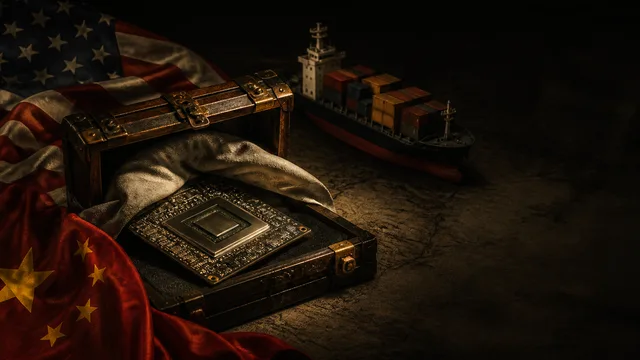
AI Chip Smuggling and the US-China Tech Divide
FT's Eleanor Olcott investigates the black market for Nvidia AI chips reaching China despite US export controls — and what it reveals about the tech race.

Promptware: When AI Agents Become Attack Vectors
Prompt injection attacks on AI agents follow a structured kill chain — and existing legal frameworks have almost nothing to say about who's liable when it works.