OpenAI Just Hired OpenClaw's Creator. Here's Why.
Peter Steinberger's journey from viral open-source AI agent to OpenAI reveals the real battle happening in AI right now—and it's not about models.

Written by AI. Zara Chen
Look, I need to tell you about the wildest unforced error in recent tech history. It involves a trademark letter, crypto scammers, massive security holes, and a developer who just wanted to text his AI to book dinner reservations.
Over the weekend, Sam Altman announced that Peter Steinberger—the creator of the viral AI agent project OpenClaw (formerly Claudebot, formerly Moltbot, it's complicated)—is joining OpenAI. The announcement was characteristically understated: "Peter Steinberger is joining OpenAI to drive the next generation of personal agents." But the path that led here? Absolute chaos.
The Project That Broke GitHub
Back in November, Steinberger built what he describes as "glue code"—a way to connect WhatsApp to Claude so he could text message his AI agent and actually get things done. Not just chat. Not just get answers. Actually complete tasks: manage email, book reservations, check into flights, control smart home devices.
He open-sourced it as Claudebot (stylized as "Clawbot" because lobster theme, stay with me). For a while, it was just another GitHub project with a few thousand stars. Solid, but not earth-shattering.
Then January happened. The project exploded to 201,000 GitHub stars and 2 million visitors in a single week—the fastest-growing open-source project in GitHub history. It spawned an entire ecosystem, including Moltbook, which was essentially a social network for AI agents. Then came the inevitable: Silk Road for AI agents, Tinder for AI agents, OnlyFans for AI agents. Every human platform recreated for autonomous software.
Andre Karpathy, OpenAI's former founding member, called what was happening at Moltbook "genuinely the most incredible sci-fi takeoff adjacent thing I've seen recently."
The Rebrand That Changed Everything
Here's where Anthropic enters the story. On January 27th, right as Claudebot was going viral, Anthropic's legal team sent Steinberger a notice: the name was too close to their Claude branding. Fair enough—it literally had "Claude" in the name. Steinberger agreed and rebranded to Moltbot.
What happened next was like watching a domino chain designed by chaos itself.
Within 10 seconds of releasing the old username, crypto scammers grabbed it. Within minutes, they'd released fake tokens on Solana, started serving malware from the GitHub repo, hijacked npm packages, and turned every Twitter mention into a spam wall. Steinberger considered just deleting everything: "Honestly, I was that close of just deleting it. I was like, I show you the future, you build it."
Instead, he executed what he calls a "covert operation"—a second rebrand to OpenClaw, complete with decoy names and constant Twitter monitoring. "I literally was monitoring Twitter if like if there's any mention of OpenClaw like was reloading," he explained. "Like, I lost like 10 hours just by having to plan this in full secrecy like a war game."
The trademark claim was legally defensible. Anthropic had every right to protect their IP. But the unintended consequences created a direct pipeline from their legal department to their biggest competitor's hiring announcement.
The Security Nightmare Nobody Could Ignore
While all this naming drama unfolded, a parallel crisis was brewing. Gartner called OpenClaw "an unacceptable cybersecurity risk" and told enterprises to block it immediately. Researchers found over 30,000 OpenClaw instances publicly accessible on the internet—no authentication, no protection, just exposed data.
These instances had access to people's emails, calendars, Slack credentials, API keys. One security firm found 93% of verified instances had vulnerabilities. CrowdStrike released a removal tool. Moltbook exposed 1.5 million API keys and 35,000 user emails through a database misconfiguration.
You had the most exciting AI agent project anyone had seen and simultaneously some of the biggest security holes anyone had seen. Both things were completely, uncomfortably true.
Who Even Is This Guy?
Steinberger isn't some lucky hobbyist who stumbled into virality. He built PS PDF Kit, a PDF toolkit used by Apple, Dropbox, and SAP. He bootstrapped it for 13 years. Nearly a billion people use apps powered by his software. He's a self-made multimillionaire and legitimately serious developer.
After exiting that company, he burned out hard—didn't touch a computer for months, stayed away from tech for three years. He came back in April 2025 when AI had gotten good enough to help him code again. He built tons of open-source projects, most gaining zero traction, until OpenClaw hit.
With viral success came operational reality: the project was costing him $10,000-$20,000 monthly out of pocket. He wanted to build "an agent that even his mom could use," but he couldn't scale it alone.
Why OpenAI Won
Meta wanted him. Mark Zuckerberg was interested. Satya Nadella from Microsoft called personally. But Steinberger chose OpenAI, and his reasoning reveals what other companies were probably offering: "It's always been important to me that OpenClaw stays open source and given the freedom to flourish. Ultimately, I felt OpenAI was the best place to continue pushing on my vision and expand its reach."
That suggests other suitors were less committed to keeping OpenClaw open-source.
But there's a bigger strategic context here. OpenAI held 50% of the enterprise LLM market in 2023. By mid-2025, that dropped to 25%, with Anthropic taking the lead at 32%. More recent data shows Anthropic now holds 40% of the enterprise API market. Claude Code hit a billion dollars in revenue within six months.
Here's the really wild part: OpenClaw was sending tons of customers to Anthropic. Most users ran it on Anthropic's APIs. OpenAI just recruited one of the main people driving traffic to their competitor.
The battle isn't about model benchmarks anymore—they're mostly table stakes now. It's about the agent layer: the software sitting between the AI model and the user that can actually do things on your behalf. Whoever nails that layer—with security figured out, tool integration seamless, and trust established—wins the next phase.
What This Actually Means
AI agents aren't theoretical anymore. They're here, they're working, and 201,000 GitHub stars say people desperately want them despite the security nightmares. Expect OpenAI to ship agent features into ChatGPT with Steinberger's fingerprints all over them. When he says he wants an agent his mom can use, that tells you exactly where this is heading—agents for normal people, not just developers.
And for Anthropic? This is a masterclass in unintended consequences. They sent a trademark letter that triggered a rebrand that triggered crypto scammers that triggered a second rebrand that attracted every major tech company that ended with their biggest competitor hiring the guy and absorbing the ecosystem everyone clearly wants.
OpenClaw is moving to a foundation. Steinberger is building at OpenAI. Meta just acquired Manis for their own agent play. The agent wars are just getting started, and the opening move came from a legal department trying to protect a brand.
More Like This
Anthropic Bet on Teaching AI Why, Not What. It's Working.
Anthropic's 80-page Claude Constitution reveals a fundamental shift in AI design—teaching principles instead of rules. The enterprise market is responding.
This Guy Treats AI Agents Like Employees—And It Works
Brian Casel built a system to hire AI agents like real employees. Here's why thinking in jobs instead of tasks changes everything about automation.
OpenClaw 3.13 Lets AI Agents Browse Using Your Accounts
OpenClaw's latest update allows AI agents to browse the web with your logged-in accounts, plus mobile redesigns and privacy improvements.
Every Company Needs an AI Agent Strategy Now, Says Nvidia
Nvidia's Jensen Huang says every software company needs an OpenClaw strategy as Q2 becomes a race to productize AI agents for enterprise. Here's what's happening.
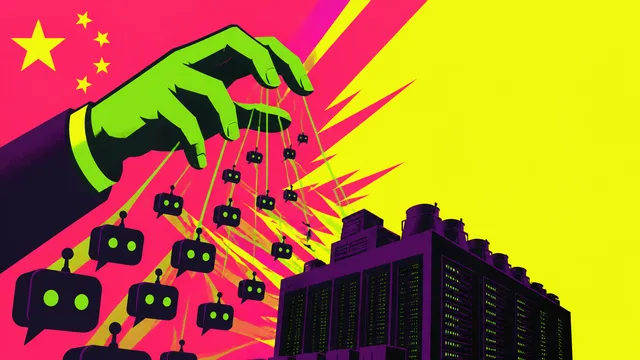
Chinese Bots Targeted AI Data Centers. Real People Did Too.
X found 200 Chinese bot accounts targeting AI data center debates. OpenAI and Republicans ran with it. Wired and others say the outrage was already real.
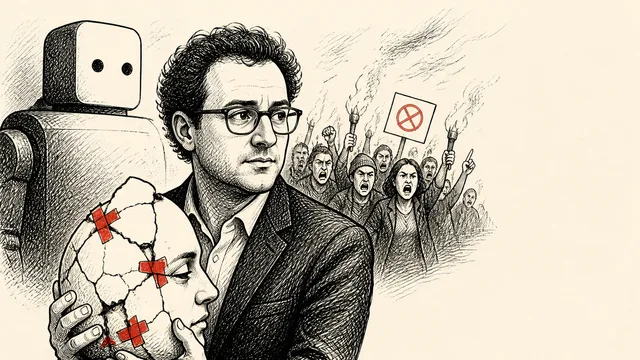
Dario Amodei Says AI Backlash Is a Crisis of Trust
Anthropic CEO Dario Amodei says AI's public backlash is a decades-long trust crisis—not a messaging problem. Here's what that diagnosis gets right, and what it sidesteps.

Netflix Used AI in 300 Titles. Here's What That Means.
Netflix disclosed AI use in roughly 300 titles in its Q2 2026 earnings. We break down what that number actually tells us — and what it doesn't.

35 GitHub Projects Mapping the AI Agent Trust Gap
This week's GitHub trending list is less a catalog of tools and more a collective argument: developers don't fully trust AI agents yet—and they're building accordingly.