Microsoft's VibeVoice Can Clone Your Voice—Here's Why
Microsoft released VibeVoice, an open-source voice cloning tool that runs offline. Better Stack tested it against ElevenLabs and Chatterbox—here's what works.

Written by AI. Tyler Nakamura
Microsoft just dropped VibeVoice into the wild—a fully open-source voice AI stack that handles text-to-speech, speech-to-text, and voice cloning, all running locally on your machine. No cloud APIs. No subscription fees. And according to the folks at Better Stack who tested it extensively, it can generate up to 90 minutes of multi-speaker audio in a single pass without completely losing the plot.
That last part matters more than it sounds like it should. Most text-to-speech systems start decent and then drift into uncanny valley territory after a couple minutes. Voices flatten out, pacing gets weird, or the whole thing just... falls apart. VibeVoice was apparently built specifically to solve that problem, which makes it interesting for a completely different set of use cases than the usual TTS demos.
What Actually Works
Better Stack ran VibeVoice through three main scenarios: multi-speaker podcast-style audio, real-time streaming for voice agents, and straight-up voice cloning. The multi-speaker test is where things got interesting.
They fed it a podcast script with three distinct speakers, clean turn-taking, and emotional cues. Most TTS systems would start making up context or bleeding speakers together after 20-30 seconds. VibeVoice kept speaker consistency solid throughout. As the tester noted: "It doesn't sound like it's making up context after 20 seconds... Microsoft hasn't just made this for short play projects. It's made for longer context audio generation and offline, too."
The voice cloning demo was straightforward—record yourself on voice memos, convert to WAV, feed it to the system. The output was convincingly similar, though not perfect. "It honestly sounds really good. Almost too good because I didn't say any of this," the tester observed. "If you know me, then you'd probably still tell it's a fake. At least I hope so."
Real-time mode runs faster than the multi-speaker generation but sits at around 300 milliseconds of latency. Usable, but not blazing fast. The tester tried to push it into singing or generating background music—features Microsoft mentioned—and that didn't work at all.
The Trade-Offs Are Real
Here's where VibeVoice gets complicated. It's MIT licensed, runs on consumer GPUs (around 7GB VRAM for real-time), and includes fine-tuning code. That's huge for developers who want to tinker without getting locked into a paid API ecosystem. The speech-to-text component includes speaker diarization and timestamps out of the box, which saves actual time if you're building transcription pipelines.
But the drawbacks aren't minor technical quibbles—they're fundamental design choices. Microsoft pulled some TTS code paths due to deepfake concerns, which tells you everything about how production-ready they think this is. The audio quality has quirks: robotic intonation, weird pacing, and multi-speaker scenes degrade past two or three people. Developers apparently love the tokenizer architecture but hate the VRAM spikes.
Language support is limited to Chinese and English. Emotion tags exist but glitch out frequently. And there's zero semantic understanding—the system reads text, but it doesn't understand what it's saying. That matters more than you'd think. When a TTS system doesn't grasp context, it can't naturally emphasize the right words or adjust tone appropriately.
How It Stacks Up
The comparisons to existing tools reveal VibeVoice's actual niche. Against Chatterbox, VibeVoice loses on short-form content—Chatterbox has sub-200 millisecond latency and better emotional range. But Chatterbox maxes out around 30 minutes. VibeVoice handles 90-minute monologues or podcast-length content without falling apart.
Versus ElevenLabs, it's not even close on polish, pronunciation, or zero-shot voice cloning quality. ElevenLabs wins on user experience. But ElevenLabs costs money, runs in the cloud, and you don't own the code. VibeVoice is free, offline, and open source. That's not a small difference if you're building something you want to control long-term.
Compared to Whisper for transcription, VibeVoice performs better once audio gets long and you need structured output. It's more expressive than CosyVoice and other quantum-based TTS models, though those are catching up on dialect coverage.
The tester's assessment was measured: "If you're a dev who builds locally, you like open-source, and you care about long form audio, I think VibeVoice is worth your time. If you want something that's more plug-and-play production-ready, honestly, you can probably skip this for now."
Who This Is Actually For
VibeVoice isn't trying to be ElevenLabs. It's not even trying to be production-ready in the traditional sense. It's a research release that happens to be useful for specific developer workflows—AI podcasts, narrated documents, training data generation, local voice agents that need to run without calling external APIs.
The deepfake concern that made Microsoft pull some code isn't theoretical handwringing. Voice cloning tools are getting good enough that the gap between "obviously fake" and "might fool someone who doesn't know you well" is narrowing fast. Microsoft shipped this as open source anyway, which suggests they think the benefits outweigh the risks—or at least that trying to keep it locked down wouldn't actually prevent misuse.
The real question is whether the open-source audio community builds on this or whether it becomes another impressive research repo that nobody uses six months from now. The architecture is interesting—low-frequency audio tokenizers for manageable context, diffusion plus LLM backbone for expressive speech without absurd compute requirements. That's not nothing.
But "interesting architecture" and "five dollars" gets you a coffee. What matters is whether developers actually integrate this into projects that ship. Right now, VibeVoice is messy, powerful, and exciting—the Better Stack tester called it "one of the strongest open source audio stacks we've seen for long form AI speech in a long time." Whether that potential turns into actual adoption depends on whether the community fixes the rough edges or just moves on to the next shiny model drop.
More Like This
Chrome's HTML-in-Canvas Experiment Might Make the Web Fun Again
Chrome Canary's new HTML-in-Canvas feature lets developers embed interactive DOM elements in WebGL scenes. It's experimental, buggy, and kind of brilliant.
Penpot Wants to Fix Design Handoff—Does It Actually?
Better Stack demos Penpot, an open-source design tool that speaks CSS natively. We look at what it solves, what it doesn't, and who should care.
DeepSpeed: Memory Mastery for Your GPU
Discover how DeepSpeed optimizes GPU memory, enabling larger models on limited hardware without crashing.
Crawl4AI Claims 6x Speed Over Scrapy for RAG Pipelines
Crawl4AI promises faster web scraping built specifically for AI workflows. Better Stack tests its claims against traditional Python tools.
Chatterbox Turbo: The Open-Source TTS Revolution
Discover Chatterbox Turbo, a fast, open-source TTS tool that's transforming voice tech.
Buzz: Offline Audio Transcription with Whisper Tech
Explore Buzz, a free app using Whisper for offline audio transcription, ensuring privacy and efficiency.

Smart Sensors Are Changing Home Fermentation
From sourdough starters to homebrewed beer, smart sensor kits are giving fermentation hobbyists precision control once reserved for commercial producers.
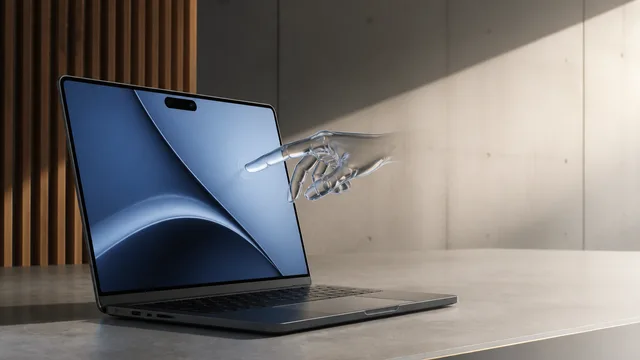
MacBook Pro Redesign: OLED, Touch, Same Old Chip
Apple's biggest MacBook Pro redesign brings OLED, touchscreen, and Dynamic Island—but the same M5 chip. Is a $3,000 price tag justified by new hardware alone?