Mastering RAG Systems with Star Wars Scripts
Discover how to build effective RAG systems using Star Wars scripts. Learn about data chunking, vector databases, and security.

Written by AI. Rachel "Rach" Kovacs
In a galaxy not so far away, the art of building a reliable Retrieval-Augmented Generation (RAG) system is explored through the iconic Star Wars scripts. Better Stack's recent video dives into the nuances of creating an AI agent that expertly answers questions using only the original scripts penned by George Lucas. While this might sound like a trivial pursuit, the underlying principles offer insights applicable to any specialized AI project.
The Heart of RAG Systems
At its core, a RAG system is designed to provide answers strictly based on the data it has been fed. The video emphasizes that the real power of RAG lies in its ability to prevent the AI from 'hallucinating'—or generating information not present in the source material. As the narrator explains, "If an item does not appear in our records, it does not exist," echoing the precision needed for enterprise applications.
Navigating the Data: Chunking Strategies
One of the rookie mistakes in setting up a RAG system is mishandling data chunking. The video demonstrates the importance of dividing the Star Wars scripts into manageable, context-preserving pieces. Instead of treating the entire script as a monolithic block, the use of a recursive character text splitter ensures each chunk represents a self-contained scene. This method maintains the integrity of each narrative unit, much like preserving the story's flow from scene to scene.
Embeddings and the Qdrant Vector Database
To make this data usable, embeddings come into play. These semantic coordinates translate text into numerical values that represent meaning. For storage, the video highlights using Qdrant, a high-performance vector database. It's crucial to note that Qdrant is specifically designed for handling large-scale vector data, not to be confused with 'Quadrant.' The ability to run it locally adds a layer of convenience and security, keeping your data within reach and under control.
Security: The Invisible Force
Security in AI systems often feels like an afterthought, yet it's a critical component. During the video's demonstration, the system's resilience against prompt injection attacks is put to the test. The RAG system's strict adherence to the script's content acts as a natural barrier against such vulnerabilities, showcasing how a well-tuned prompt template can safeguard against unauthorized data manipulation.
Finding Balance in Prompt Design
The challenge of crafting a prompt that is both specific and flexible is akin to navigating a Star Destroyer through an asteroid field. Initially, the RAG system struggled with queries about Luke Skywalker, due to the rigid prompt design. By refining the prompt to account for nuanced answers, the system improved its response accuracy while maintaining its focus on the original trilogy.
The Takeaway: More Than Just Star Wars
While the Star Wars theme provides an entertaining backdrop, the principles discussed are universal. Whether you're looking to index legal briefs or corporate documentation, the approach remains the same: start with high-quality data, employ intelligent chunking, and ensure your system is secure against potential exploits. As the video concludes, "This is the power of a fine-tuned RAG system." In the end, the lessons learned here could make your next AI project as memorable as a trip to a galaxy far, far away.
More Like This
Transform JSON Debugging with JSON Crack
Revolutionize how you debug JSON with JSON Crack. Visualize data as interactive graphs for a productivity boost.
Decoding the Latest Tech Turmoil: VS Code, Apple, and Moltbook
Explore the latest in tech: VS Code hack, Apple's AI struggle, and Moltbook's rise.
Vercel's Portless Tool: Weekend Project or Real Solution?
Vercel Labs released Portless to eliminate localhost port conflicts. Does this weekend project solve a real problem, or create new ones?
RunPod Flash Promises to Kill Docker for GPU Deployments
RunPod Flash lets developers deploy serverless GPU functions without Docker. But does abstracting away infrastructure create new security risks?
Nvidia's NemoClaw Bets on Engineering Basics, Not AI Hype
While OpenAI and Anthropic partner with consultants to deploy AI agents, Nvidia's NemoClaw assumes developers can handle it—if we remember basic engineering.
Building Production RAG Systems: What Google Taught Me
Google Cloud engineers walk through building a production-ready RAG agent, revealing the gap between demo code and systems that actually ship.

Flock Safety Cameras: Crime Tool or Privacy Risk?
Flock Safety's license plate readers are spreading fast. Retired Microsoft engineer Dave Plummer breaks down what they actually capture—and what's at stake.
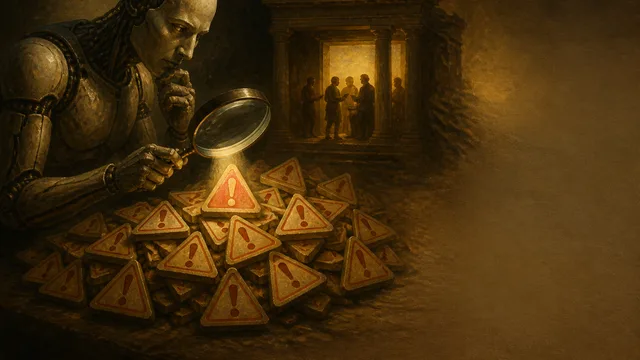
Why AI AppSec Needs Organizational Context to Work
AI finds more vulnerabilities than ever—but without organizational context, it still can't tell you which ones actually matter. Here's what that gap costs.