Inside an AI Factory: What 144 GPUs in One Rack Actually Means
Supermicro's NVIDIA B300 systems pack unprecedented GPU density. But the networking, cooling, and power infrastructure reveals the real engineering challenge.

Written by AI. Rachel "Rach" Kovacs
The servers powering today's AI models aren't just computers—they're small power plants that happen to do math. ServeTheHome's recent tour of Supermicro's San Jose facility reveals what it actually takes to cram 144 NVIDIA B300 GPUs into a single 48U rack, and the infrastructure complexity is where the real story lives.
The Networking Jump Everyone's Missing
Most coverage of NVIDIA's B300 generation focuses on the obvious upgrades: 288GB of HBM3e memory per GPU, improved compute for AI inference. But the networking architecture shift is what enables the density everyone's chasing.
The B200 generation required eight separate ConnectX-7 network cards—physical cards taking up space, generating heat, consuming power. The B300 integrates ConnectX-8 directly into the baseboard. Each GPU now has 800 Gbps of bandwidth built in, double the previous generation. "You get twice the throughput on your network with the B300 generation, even though most folks only talk about the memory and maybe the numerics," the video notes.
This isn't just a speed bump. It's architectural consolidation that frees physical space for more compute density while simultaneously improving inter-GPU communication. The security implications matter here too: fewer discrete components means fewer potential points of compromise in the data path, though it also means less modularity for hardening specific network segments.
Liquid Cooling Isn't Optional Anymore
Air cooling worked fine when servers dissipated 2-3 kilowatts. These B300 systems can push 80 kilowatts per rack. Air cooling at that density would require wind tunnel-level airflow.
Supermicro manufactures its own cold plates, manifolds, and even the secondary cooling loops that connect servers to in-row CDUs (coolant distribution units). The CDUs then interface with facility water loops that eventually hit cooling towers outside. It's a multi-stage heat exchange system where warm water from the compute gets cooled to ambient temperature—not chilled, just de-heated.
What's interesting from a supply chain and security perspective: Supermicro's vertical integration here. They're not waiting on third-party cooling vendors, which accelerates deployment timelines but also concentrates the attack surface. A vulnerability in Supermicro's cooling management software could theoretically provide physical access vectors—temperature sensors can be excellent exfiltration channels since they're rarely monitored for data integrity, only operational thresholds.
The one-handed quick-disconnect manifolds are clever engineering for serviceability. They're also a reminder that physical access to these systems is often easier than we'd like to admit. If your threat model includes state-level adversaries with data center access, that convenience becomes a different kind of problem.
Power Delivery at Industrial Scale
Those 5.5 kilowatt power supplies in the ORV3 power shelves aren't the ceiling—they're the baseline. Bus bars deliver power to entire racks via blind-mate connections at the rear. Slide in a server node and it automatically connects to both power and cooling.
This plug-and-play approach solves deployment speed but introduces interesting security considerations. In traditional data centers, power and data are separately managed. Here they're integrated into a single connection point. That consolidation is operationally efficient. It also means a single compromise point affects both compute and power management.
The GB300 NVL72 racks—72 Blackwell GPUs configured to operate as one massive GPU—require coordination between compute nodes, NVLink switches for intra-rack communication, and Spectrum-4 switches for inter-rack networking. "This entire rack operates as one large GPU," the video explains. That's 64 ports of 800 Gbps Ethernet per switch, enabling adaptive routing and congestion control across the cluster.
NVIDIA's Spectrum-X networking stack includes observability tools integrated down to the library level. Transparency is generally good for security—you can't protect what you can't see. But comprehensive observability also means comprehensive potential surveillance, depending on who's watching and what data retention policies look like.
The Retrofit Problem
Not every AI deployment happens in purpose-built facilities. Supermicro's liquid-to-air "sidecar" units let you install liquid-cooled racks in air-cooled data centers. Three redundant pumps, heat exchangers, fans—it's essentially a self-contained cooling system that bridges old infrastructure to new requirements.
This matters because the AI infrastructure buildout is happening faster than the construction of new data centers. Companies are retrofitting existing facilities, which means mixing security models, compliance frameworks, and physical access controls from different eras. Legacy data centers weren't designed assuming every rack needed monitoring for coolant pH levels and leak detection. Now they do.
Software Stack as Security Layer
Supermicro's DCBBS (Data Center Building Block Solutions) and SuperCloud Composer software handle everything from compute node lifecycle management to PDU monitoring and liquid cooling loop oversight. Single pane of glass management is operationally attractive. It's also a single point of failure.
The integration between hardware and software here is tight—necessarily so. You can't run these systems without real-time monitoring of temperatures, flow rates, pump speeds, and power delivery. But that means the management plane has control over physical infrastructure in ways that traditional compute clusters don't. A compromised management interface doesn't just give you data access; it gives you the ability to physically damage hardware by manipulating cooling or power.
What's clear is that modern AI infrastructure requires management complexity that matches its physical complexity. Every monitoring endpoint is also a potential attack surface.
What This Density Actually Enables
That 144 GPUs in a 48U rack figure isn't just bragging rights. It's the difference between an AI cluster that fits in one data center versus three. It's the difference between economically viable AI deployment and not.
But density creates concentration risk. More compute in less space means more value in a smaller physical footprint. It means fewer physical security perimeters to defend but higher consequences if one is breached. It means more efficient cooling and power delivery but also more catastrophic failure modes if something goes wrong.
The engineering here is genuinely impressive. Supermicro is manufacturing everything from cold plates to cooling towers to accelerate deployment timelines—reportedly to help customers get clusters running faster in the current GPU shortage. Vertical integration as competitive advantage.
From a security perspective, that integration means understanding your threat model matters more, not less. Are you worried about nation-state adversaries with physical access capabilities? Supply chain compromises at the component level? Software vulnerabilities in management planes that control physical infrastructure? The answer determines whether this density is an acceptable risk or an unacceptable concentration.
The technology enables AI at scale. The security model determines whether that scale is sustainable.
More Like This
Elementor's AI Tool Generates Custom Code in Seconds
Elementor's new Angie Code AI converts plain-language prompts into production-ready widgets and functionality. But can it deliver on the security promises?
AI Agents Now Configure Enterprise GPU Clusters Autonomously
Tech enthusiasts built an 8-node NVIDIA GB10 cluster using AI agents to handle setup. The barrier to entry for complex AI infrastructure just collapsed.
Kling 3.0 AI Video Generator: Testing the Hype
CyberJungle stress-tests Kling 3.0's AI video generation: multi-shot scenes, native audio in 5+ languages, and character consistency. The results reveal both promise and problems.
Tech Predictions 2026: Linux, Cybersecurity & AI
Explore bold predictions for 2026 in Linux, cybersecurity, and AI acquisitions, including a potential Amazon-Anthropic deal.
Navigating AI in Coding: Balancing Innovation and Security
Explore how developers can integrate AI tools in coding while maintaining security.

Alibaba’s Zhenwu V900 Claims Still Need More Evidence
Alibaba says its Zhenwu V900 triples prior performance. Disclosed specs, Huawei comparisons and cloud plans show what can and cannot yet be verified.
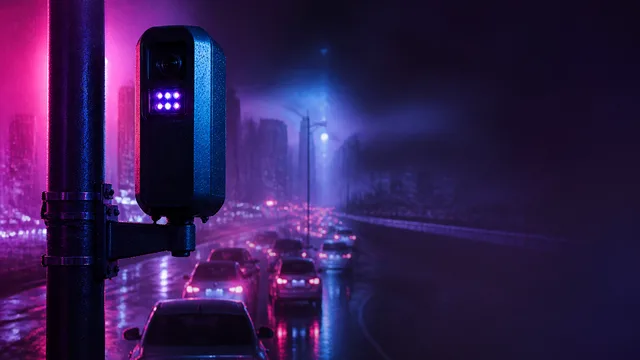
Flock Safety Cameras: Crime Tool or Privacy Risk?
Flock Safety's license plate readers are spreading fast. Retired Microsoft engineer Dave Plummer breaks down what they actually capture—and what's at stake.

Why AI AppSec Needs Organizational Context to Work
AI finds more vulnerabilities than ever—but without organizational context, it still can't tell you which ones actually matter. Here's what that gap costs.