Google's Gemma 4: Local AI That Doesn't Need the Cloud
Google's Gemma 4 brings cloud-level AI to your laptop. Free, offline, commercially usable—but is local AI ready to replace the cloud model?

Written by AI. Bob Reynolds
Google released Gemma 4 last week, and the pitch is straightforward: powerful AI that runs on your hardware, not someone else's servers. No internet required. No API costs. No data leaving your machine.
I've watched this movie before. Every few years, someone promises to liberate us from cloud dependency. Sometimes it's legitimate innovation. Sometimes it's marketing dressed up as revolution. The question with Gemma 4 isn't whether it works—Google's engineering is competent—but whether local AI actually solves problems people have, or problems vendors wish they had.
What Google Built
Gemma 4 is an open-weight AI model released under the Apache 2.0 license. That means you can download it, modify it, build commercial products with it, and Google won't send you a bill. It's derived from the same research that powers Gemini, Google's flagship commercial AI, but packaged for local deployment.
The model comes in multiple sizes. Small versions run on phones. Medium versions work on consumer GPUs. Large versions need data center hardware. Julian Goldie, in his video breakdown, emphasizes this flexibility: "Whatever hardware you've got, there's a Gemma 4 version for it."
The technical capabilities sound impressive on paper. Multi-step reasoning, which means the model can work through complex problems sequentially rather than just pattern-matching responses. Agentic workflows, the current industry term for AI that can decide and execute actions autonomously. Support for coding, debugging, and tool use.
Previous Gemma versions logged 400 million downloads and spawned over 100,000 community variants. Those numbers suggest genuine adoption, not just announcement-day enthusiasm.
The Privacy Argument
The core pitch is control. Your data stays on your device. No third party sees your queries. No company trains its next model on your confidential information. For businesses handling sensitive material—legal documents, medical records, proprietary research—this matters.
Except privacy through local deployment isn't new. It's how software worked for decades before cloud computing convinced everyone that centralization was progress. What's changed is that AI models traditionally required massive server farms. If Gemma 4 actually delivers comparable performance on consumer hardware, that's a meaningful shift.
Goldie outlines five use cases: offline AI assistants for private conversations, local coding agents that don't expose your codebase, business-specific AI fine-tuned on proprietary data, mobile AI apps that work without connectivity, and autonomous workflows that monitor and act on information without constant supervision.
Each scenario assumes you value control more than convenience. Cloud AI is convenient precisely because someone else handles the infrastructure. Local AI means you're responsible for setup, maintenance, troubleshooting, and staying current with model updates. The question is whether enough people find that tradeoff worthwhile.
What the License Actually Means
Apache 2.0 licensing removes usage restrictions common in commercial AI services. No rate limits. No surprise price changes. No risk that the vendor pivots strategy and leaves you stranded. You can fine-tune Gemma 4 on your own data and own what you build.
This matters more for developers than casual users. If you're building a product, dependency on a commercial API creates business risk. If the vendor raises prices or changes terms, you're negotiating from weakness. Open licensing eliminates that leverage.
But it also eliminates support. Google isn't staffing a help desk for Gemma 4. The 100,000 community variants Goldie mentions might help—crowdsourced solutions to common problems—but they also indicate fragmentation. When something breaks, you're figuring it out yourself or hiring someone who can.
The Limitations Nobody Emphasizes
Goldie acknowledges that "Gemma 4 is not plug-and-play for beginners" and that "AI hallucination is still a real thing." That's refreshingly honest for promotional content, but it's worth unpacking.
Hallucination—the technical term for when AI models confidently assert false information—remains unsolved across the industry. Local deployment doesn't fix it. Neither does open licensing. For production use, you need testing, validation, and ongoing monitoring. That's engineering overhead, and engineering time costs money.
Performance is another question mark. Running powerful models locally requires powerful hardware. Consumer laptops might handle smaller Gemma versions, but "handles" covers a range from "works acceptably" to "technically functions if you're patient." Google's marketing naturally emphasizes the former. Reality might deliver the latter.
The comparison to cloud AI also assumes cloud AI remains static. It doesn't. OpenAI, Anthropic, and Google's own cloud services iterate constantly. Local models require manual updates. You're trading automatic improvement for control, and whether that's a good deal depends on what you're building.
The Broader Context
Local AI represents a legitimate technical trend. Apple built its latest chips with neural engines specifically for on-device AI. Meta released Llama models under permissive licenses. Stability AI, despite its various dramas, proved there's demand for models people can run themselves.
Goldie frames this as a fundamental shift: "For the past couple of years, the assumption was powerful AI lives in the cloud. You access it through an API, you send data out, you get answers back. Gemma 4 is part of a different direction."
That's partially true. The assumption was never universal—it was a compromise. Cloud AI scaled faster than local alternatives, so adoption followed capability. As local models improve, some use cases will migrate back. But many won't. Centralized training on massive datasets produces different results than localized fine-tuning. Both approaches will coexist because they solve different problems.
The interesting question isn't whether local AI replaces cloud AI, but where the boundary settles. Privacy-sensitive applications will prefer local deployment. Scale-dependent applications will stay in the cloud. Mixed architectures—local processing with occasional cloud augmentation—might split the difference.
Google releasing a competitive open model matters because Google controls so much cloud infrastructure. They're hedging. That's either strategic brilliance or an admission that they're not confident they can lock everyone into cloud dependency. Probably both.
What's clear is that AI deployment is fragmenting. The one-size-fits-all cloud model made sense when it was the only option that worked. Now there are options. How people choose between them will depend less on technical capability—most modern AI is impressively capable—and more on what they actually trust.
More Like This
Google's Gemma 4: Running Frontier AI on Your Phone
Google's Gemma 4 brings frontier-level AI to consumer devices. Free, open-source, and offline-capable—but does it deliver on the promise?
Agent Zero's Plugin System Shows What AI Needs Next
Agent Zero's new plugin architecture lets AI extend itself. The real innovation isn't the plugins—it's what happens when communities build them.
Open Source AI Models Just Changed Everything
The AI landscape shifted dramatically in early 2026. Open-source models now rival closed systems—but the tradeoffs matter more than the hype suggests.
Google's NotebookLM Now Builds PowerPoint Decks for You
Google's NotebookLM adds AI-powered presentation creation. It promises to replace PowerPoint with prompt-based slide generation, but questions remain.
Clawdbot AI: A New Era for Personal Assistants
Explore Clawdbot AI, the self-hosted assistant redefining productivity across messaging platforms.
How to Run Massive AI Models on a MacBook Air
LM Studio's new remote access feature lets you run 480B parameter models from a 16GB MacBook Air. Here's how it actually works in practice.

pgrust: A Full Postgres Rewrite in Rust, Tested
pgrust passes all 46,066 official Postgres regression tests and boots real data directories. Here's what that means—and what it doesn't.
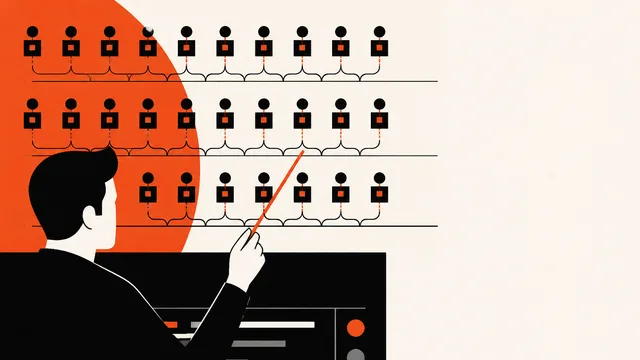
How One Solo Developer Manages 30 AI Agents at Once
Kun Chen, a former big tech engineer, built a multi-agent orchestration system to manage dozens of AI coding sessions solo. Here's how it actually works.