Google's Gemini Gets Five Updates That Actually Matter
Google's Gemini Nano Banana 2 adds text rendering, aspect ratios, and character consistency. Five features that might genuinely improve AI image tools.

Written by AI. Mike Sullivan
Google released an update to its Gemini image generation model—Nano Banana 2—and Julian Goldie's digital avatar is very excited about it. That avatar, speaking for an SEO agency CEO, just posted a breathless nine-minute walkthrough of five new features that will apparently transform how we create visual content.
I've seen this movie before. Every AI image tool launches with promises of revolutionary capability, then spends the next six months fixing the parts that don't work. But I watched Goldie's breakdown anyway, because sometimes the hype cycle actually delivers something useful. Here's what's actually new, what might matter, and what questions remain unanswered.
The Five Features, Stripped of Marketing
Gemini's update adds five capabilities to its image generation model. Let's take them one at a time.
Real-world knowledge means the model was trained on more current data. Goldie claims this fixes Gemini's previous tendency to generate images that felt "outdated, generic, off." His example: asking for a modern AI workspace now produces something that looks like 2024, not clip art from 2015.
Fair enough. Training data freshness is a real problem for AI models. But "better knowledge" is also the vaguest possible improvement to claim. What does "better" mean? More training data? Different sources? Better curation? Google hasn't published details, and Goldie doesn't explain what changed under the hood. We're asked to trust that prompts for "modern" and "premium" will now work better. Maybe they will. I'd like to see comparisons.
Advanced text rendering tackles what Goldie correctly identifies as "one of the biggest problems with AI image generation"—getting readable text inside generated images. For years, AI tools have produced garbled nonsense when you ask them to include words. Letters backwards, spelling errors, incomprehensible garbage.
This one I find genuinely interesting, because it's a measurable improvement. Either the text is readable or it isn't. Goldie's example: "Create a bold clean social media graphic with the text. Join 38,000 members AI profit boardroom in large white font on a deep navy background with gold accents professional modern style." If Gemini can now consistently produce that without breaking the words, that's actual progress.
The question is: how consistent? Every AI image tool eventually produces one perfect example for the demo. The test is whether it works reliably across different prompts, fonts, and layouts. I'd want to see failure rates before declaring this solved.
Image generation templates are exactly what they sound like—structured starting points that guide style, layout, and format. Think Canva templates, but for AI. You define a visual style once (navy background, gold accents, specific layout), then generate variations without starting from scratch each time.
This addresses a real workflow problem. AI image generators are great at variety but terrible at consistency. If you need ten images that all look like they're from the same brand, you're usually manually tweaking each one. Templates potentially solve that.
What's unclear: are these templates just saved prompts, or something more sophisticated? Can you import custom templates? Share them? The feature sounds useful, but the implementation details matter enormously.
Aspect ratio control lets you specify output dimensions before generation. Want a square for Instagram, 16:9 for YouTube, or 9:16 for Stories? Tell Gemini upfront instead of generating an image and then cropping or resizing it manually.
Goldie calls this a "real workflow improvement," and he's right. This is the kind of unglamorous feature that actually saves time. One prompt, multiple formats, all consistent. That's not revolutionary—it's just competent product design that should have existed from the start.
Character preservation is the feature Goldie saved for last, calling it "the most powerful one for anyone building a brand or business with AI." The pitch: create a character once, then reuse that exact same character across multiple images. Same face, same features, same style.
This has indeed been one of AI image generation's most frustrating limitations. You generate a person, love the result, then can't reproduce them in a different pose or setting. For anyone trying to build a consistent brand mascot or AI avatar, this has been a dealbreaker.
But character consistency is hard. Multiple startups have tried and mostly failed to deliver this reliably. Midjourney has character references. Stable Diffusion has various workarounds. None of them work perfectly. Goldie's avatar states: "You create the character once and Gemini keeps it consistent every time you generate a new image."
Every time? That's the claim I'm most skeptical about. Character consistency depends on complex prompt engineering, style preservation, and feature matching. It's easy to demo one successful example. It's much harder to make it work consistently across different poses, angles, lighting conditions, and contexts. I'd want to see independent testing before believing this works as advertised.
The Pattern I Keep Seeing
Here's what strikes me about this update: four of these five features are about control and consistency, not novelty. Better aspect ratios. Better templates. Better character preservation. Better text rendering.
These aren't moonshots—they're the unglamorous work of making an AI tool actually usable for professional workflows. That's good. That's what AI image generation needs right now. We don't need more capabilities; we need the existing capabilities to work reliably.
But it also suggests we're still in the "fixing basic stuff" phase of AI image generation, not the "mature technology" phase the marketing implies. When your big update is "text that's actually readable," you're solving problems that shouldn't exist in a finished product.
Goldie's avatar demonstrates each feature with examples from the "AI Profit Boardroom," the community he's promoting throughout the video. Deep navy backgrounds. Gold accents. Clean modern style. The examples look professional and polished. But they're also carefully curated demos designed to showcase the features at their best.
What I'd want to know: What's the failure rate? When does character preservation break down? How often does text rendering still produce garbage? What happens when you push these features beyond the carefully constructed examples?
What Google Isn't Saying
Notice what Google hasn't published with this release: benchmarks, comparisons, technical details, or limitations. We get marketing claims filtered through content creators who have financial incentives to present the tools optimally.
That's not unusual—it's standard practice for tech companies. But it means we're evaluating this update based on demos and testimonials, not data. The actual reliability, consistency, and edge cases remain unknown until independent users test these features in production.
I'm also curious about one technical detail Goldie never mentions: is this a fundamental model update, or improved prompting and post-processing? "Nano Banana 2" sounds like a new model version, but the features he describes could be achieved through better prompt engineering, additional refinement steps, or post-generation processing.
That distinction matters. A new model suggests Google retrained Gemini with better data and architecture. Better tooling means they added features on top of the existing model. One is a bigger deal than the other, but Goldie's video doesn't clarify which we're getting.
The Actual Question
Does this update make Gemini competitive with Midjourney, Stable Diffusion, or DALL-E 3 for professional image generation? That's the question that matters, and Goldie doesn't address it. He presents these features in isolation, never comparing them to alternatives or explaining where Gemini now sits in the competitive landscape.
For someone deciding which AI image tool to use for their business, that context is crucial. Is Gemini now the best option for text rendering? Character consistency? Template-based workflows? Or is it catching up to where competitors already were?
I don't have those answers, because Google hasn't provided comparative data, and Goldie's video is essentially a feature announcement, not an evaluation.
What I'd Actually Test
If I were evaluating this update, here's what I'd want to know:
- Text rendering: What's the success rate across different fonts, sizes, and styles? When does it still fail?
- Character preservation: How many prompts can you string together before the character drifts? What about different angles, lighting, or contexts?
- Templates: How flexible are they? Can you modify them? Import custom ones?
- Real-world knowledge: Measurable how? Compared to what baseline?
- Aspect ratio control: Does this affect image quality or composition?
Those are practical questions that would help someone decide if this update is worth their time. Goldie's video, understandably focused on promotion rather than critical evaluation, doesn't explore them.
The update might be exactly as good as advertised. Google has serious engineering resources, and incremental improvements to AI models are real and valuable. But "insane" is doing a lot of work in that title, and I've been watching AI tools long enough to know that demo videos always show the best-case scenarios.
The real test comes when thousands of users try these features with their own prompts, their own use cases, and their own expectations. That's when we'll know if Nano Banana 2 is a meaningful update or just another point release in the endless march of AI model iterations.
More Like This
Google's Lyria 3 Makes AI Music From Text (And Images)
Google's Lyria 3 generates custom music from text, images, and video in seconds. Built into Gemini, it's multimodal, free, and targeting creators.
Master SEO with Claude AI: A Practical Guide
Learn how to rank #1 using Claude AI SEO strategies for free.
Google's Image AI Bets on Speed Over Perfection
Google's Nano Banana 2 signals a shift in AI image generation: good enough, fast enough, and cheap enough now matters more than perfect.
OpenClaw Lets AI Control Your Real Browser. Should You?
OpenClaw's update lets AI agents access your actual Chrome sessions. Here's what changed, what it means, and whether you should trust it with your logins.
Google's Image FX: The AI Tool Nobody's Talking About
Google's Image FX lives in Google Labs obscurity, but it might be exactly what beginners need—if they can live with its limitations.
Ideogram AI's New Updates Fix the Two Biggest Problems in AI Design
Ideogram AI just launched three features that solve AI design's most annoying issues: broken text and inconsistent characters. Here's what actually changed.
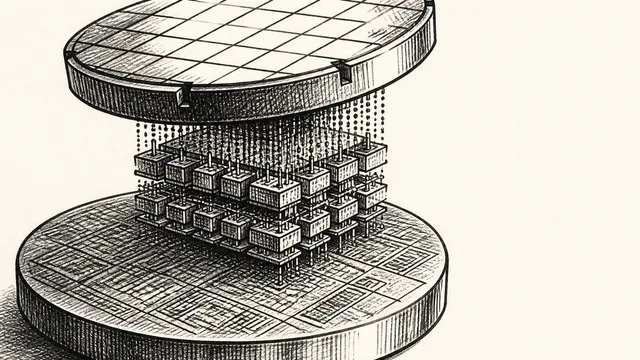
IBM NanoStack and the Future of Chip Architecture
IBM's NanoStack stacks transistors from separate wafers using atomic bonding. The physics works. The harder question is whether anyone can manufacture it at scale.
Inside the Smartphone: 120 Years of Hidden Engineering
Professor Hannah Fry tears apart a modern smartphone to trace 120 years of engineering history — from Marconi's radio waves to a 200-million-pixel camera sensor.